Related Posts Plugin for WordPress, Blogger...
Showing posts with label City guide. Show all posts

Friday, April 27, 2012

In Photos: Gaudi’s Barcelona

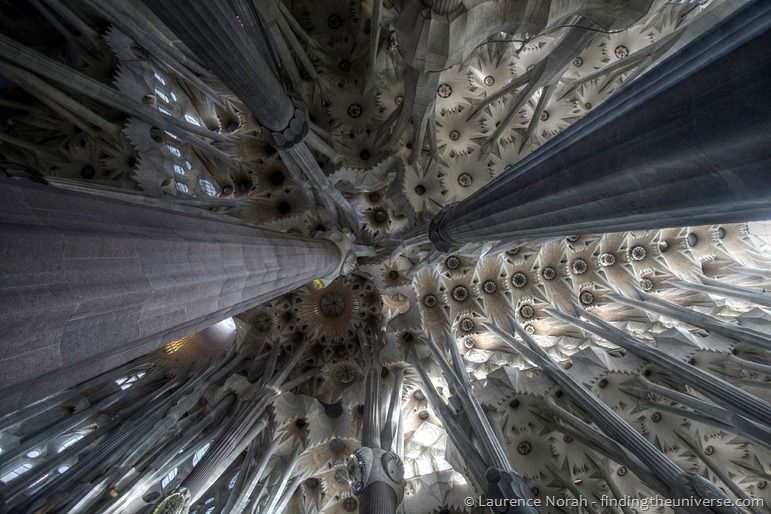
Sagrada Familia Interior Gaudi Barcelona beams

Gaudí. It’s kind of hard to visit Barcelona without spending your time gaping in awe at the architectural and artistic genius that he left behind all over the city.

A great deal of my week in Barcelona was therefore spent, gaping in awe, at his many truly incredible constructions. As well as gaping, I was also taking the odd photograph, which I’m sharing with you today. I wasn’t able to visit every bit of work he did, but I’d like to think that I took in the serious highlights.

In a future post I’ll be going more into the details of what to see and do in Barcelona. For now though, less detail: more eye candy.

Lets start with…

The Sagrada Familia.
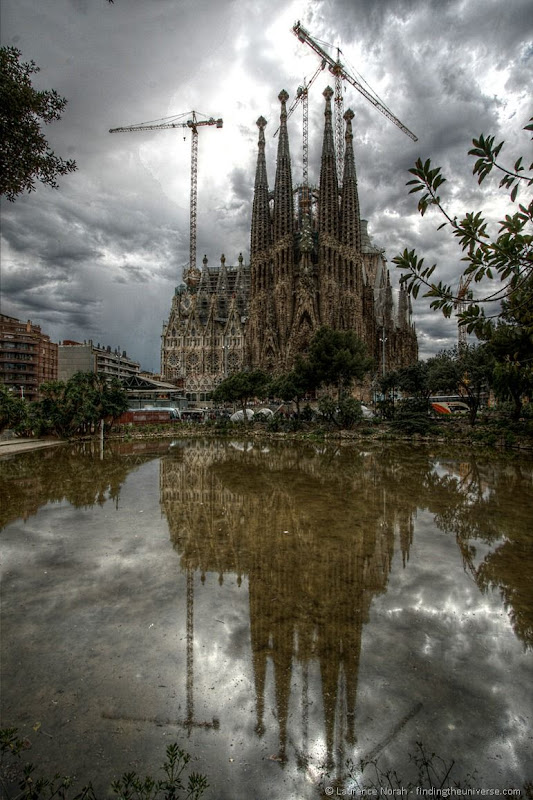
Sagrada Familia outside reflection 3

We might as well start at the top. The Sagrada Familia is Gaudí’s masterpiece, the building that obsessed him in the later years of his life, and which is still under construction. It’s an ever evolving masterpiece, an easily visible part of the Barcelona skyline, and one of the most incredible buildings I’ve ever visited. You cannot go to Barcelona without visiting it.
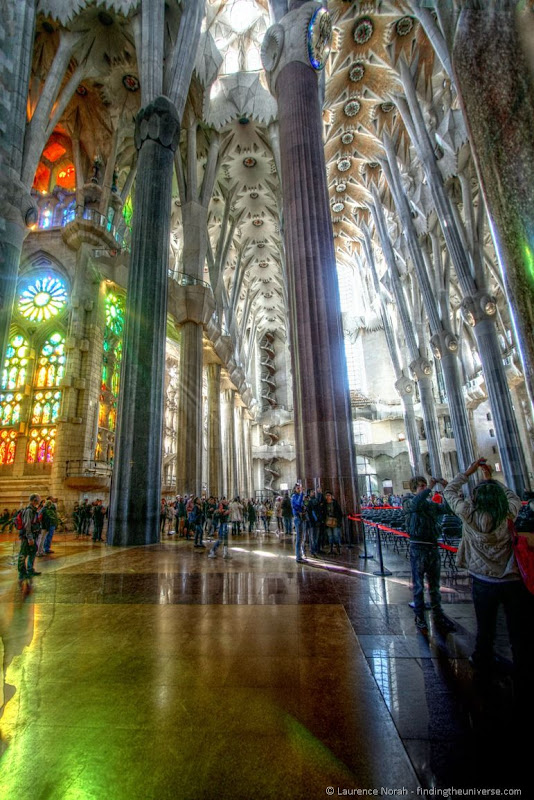
Sagrada familia internal colourful gaudi barcelona.png

Parc Güell

Parc Guell arches Barcelona gaudi.png

Parc Güell was Gaudí's attempt at creating a garden city development. I say attempt, because of the 60 buildings planned, only two were built, neither of which was actually designed by the man himself.

Instead, Gaudí spent his time focusing on the little details, like the enormous terrace. Gaudí also lived in the Parc for 20 years. These days, the garden is open to all, and is well worth the visit.
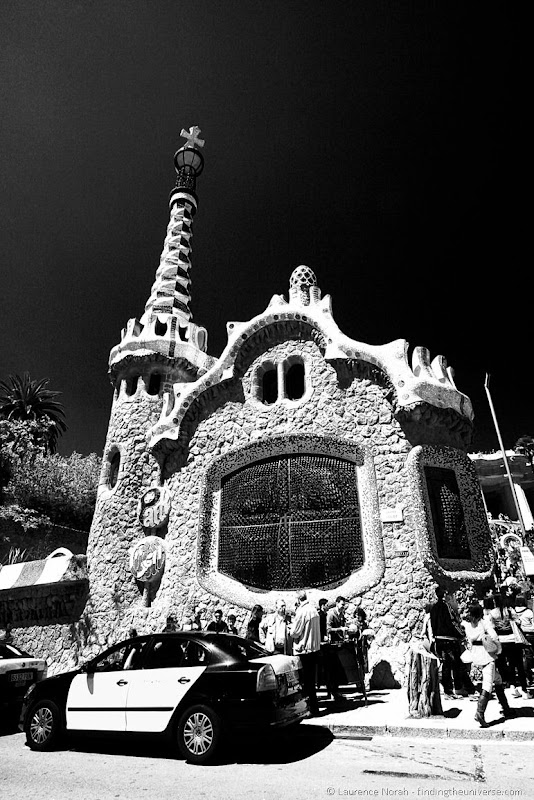
Parc guell entrance buildings barcelona gaudi 2


Casa Batlló

Casa Battlo roof Barcelona Gaudi1.png

Casa Batlló, also known as the House of Bones, is one of the finer examples of a town house designed and built by Gaudí for a rich Catalan family. It is most well known for it’s striking exterior wall, made up of balconies which to my mind looked rather like the masks one would wear at a ball. Should one be invited to a masked ball that is. 

My favourite bit of the house was up on the roof, where what appeared to be the spine of a dragon was laid out as the roofline. I’m not sure it was a dragon, but given Barcelona’s close connection to St. George, I have hope.
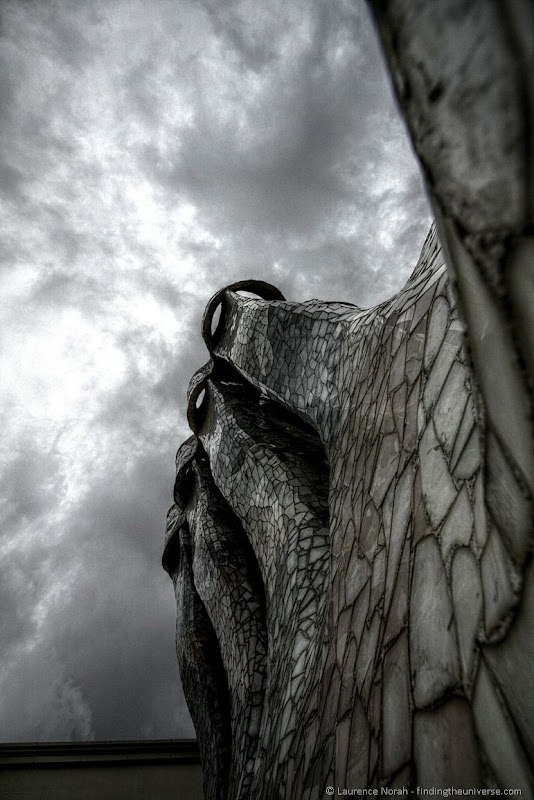
casa Battlo Barcelona Gaudi chimney


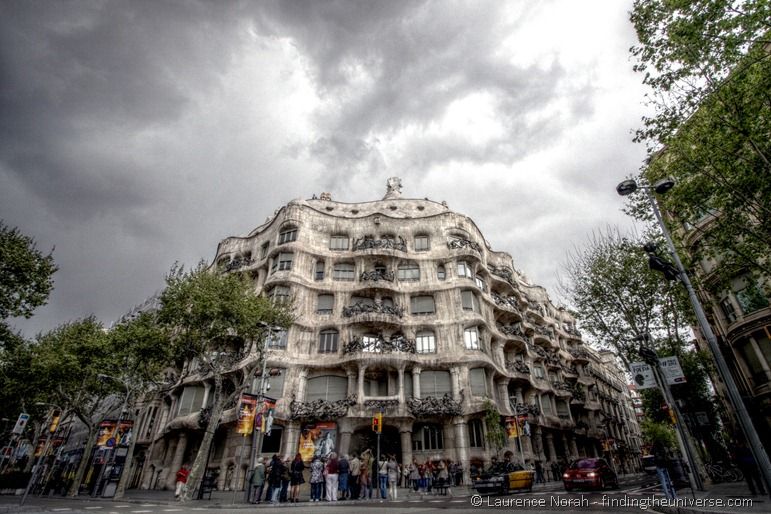
Casa Mila, also known as La Pedrera

HDR La Pedrera

Not far from Casa Battlo is Gaudi’s other famous Barcelonian town house, the Casa Mila, which is known by pretty much everyone as La Pedrera, which translates as the Quarry. The locals at the time not being entirely enamoured of Gaudi’s style choice with the building.

As with the Casa Battlo, this was built for a wealthy family, and broke pretty much every planning rule in the book when it was put up. The price of great art in this case coming with plenty of building regulation fines, and rather irate owners.
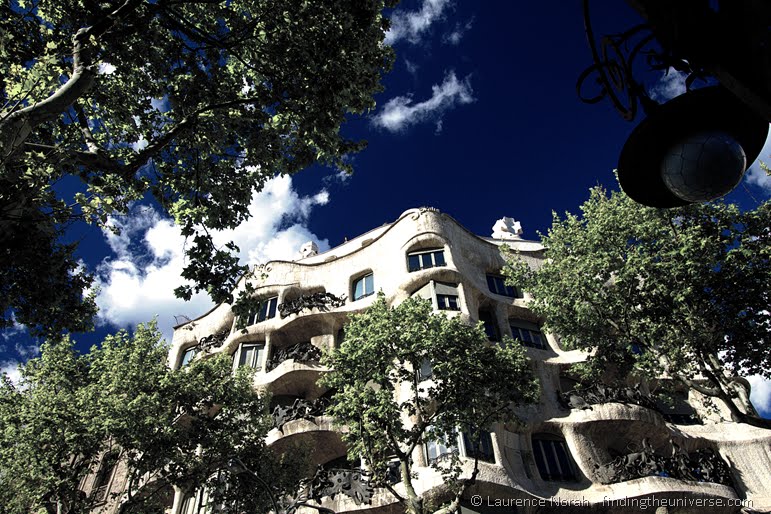
casa pedrera

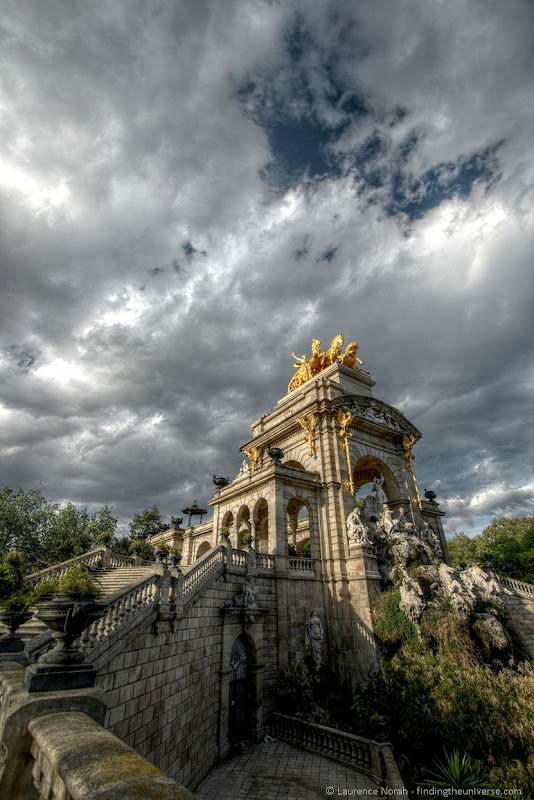
Cascada in Parc de la Ciutadella

Gaudi Fountain_edited_2-001This fountain, in the pretty Parc de la Ciutadella, near Barcelona’s parliament building, was mostly erected by Josep Fontsere. It is understood that Gaudí did work on it, during his early student years. It’s nowhere near as organic as some of his later works, but is still a great looking bit of building! When we visited, it wasn’t in operation, and had a wonderful air of decay going on.
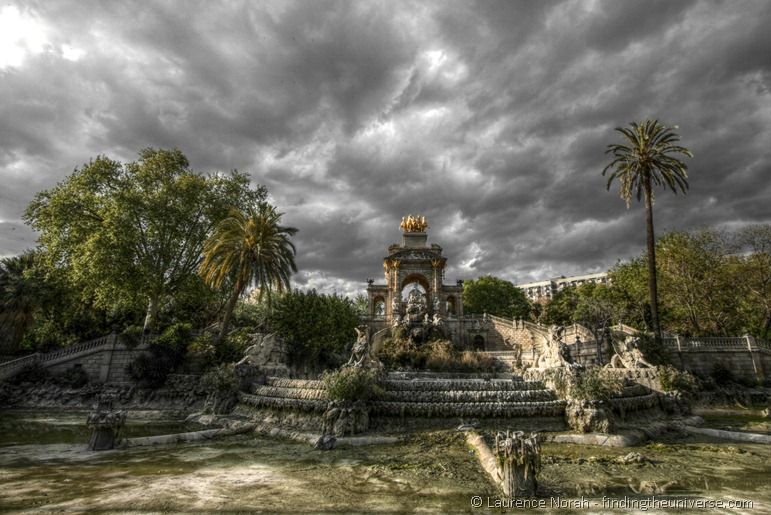
Horse Fountain.png

So there you have it. Five of my favourite bits of Gaudí work in photos. Obviously Gaudí left behind more than these pieces, and Barcelona is just stuffed with incredible architecture from people other than this great man. But for sheer madness, it’s hard to beat what he got up to! Let me know what you think of the photos, of Barcelona, or of life in general, in the comments below!

Also... don’t forget to check out my site’s facebook page, where I share lots more of my photos!

Tuesday, April 24, 2012

Things I didn’t know about Barcelona!

Horse Fountain.pngI’ve just spent a week visiting Barcelona. I’d like to say that I did a whole bunch of research before setting off, but to be honest, I’m not that great at research. For example, I managed to get through an entire University degree without stepping inside a University library.

Plus, I like a place to surprise me. I asked you guys for your tips, and you supplied them in plentiful fashion. Barcelona’s tourist board, who hosted me so splendidly on this trip, sent me over a whole bunch of stuff too.

But none of this meant that I really knew the following things. I was ignorant… now I am less so. Yay for travel!

Barcelonés, or Barcelonians, aren’t exactly Spanish

ive got a lot to say text.png

Ooh, I’ll start off with the contentious one first then. Sure, Barcelona is *in* Spain. But it is in the Catalan region of Spain, a region which has its own language, own culture and… if the local population had its way... its own borders.

A basic study of Spanish history probably would have helped me out here, but I was never that great at history, particularly after spending two very dry years of my teenage life studying in great depth the Russian revolution of 1917. Something about reading the account of peasants being tyrannised in a frozen wasteland just turned me off history.

So, whilst officially Barcelona is a part of Spain, there are hints everywhere, from flags to language, even to domain names ending in .cat rather than .es, that really, the locals consider themselves somewhat separate. I’m sure there’s a whole world of politics and history here that I could get bogged down in. Instead, let’s move onto other, less contentious and more tasty subjects.

Lunch is a somewhat lengthy affair

Barcelona food tapas squid

I’ve never really travelled in a country which has that Spanish themed approach to lunchtime. I thought the French took lunch breaks seriously, but they really can’t hold a candle to the Spanish.

Lunch time starts a bit later than I was used to (turning up before 1pm raised eyebrows.. try that in France and you’ll be lucky if they still have a plat du jour left), and runs.. well.. until dinner time as far as I could see.

The other thing is that the traditional concept of starters and main courses isn’t the standard here. Possibly because tapas is so popular. Instead, meals consist of two slightly smaller main courses, followed by dessert and coffee.

Food is also incredibly cheap, by Western European standards anyway. It’s not hard to find a meal that includes first and second dishes, dessert, coffee and a beverage, for under 10 euros. No wonder everyone eats out all the time!

Barcelona is a seriously popular destination

sagrada familia you are not alone.png

I had a vague hope, when planning my trip for early April, that i would be able to miss the peak visitor months of the summer, when visiting European cities is… well... a bit of a chore.

And, when we blearily stumbled off the train at 8am on a Saturday morning, the wonderfully deserted narrowly winding streets of the Gothic Quarter were reassuringly empty. We had Barcelona to ourselves!

Of course, the reality wasn’t entirely in line with this first impression. Pretty much any city is largely deserted at 8am on a Saturday morning. As the day wound on, and people started to wake up, it became rapidly apparent that Barcelona is an incredibly popular destination. The major sights were always crowded, as were the streets, restaurants and even the parks!

It wasn’t really a problem – a city is a place of people after all. It was just a little busier than I had imagined for April. Good news for the tourism economy though. I’ll be writing a post on my tips for surviving a European city in summer soon, although in the case of Barcelona, the tips will probably apply year round…

Barcelona is eminently walk-able!

Barcelona gothic quarter street.png

One thing that really stood out about Barcelona, which isn’t always the case with large cities, is how easy it is to walk around.

Sure, there is an awesome public transport infrastructure, with all modes of transport offered, from trams to buses to a metro and even bicycles. But for me, the best way to experience a city is on foot, and Barcelona is a city that is just so wonderful to experience from the pavement.

It has distinctly separate districts, all of which have their own character and beauty. The aforementioned Gothic Quarter is all tiny maze like passageways framed by looming buildings.

There’s the gorgeous beach fronted Barceloneta. There’s the Eixample... full of beautiful art nouveau buildings in a modernist style. Something for everyone, and all just so easy to get between! A walkers haven.

St George is not an exclusively English Saint

Statue of saint.png

For most of my life, being English, I have been living under the misguided impression that St. George was this English chap who slayed a dragon, saved a princess, and gave us a national day that we largely ignore.

Then I visited Barcelona, and discovered that St George is also the patron Saint of Catalonia. Some further research has indicated that he also happens to be the patron Saint of nine other countries, including Portugal and Germany, as well as four cities including Venice. This was a chap whose dragon slaying abilities clearly  travelled well. He was also Turkish.

Unlike the English, for whom the St. George flag only really appears when we want to celebrate our football team being dire, the Catalonians really revere this guy. He appears all over the city in statues and artwork, and his national day is a seriously big deal. Poor old St. Valentine doesn’t get his own day in Catalonia – rather, St George’s day is the day to celebrate love. After all, what’s more romantic than a day celebrating a bit of princess saving and dragon slaying.

On St. George’s day, it is popular tradition for men to give women a red rose, which symbolises the blood of the poor slain dragon, and for women to give men a book, which symbolises knowledge. These days, what with women being allowed to read and everything, the exchange is more balanced, with everyone getting everything. Which seems fairer.

So that was some of what I learnt in Barcelona! More posts will be following on the subject of this wonderful city. In the meantime, if you’ve got stories to share about what you’ve learnt on your travels, or any feedback on this post, do hit up the comments below!

Friday, April 20, 2012

Angouleme–wanders around the ramparts

Angouleme castle.png

This is my third post on Angoulême! Who would have thought one French town could hold so much appeal? Admittedly, Angoulême cheated slightly, by seducing me with awesome street art. That’s a good way for any city to get my attention, and more than one post. See Berlin’s street art for example.

So I have now thoroughly covered the paintings on the walls of Angouleme in this post and this post.

There is, I am pleased to tell you, more to Angouleme than just great street art. Although, if you ask me, that’s enough to make a city worth a visit anyway. 

Angoulême is the capital of France’s Charente department, in the Poitou-Charentes region. Charente is also notable for being home to the town of Cognac, for the drinkers amongst you.

The Charente department is named for the river Charente, above which the main centre of the town of Angoulême perches. The rocky outcrop upon which the old town sits was, back in the day, splendidly defendable, and this is a town which has seen its fair share of sieges and plunders, with a history of invasions dating back to the 5th century.

Angouleme Cathedral blue sky.png

These days the fortifications that surrounded the old town have been turned into boulevards which sit upon the old city walls, and afford the visitor a rather jolly set of views across the valley surrounding. A valley which is, admittedly, rather full of industry, but still. The thought is there.

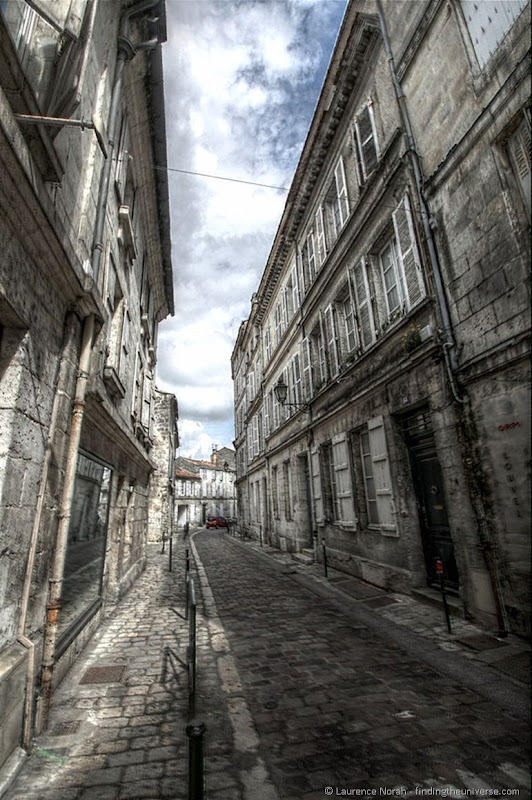
The old centre of Angoulême is rather more interesting than its surrounding industrial area, being home as it is to a fine pedestrianised and cobbled town centre, which is just stuffed full of restaurants and quirky little streets to explore.

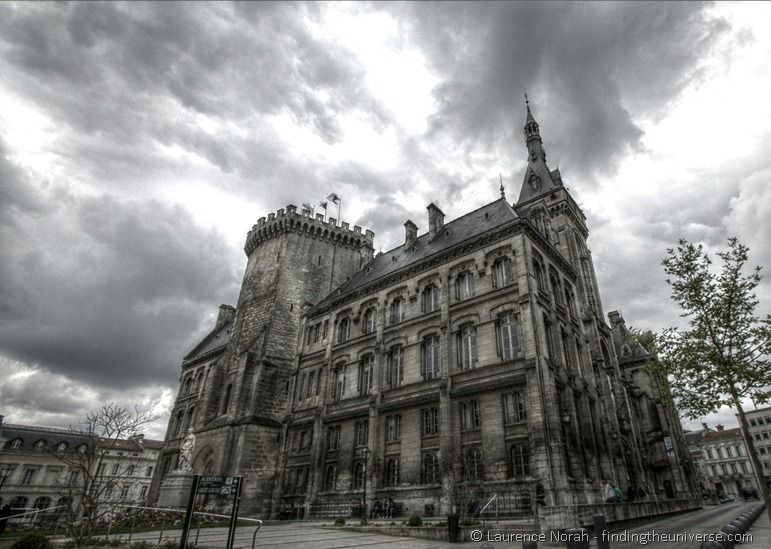
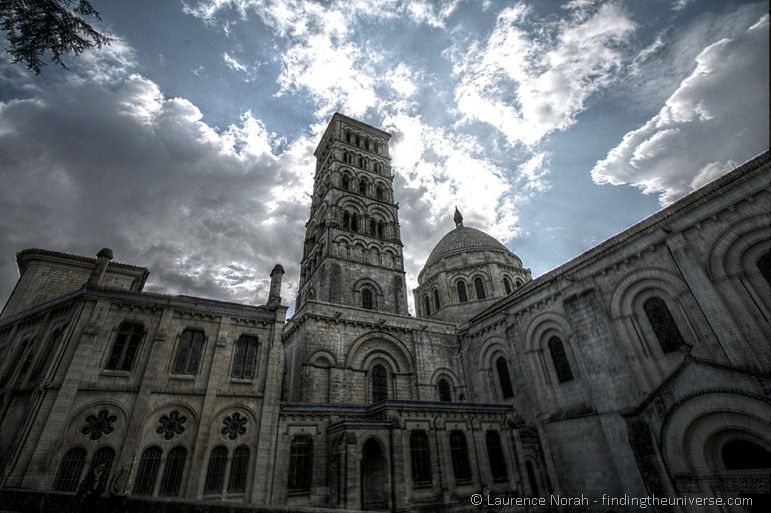
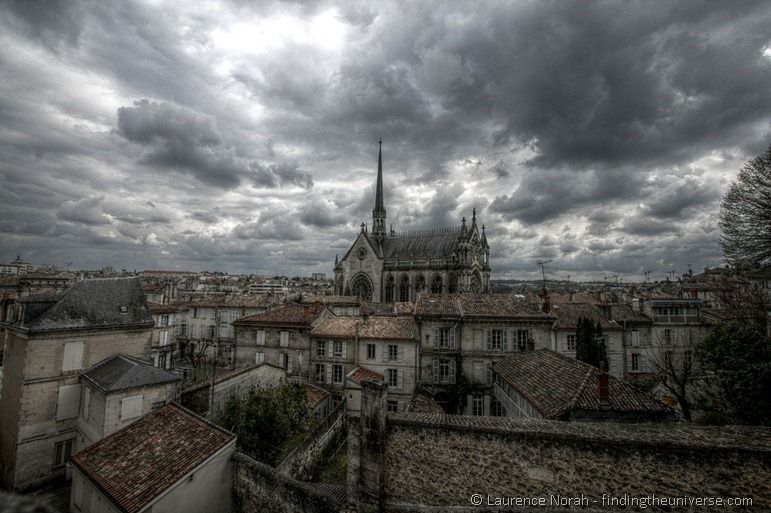
It also has its fair share of interesting looking buildings, including a fine cathedral (as seen in the photo above), and the “hotel de Ville” (first photo), which incorporates into its design the old chateau of Angoulême.

Angouleme Church

Angoulême is a very vibrant town, made so perhaps by its large student population. There is a really positive buzz in the city centre, with lots of people wandering and plenty to see down the twisty alleys.

When wandering, if you’re in the mood, there are a number of museums that could while away a rainy afternoon. These include the Fine Arts and Archaeology Museums, as well as the Paper Museum and Comic Book Museum. The latter sounding more interesting to me, although to be honest, museums have to be pretty damn amazing (or featuring Dali) to get me excited.

Angouleme Street.png

If you’re like me, and wandering aimlessly peering at street art or sculptures is more your thing, then you should swing into the tourist office and pick up the map of the notable street art in Angouleme, which will guide you past the main highlights.

If you’re more into formalised art with a side of greenery, then there is a lovely park under the ramparts to the west of the city, which features sculptures and fountains. A nice way to round off a bit of exploration.

Church Angouleme cloudy angry sky.png

Finally, Angoulême is also notable for its events and festivals. As well as the yearly international comic book festival, held every January, there is a classic car race which takes place around the roads of Angoulême , held every September since 1939. There are also music, food and animation festivals. Something to suit every taste!

If you’re in the area, I can really recommend taking a bit of time out to explore Angoulême. It’s a fascinating town with loads to see and do, and no shortage of excellent restaurants to fill up on fine French food!

As always, I’d love your feedback on this post! Is Angoulême somewhere you’ve been, or somewhere you’d want to visit? Never heard of it before now? Hit up the comments below, and let me know!

Thursday, April 12, 2012

My favourite bits of Venice

Venice Bridge and Boats

Venice recently won the battle for my favourite city in Europe, after a tense battle between four other serious contenders.

So far, though, it has been seriously lacking its very own personalised post about it, treatment that cities like Rome and Paris have already received. Poor old Venice. Fear not – I haven’t forgotten you!

Venice is a city that just captures my imagination in a way that few other cities are capable of. It’s a maze of tiny streets, a collection of islands linked by bridges and waterways, and the whole thing is possibly going to sink one day. There is art, music, architecture and food.

Most importantly of all, perhaps, the whole place is pedestrianized, what with there being no roads capable of fitting a car on. Seriously awesome for someone who loves to get to know a place by foot, like me.

So. When I’m in Venice… what do I get up to?

Visit St. Mark’s Square

St. Mark’s square, or Piazza San Marco, is an absolute must for any visit to Venice. In fact, one of my most enduring travel memories is having the whole square to myself during an immense thunderstorm, when everyone (including the pigeons!) scurried for cover, and I didn’t. I ended up somewhat wet, but happy.

St Marks Square Venice.png

The Square is home to a number of sights that are worth taking some time to look at. First, I’d highly recommend getting your legs into shape with a quick scoot up the Campanile di San Marco – the large bell tower at the corner of the square.

This will afford you with quite splendid views across Venice, and the surrounding lagoon and islands. The orientation probably won’t save you from getting hopelessly lost down the many back streets, but it’s great for taking some panoramic photos all the same.

Back down at ground level, you’ll want to take in the Basilica di San Marco. This is one of the most famous churches in Venice, and it’s also handily free, which is a rarity in this town.

Around the Piazza there are also a great number of museums and other churches. Entry to these is not normally free, although you can save money by buying a ticket that gets you access to multiple venues, if that is your thing.

View from the top of Campanile di San Marco Venice 2.png

Otherwise, the square is also home to a number of cafes, many of which have live orchestral music. You’ll pay handsomely for the privilege, but sitting in this square listening to classic music and enjoying a cup of fine Italian coffee is an experience that everyone should have at least once in their life. Apologise to your wallet later!

Explore the innumerable back streets

Venice has a lot going for it, with churches, museums and incredible bits of architecture literally jumping out at you on every corner.

The other thing that Venice has is a lot of people. The funny thing though, is that most visitors seem to stick to the main street that takes you on a big loop past all the main highlights.

Backstreets and waterways of Venice.png

If you duck off the main streets, as I usually do, you will find yourself in a maze of back alleys. I’d advise abandoning the map and just giving up on trying to maintain any sense of direction – just wander freely and lost. Venice is, after all, an island, and you won’t be lost forever.

You will, however, be rewarded with a side of Venice that is often overlooked and far less busy than the main thoroughfares. And then you will realise why Venice is my favourite city in Europe.

Head out to the other islands

The most well known part of Venice is the central area made up 118 islands. But there are more parts of Venice that are worth a visit. The four islands of Burano are well worth a visit, a fact that is corroborated with wonderful pictures by Ayngelina of Bacon is Magic on her blog post on Burano.

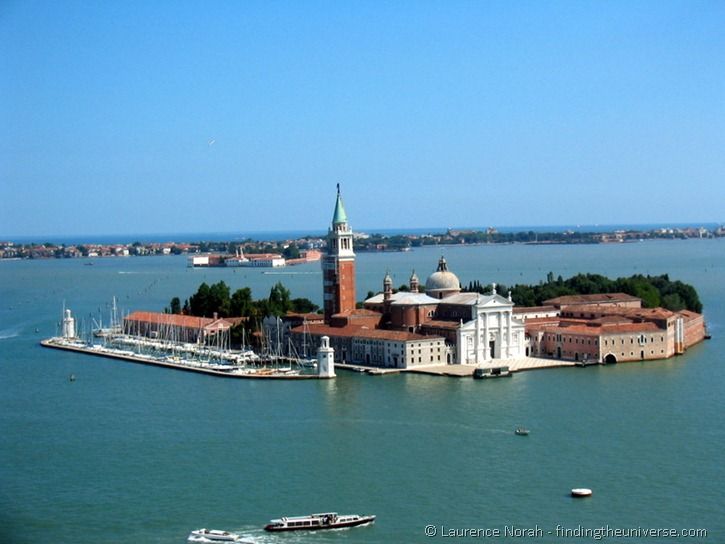
Island off Venice

There are many more islands, including Murano and Torcello. My point is – don’t forget that Venice extends beyond the central area that you will first come upon, and has plenty of opportunities for exploring! Don’t be afraid to jump on a boat and get out there… which brings me to my next point…

Take a boat ride

Now then. Venice is a city of waterways, and no visit to Venice is really complete without a trip on some form of water borne transportation.

If you’re travelling with your significant other, and your idea of heaven is a gentle meander down the back waterways of Venice, just the two of you, luxuriating on some pillows while a muscle bound man serenades you.. well.. you’ll sure be able to find an experience approximating that.

Although, as with the coffee in St. Mark’s Square, it’s an experience you best keep secret from your savings account.

If you’re not overly romantic, and you just want to experience Venice from the water, singing be damned, then you have no shortage of options. If your heart is set on a gondola, then you can take a gondola taxi from one side of the river to the other. It’ll be over quickly, but as least you can tick the gondola box.

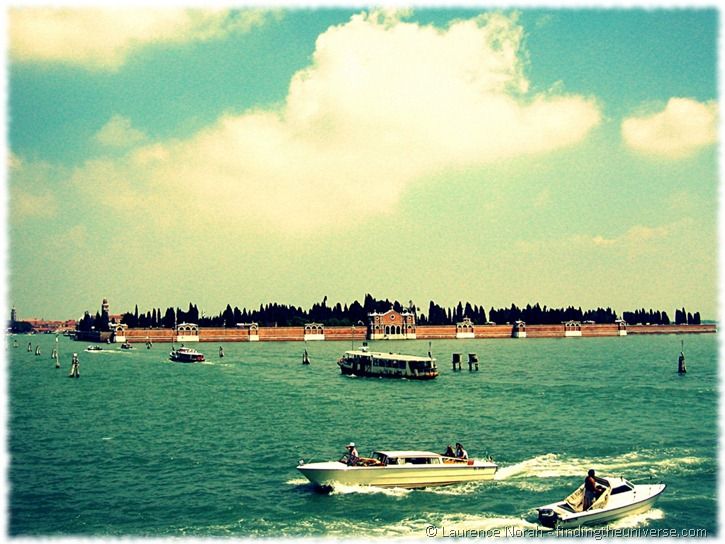
Venetian waterways and boats on lagoon

Alternatively, there are water taxis, water buses, and water sight seeing tours. Take everything you would normally find on a road, imagine it on the water, and you will find it in Venice. Whichever one you do, you’ll be sure to enjoy it!

When to go and other practicalities

Venice gets very warm (and very crowded!) in the summer months, although you can escape the crowds by hitting the back streets. My preferred time to visit would be the quieter shoulder months, when it is a little cooler and likely to be less busy. Although this is a tourist town, so don’t expect to be on your own whichever time of year you choose to visit.

If you want to visit the churches, remember that it’s common practice for there to be a dress code, which usually means no short skirts or bare shoulders. You don’t want to be turned away after queuing for a long time, so make sure you are dressed appropriately!

If you are planning a trip to Venice, don’t forget to check out Teletext Holidays for deals. I remember their TV campaign well.. you wouldn’t want to miss a bargain. There are regular flights to Venice airport from all over Europe, and you can also get here by train, bus.. or car!

Venice Panorama

So - have I sold you on Venice? Do you think it belongs up there as my favourite European city? Or are you firmly entrenched in the camp of people who believe that it’s a tacky, overpriced, overflowing tourist trap that just smells awful in summer? Hit up the comments below and let me know!

Saturday, February 18, 2012

Perigueux: what have the Romans ever done for us?

St Front cathedral exterior france perigueux unesco.png

If the title of this blog post makes little sense to you, then you should pause your whole life for a couple of hours and go watch Monty Python’s Life of Brian. Done that? Good.

Perigueux is a town with a remarkably hard to spell name in the heart of France’s Dordogne. It is the administrative capital of the region, and has held the title of capital for some time, ever since 200BC in fact, back when the Gauls ran France.

Of course, the Romans put a bit of an end to that, with their rampant empire building, so for a few hundred years this was a serious Roman city, before the Romans gave up the whole empire thing and moved on to driving funky scooters and coming up with romance.

Ruined Roman Temple of Vesunna perigueux France.png

After the Romans came that dark bit of history that no-one seems to know much about, after which came the Middle Ages, during which time all kinds of embellishments appeared around the city, like the Cathedral, which is one of the sights on the Santiago de Compostela pilgrimage.

What all this history means is that Perigueux is a rather interesting place to wander around, filled as it is with relics from over 2000 years of history. So wander we did.

The initial approach to Perigueux is, it has to be admitted, not totally exciting. The town has sprawled beyond its Roman and medieval roots and moved on to being filled with the sort of large commercial parks that you would expect to find in any big town.

Close your eyes as you come into the town though, and all is well. Assuming someone else is driving of course. Or you’re reading this in the future where driverless cars have become the norm.

Barriere Castle ruins France perigueux.png

There are two main parts to the city that are of interest to the visitor – the old crumbling roman ruins, and the slightly newer and less crumbly medieval bits.

The Roman Bits

We started with the crumbly Roman ruins. We visited the remains of the temple of Vesunna, a Gallic goddess, which was built in the 2nd century AD. This is a fairly imposing bit of construction, measuring 27 metres in both height and in diameter. The original temple would have been much bigger – now only the central and most sacred part remains. And it looks good, for its age.

perigueux amphitheatre ruins france roman.png

Beyond the temple we visited the very crumbly remains of the amphitheatre, now a public park, which has a children's playground in the middle and the ruins of the original seating around the rim. This was actually quite weird to walk around – the mix of ancient and new in the same place seemed quite out of place. Try imagining someone popping a couple of swings in the middle of the coliseum for an idea of what I mean. 

After exploring further Roman ruins, and the burnt remains of the 12th century Barriere Castle, sacrificed in one of the regions wars of religion, we headed up to the medieval town centre.

The Medieval Bits

This is absolutely dominated by the St Front Cathedral – a UNESCO World Heritage site. This is more impressive on the outside than the in, covered as it is in little cupolas and domes. Inside it is cavernously vast and sparsely decorated, a far cry from the usual lavishness one finds in these places.

Around the cathedral the twisty mazes of the largely pedestrian only medieval town wind and wind, these are an explorers paradise, with countless little shops and restaurants tucked away to be discovered, and endless scope for wandering. Which we did, at some length, before finding somewhere to fill ourselves with excellent French food.

Medieval city street france perigueux

If you’re visiting the area, Perigueux is a must visit. It’s easy to get to and from, having both a train station and airport, and forms an excellent base for exploring the region. Beyond the town, there are no end of sights to see, from the town of Brantome to the endless castles of the region. You won’t run out of things to do!

Wednesday, February 1, 2012

Face off: five European cities duel to the death

Cities of Europe Collage

I was going to write a nice post about my five favourite cities in Europe, but then I figured that wasn’t quite as exciting as putting them to the test in a knockout and seeing which came up trumps. Naturally, this will be an entirely objective post, based solely on fact.

Each round will feature two European cities, and I’ll work out which one I like better, allowing it to proceed to the next round. The city still standing at the end, wins! Let’s get this started with our five contenders. Rocky theme music is optional.

Round 1: Paris vs Rome!

Montmartre Cathedral

Lets see – two cities famous for being the romance capital of Europe. Sadly only one can carry that particular crown, and Paris wins my heart there.

Romance isn’t everything though. Rome has the upper hand when it comes to empire building, with the Roman Empire once spreading all across Europe. They’ve also got the religious angle down pretty well, what with being the seat of Christianity.

As far as old crumbliness and prettiness go – well, Rome and Paris both have their spectacles, but for me, Rome wins. Paris may have a steel tower, but Rome has so many ruins that you can often find ruins built on top of other ruins built on top of other ruins. Rome is the onion of ruins. Plus the ice cream is better. Victory to Rome!

Round 2: Berlin vs London!

Berlin Reichstag

On second thoughts, putting Berlin up against London may have been an error, what with the recent history between the Germans and the English. Still, I’ll labour on, and do my best not to mention any unfortunate football based incidents.

I am slightly biased, as I lived in London for a couple of years, and haven’t spent a massive amount of time in Berlin. Still, the time I did spend there let me see what a fascinating city it is.

There are visible reminders of the cold war all around – from the crumbling remnants of the actual Berlin wall to the incredible street art to be found all over the city.

It is also home to a vibrant club scene, wonderful palaces and churches, and some of the most inventive sausage sauces out there.

It’s not all over for London though. London has quirky markets, incredible pubs, and some of the most recognisable landmarks in the world. Plus I’m English. Victory to London!

Semi-final: London vs Rome!

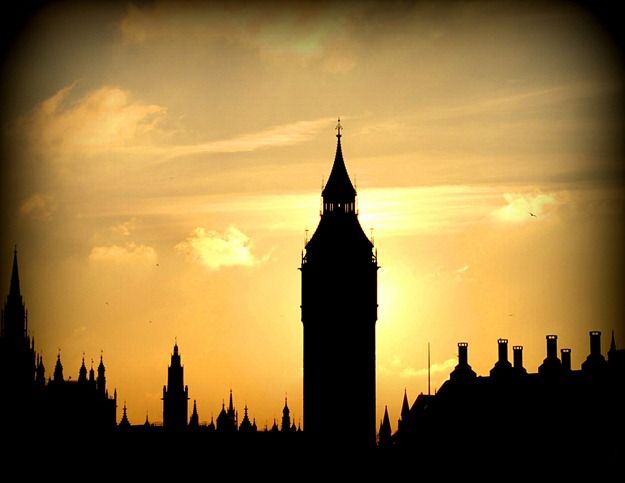
London skyline.png

So now I have two cities that are over two thousand years old, both of which owe a rather great deal of their look and feel to that previously mentioned empire, both of which I absolutely love.

Rome has some serious quirkiness going for it, which I am mostly basing on the fact that everyone drives tiny cars or scooters. This transport option is less popular in London, largely due to the presence of the deadly London bus.

Rome also has better weather, better ice cream, and a bit more crumbliness. London has markets that service goat curry, pubs that serve real, meaty beer, and the South Bank.

Ah, this was a tough one, but ultimately, London isn’t going to win this bout. Rome, as she was a couple of thousand years ago, is victorious. Alea iacta est.

Final: Surprise Contender vs Rome!

Coliseum Black and White

I did say this was a round up of five of my favourite European cities, and thus far only four have slugged it out, Rome emerging victorious.

My fifth city is a bit like Marmite. For those of you not familiar with this food stuff, marmite is a yeast based tar like substance that you spread on bread. The flavour is difficult to describe, and hard to appreciate unless you’ve been brought up on the stuff. The thing about Marmite though, is that you either absolutely love it, or you hate it. There is no happy in-between.

And the same can be said of Venice. Some folk absolutely adore the place, a city set in a swamp which is slowly sinking away. They will go on about the tiny backstreets, the magnificent piazzas and the fabulous ice cream. They will wax lyrical about the cafes, the glass sculptors, and the joy of getting lost in the pedestrian heaven that is a car free city.

Venice

Venice’s detractors, on the other hand, will bemoan that the place is tacky, full of tourists, overpriced, and smells like an open sewer.

Those people are wrong.

Which is why I am happy to declare Venice my overall favourite city in Europe! Rome has a lot to offer, but the magic that can be found in Venice is unbeatable.

I’d love to know what you have to say about my five picks! Did I miss one of your favourite cities off the list? Am I completely insane to have picked Venice? Share away in the comments below! And if you are planning on visiting some of these cities, why not check out the deals that Hotels4U have on accommodation, including London hotels and Paris hotels :)

Wednesday, January 4, 2012

A trip to Wilsons Prom, Victoria

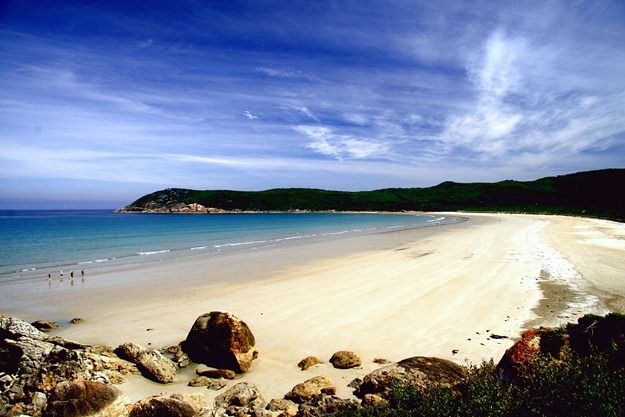
Norman Beach.png

Australia has no shortage of wonderful scenery and the state of Victoria is particularly chock full of the stuff.

From the sweeping road trip that is the Great Ocean Road to the towering Snowy Alps, from outback desert to lush rainforest - this really is a state that offers something for everyone.

One of Victoria’s most popular spots, particularly for lovers of the outdoors, has got to be the Wilsoms Promontory National Park, known affectionately to those in the know as The Prom.

On my year long road trip around Australia I spent a few days camping out in this park, and was able to appreciate some of the delights on offer. Here are some of my favourite things to do when visiting mainland Australia’s southernmost park!

Wander up Mount Oberon for splendiferous views

Normans Beach Victoria

I have a thing about needing to get to the highest point of my surrounding area in order to geographically align myself with my surroundings. Multiple towers, churches and domes have been scaled as a result of this need. Mountains too.

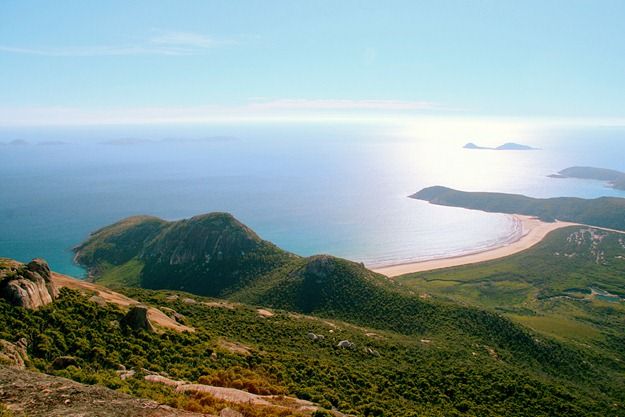
Whilst Mount Oberon isn’t the biggest mountain in the world, it does offer excellent views across the Prom, and the walk up is an easy hour return. Definitely worth doing for the views. When I was there I was lucky enough to be dive bombed by swallows at incredible speed. Which was different.

Camp under the stars

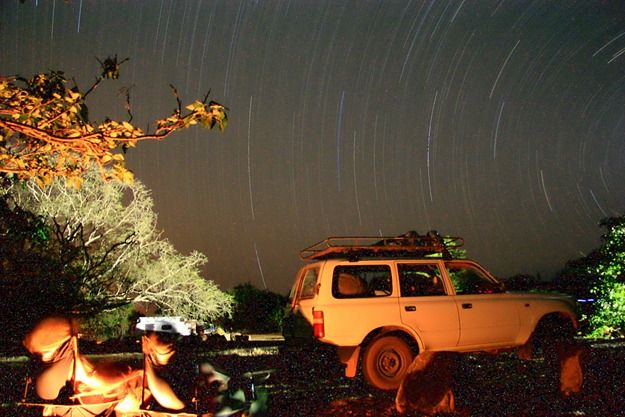
Stars over our campsite

There are a plethora of awesome campsites to choose from in the Prom, from outback wilderness requiring you to walk in with all your gear, to the high end luxury with hot showers style of camping that you will find at Tidal River.

We stayed at Tidal River, because, well, by this point in the trip campsites with hot showers were darn awesome. Plus it’s on an incredible white sandy beach, and is within a stones throw of some rather wonderful walking. But the main reason to stay at Tidal River is to:

Experience the outdoor cinema

I know, I recommend coming to a park full of glorious nature and then I suggest you ignore that and go to the cinema. But the cinema in the tidal river campground is pretty cool (a campground with a cinema! this place is serious luxury!), what with it being outside and everything.

Just bring plenty of mosquito repellent. And a bean bag. (You do go camping with a bean bag don’t you?)

Get squeaky on the beach

Coloured Rocks on Beach.png

From Tidal River campground, if the arc of pure white sand that is Norman Beach isn’t quite doing it for you, then you can hop over the northerly headland, and take a look at Squeaky beach.

Here you’ll quickly notice that the sand is a bit weird, and squeaks when you walk on it. Something to do with quartz crystals. It’s pretty cool.

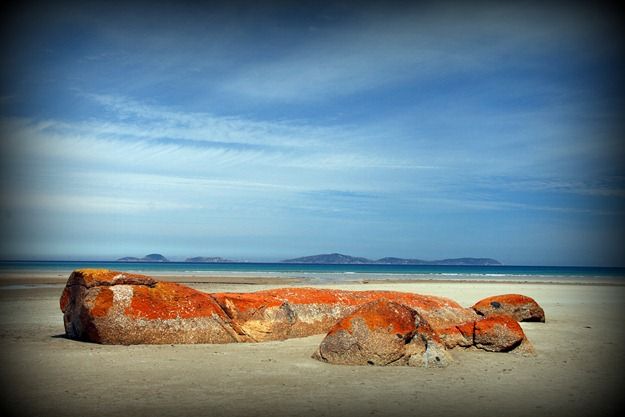
If squeaking sand doesn’t do it for you either (I’m dying here), then head south instead. There are endless headlands hiding beach after spectacular beach, and you can easily get your groove on away from the madding crowd in peace. There are even funky lichen coated boulders. What’s not to love.

And that was Wilson’s Prom! A truly magnificent park in an incredible state. Have you been? Would you like to go? Do you just want to share with the world how wonderful everything is? Get involved in the comments below, now with 100% more commentluv!Cloud coated mountain from Mount Oberon

If you are heading to Wilson’s Prom don’t forget to pick up travel insurance before you go. Get a travel insurance quote from HBF, and see if you can save!

Tuesday, December 27, 2011

Xmas and New Year in Edinburgh

Today’s sponsored post on spending Christmas and New Year in Edinburgh was put together in partnership with Joe, representing eurobookings.com. I love Edinburgh, and have visited on multiple occasions, – it is one of my all time favourite UK cities. Hitting up Edinburgh at Hogmanay, or New Year, is way up there on my to-do list!

Festive travellers are bound to be spoiled for choice when they hit the picturesque and quintessentially Scottish streets of Edinburgh over Xmas and New Year. And there’ll always be somewhere to stay with the huge array of hotels in Edinburgh city centre that are on offer during the festive period. So what has the city got going on that you should check out?

Christmas Market

Much like many of Britain’s larger cities, Edinburgh hosts a Christmas Market that offers fun for all the family, day and night. With fairground rides, speciality continental food stalls, gift stalls, a beer hall and the incredible Edinburgh Wheel, offering stunning views of the cities iconic landmarks, Edinburgh’s Christmas market is unparalleled. 

Not only this, but if you like to ice skate around Christmas, the market is in close proximity to one of the largest ice rinks in Europe!

Hogmanay

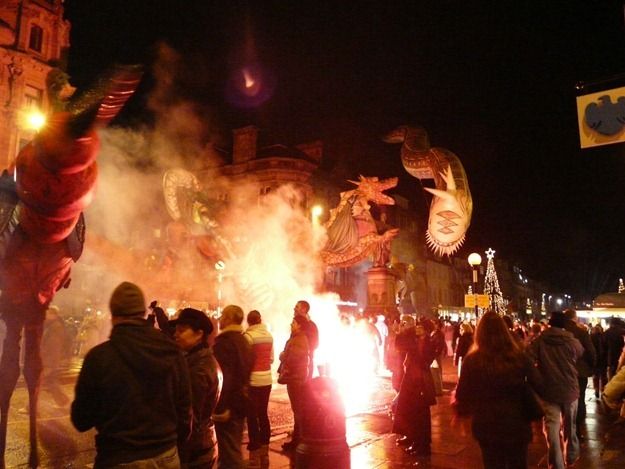
The streets of Edinburgh play host to an immense street party every single year on New Year’s Eve and truly are a sight to be seen. A torchlight procession creates the illusion of a river of fire through the city, and there's live music from some of the biggest and most influential artists around.

Hogmanay street party Edinburgh

This year, Edinburgh’s partygoers will be Primal Scream, Mark Ronson, Friendly Fires and The Vaccines, who will all play against the backdrop of Edinburgh Castle. More details on the Hogmanay celebrations and how to get tickets can be found here.

Shopping

The Old Town in Edinburgh is a fascinating place to enjoy a spot of retail therapy and to grab a few trinkets and bargains while you’re there. Lined with all manner of quirky boutique shops and independent eateries, the maze of streets that makes up the Old Town area really is unique.

The Sights

The Royal Observatory, Nelson's Monument and the National Museum of Scotland are all essential sights. Top of the list though, should be a trip to Edinburgh Castle.

Edinburgh Castle

This imposing building is perched on an edifice in the centre of Edinburgh, and is a magnificent castle to explore. There’s also a daily gun salute at 1pm from an actual cannon - not to be missed!

Princes Street

The main shopping street in Edinburgh, Princes Street provides the milieu for a wide-ranging programme of multi-cultural events between now and the end of December, from street artists to live music and even the Scottish Snowsports Festival!

Climb a hill

Edinburgh is a wonderful city to explore by foot. If you’re looking for a great view, you should consider taking a walk to the top of Calton Hill, which is right in the middle of Edinburgh. As well as having an amazing view, it is also home to the “National Monument”, an acropolis built in 1816.

arthurs seat view

If you’re looking for more hills to climb, then a walk to Arthur’s Seat, situated around a mile from Edinburgh castle, is another must. Looming 250m above the city, this hill offers incredible views across the city and surrounding area.

And that is that for Edinburgh! Thanks to Joe for helping put this one together. Have you been to Edinburgh for Hogmanay? Got any stories to share, or places you recommend to visit in Edinburgh? Do share them in the comments below!

Despite having been to Edinburgh many times, for some reason I have no decent photos of this marvellous city. So today’s photo credits go to DecoByDesign for Edinburgh Castle, Katy-Mac for the Hogmanay street shot, phault for the shot across Edinburgh to Arthur’s Seat, and hockadilly for the firework shot at the beginning!

Friday, December 23, 2011

My favourite bits of Paris

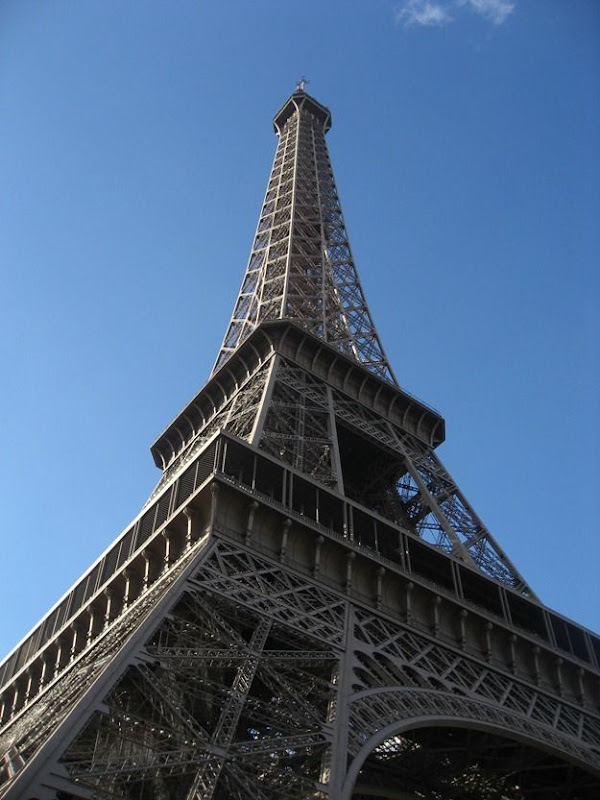
Eiffel Tower Paris Autumn 2

Ah, Paree. The city of love. A city that is a delight to visit at any time of year, be it for a sunny summers day stroll along the Seine or for a wander through the festively lit streets in Winter.

Paris is a city that I’m deeply fond of in Europe. It vies with Rome for being the capital of romance (personally I’m with Paris on this one), and, like Rome, has much to offer the visitor.

In today’s post I’m sharing with you some of my favourite bits of Paris. Much like Rome, Paris is a well visited city, so you’ll rarely be alone. However, there are myriad areas to get lost in, and its appeal year round means you can skip the crowds if you don’t mind risking the weather. Now, on to my Parisian highlights!

On my visits to Paris I’ve always stayed in a hotel, usually as a result of accumulating far too many Marriott points from a  long lost corporate lifestyle. These days though, I’d either be considering a hostel, or the flexibility of an apartment. If the latter sounds good to you, check out Paris apartments to rent from Oh-Holidays.com.

Notre Dame Cathedral

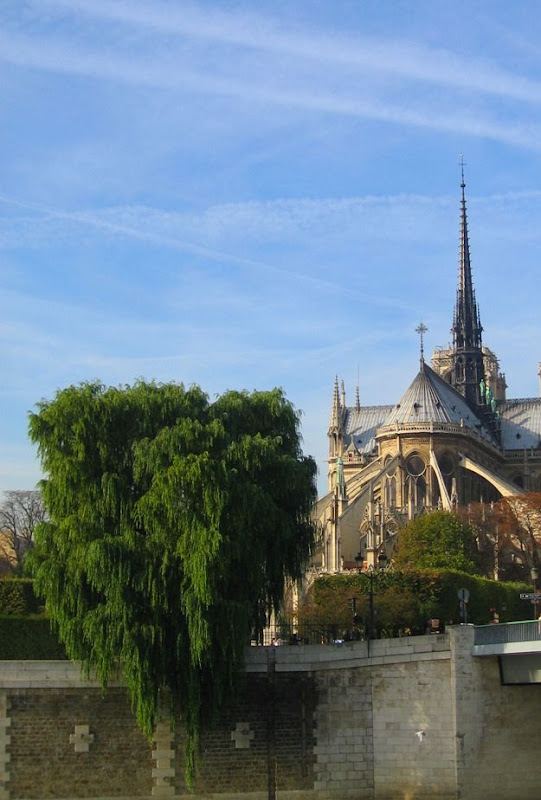
I’m a huge fan of the gothic style of architecture on Cathedrals, and you don’t get much more gothic than the Notre Dame de Paris. Famous for her flying buttresses, and for being the home of the Hunchback, Notre Dame is truly a sight to behold.

IMG_2797

She is beautifully situated on one of the islands on the River Seine, which means there are plenty of opportunities for wonderful photographs. You can also go into the Cathedral, free of charge, from where you can climb up the 387 steps to the top of the tower, or descend into the Crypt, although these activities do incur a fee.

Montmartre

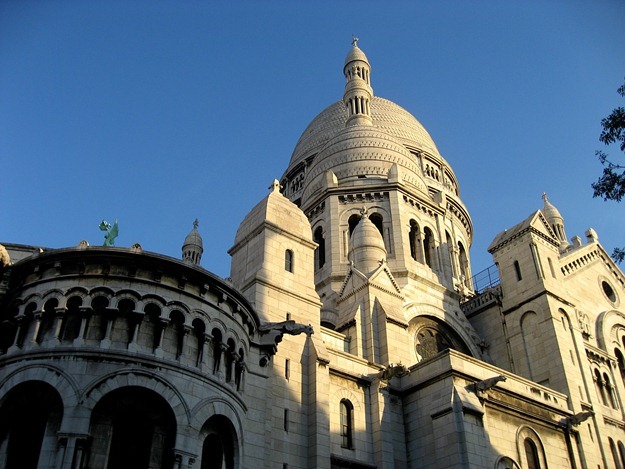
Montmartre is a beautifully bohemian area of Paris, named for it’s hill. Mont being “Mount” in French. This area has a lot to offer, not least being the spectacular views across Paris. Here you will find the beautiful Basilica of the Sacre Coeur, a magnificent church from whose dome you get an almost unrivalled view of Paris.

Montmartre is also famous for being a home to artists, and it was here that such artists as Van Gogh, Renoir and Matisse worked and were inspired. The famous Tournee du Chat Noir cabaret act was also homed here.

Montmartre Cathedral

My favourite attraction in Montmartre is the Espace Dali – a permanent exhibition dedicated to the life and works of surrealist Salvador Dali. It houses hundreds of his works, and is a must visit for any fan of melted clocks.

The Eiffel Tower

It’s impossible to visit Paris without seeing the Eiffel Tower, so including this fabulous structure here seems almost unnecessary. Just know that you really should take the time to get to the top of this magnificent steel tower and marvel at a structure that was hailed as the worlds tallest for 41 years.

IMG_2716

Everywhere you go in Paris you will be able to orient yourself by looking for the iron lady (as the French call her). It makes sense to get to the top and enjoy the views from the only place in Paris where you can’t see her. If you’re feeling truly decadent, you can even take in dinner at one of the two restaurants located within. The second floor option boasts a Michelin star, and is priced to match!

The Louvre

Perhaps most famous for housing the Mona Lisa (queue for a long time and then wonder how something so small has held the world spellbound for so long), the Louvre is the most visited art museum in the world. It is also very big, and would take an absolute age to see in it’s entirety.

Louvre Pyramid Paris

I’m not usually big on museums, but the Louvre is worth visiting even if you don’t go in, merely to take in the magnificent building that it is housed in, not to mention the Pyramid in it’s forecourt.

If you do decide to visit, I’d advise having a plan of what you really want to see, because this place is vast! And yes, if you do plan on seeing the Mona Lisa, turn up early. The  most famous painting in the world has her admirers.

Champs-Élysées and the Arc de Triomphe

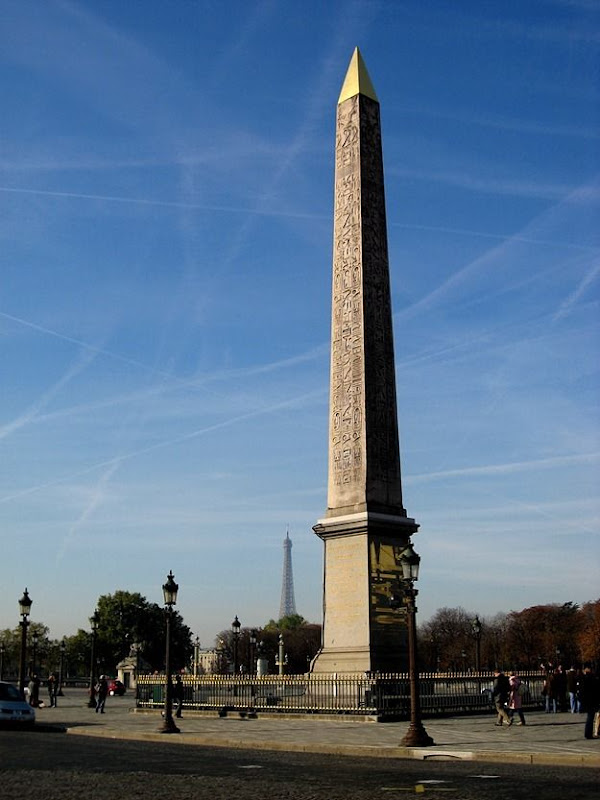
Beyond the Louvre, at the Place de la Concorde (where such dignitaries as Marie Antoinette and Louis XVI met a rather sticky end at the hands of the French Revolutionaries), is the start of the Avenue des Champs-Élysées.

Obelisk Place de La Concorde Paris France

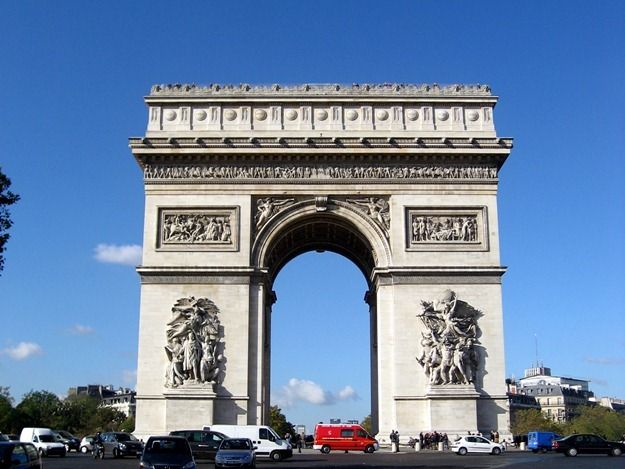
Nearly two kilometres long, this is Paris’s most famous shopping street, and if you are at all into fashion, or just walking down incredibly picturesque tree lined avenues, then a stroll down the Champs-Élysées is for you. Not to mention the fact that at the other end of the Champs-Élysées is the Arc de Triomphe, which ranks up there with the Eiffel Tower as one of France’s most recognisable landmarks.

Built as a war memorial to commemorate the French Revolution and Napoleonic Wars, the Arc sits at the centre of France’s most insane roundabout, where twelve streets meet and around nine lanes are available to choose from. Drive onto this at your peril.

Arc de Triomphe Paris

If you do make it across the roundabout (there are, thankfully, pedestrian tunnels), then you can go up inside the Arc de Triomphe to the roof and enjoy the view. Turns out there are a lot of places in France to get good views!

Food

It would be improper of me to talk about Paris without mentioning the food. France is a country which is obsessed with good food. There is a good reason the Michelin star system began here. There are endless places to eat, to suit all budgets.

I’d recommend going for a good long wander down the many side streets, perhaps in the Montmartre area, and finding somewhere that suits your budget and taste. Wash it all down with some excellent French wine in the company of someone you love, and let the magic of Paris enchant you.

Cemetery Père Lachaise

Including a cemetery in a list of attractions in a city may seem a bit weird, but the Cemetery Pere Lachaise is one of the worlds most visited cemeteries, and there is a reason for that.

Pere Lachaise is home to three WW1 memorials and is the final resting places of some of France’s most notable persons of the last couple of centuries. It is also home to a number of other famous folk, including Oscar Wilde and Jim Morrison.

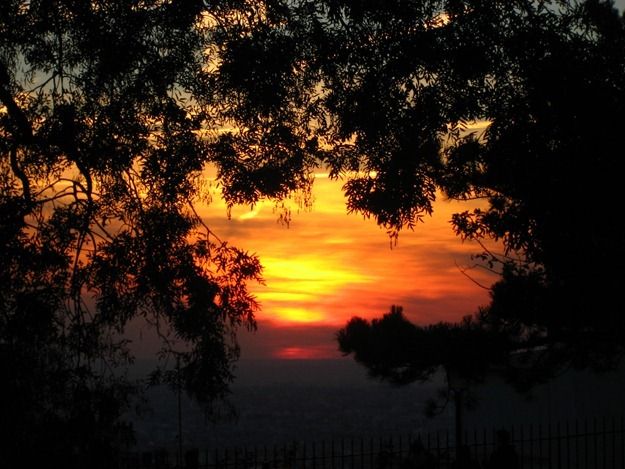
Sunset in Paris

It is tough to get buried in Pere Lachaise these days, as befits a place that is home to rock stars and artists: there is a waiting list.. The good news is that it is easy to get in while you’re alive, so if you don’t mind hanging out with a bunch of dead people, head on over and enjoy.

And that’s it for Paris! If you’ve got any favourite bits of Paris that you think are unmissable, or memories you’d like to share, head on into the comments! (links welcome!)

 
Bloggers - Meet Millions of Bloggers