
Once again with David this time to know all about 4 things to see in 2012, if not in loco at least online :) A big thanks to you David and let's go!
Why not make this the year you realize your travel ambitions by seeing some of the world's most enthralling spectacles? If you commit to witnessing four of the top events, sights and happenings over the next year, you'll finish it feeling wiser, happier and more invigorated. So book your flights, arrange your travel money and dig out your passport!
The London Olympics
This is going to be the big event in the UK's capital city this year and excitement is growing across the nation as preparations for the ultimate sporting occasion take place. You'll need to be fast to snap up the remaining tickets and there will also be large screens around the stadiums for fans to soak up the sporting atmosphere.
Book early for good quality accommodation, as the best is likely to go very fast. Do the same with train tickets and other advance bookings. You could make a week of it and also see the capital's myriad attractions while you’re there, for a genuine trip to remember.
The Northern Lights
The Northern Lights are on many a would-be traveler's wish list and are one of the most spectacular natural spectacles on the planet. There are different places to see the lights, such as Norway, Lapland, Iceland and even the northernmost parts of Scotland at certain times of the year. You can see the lights on land or on cold-water cruises, which are becoming extremely popular.
Marlborough Wine Festival
Why not take in some culture and visit one of the many wine festivals held worldwide to taste the latest creations from the vineyard artisans? The Brancott Estate in New Zealand's South Island is well worth a visit for its three-day festival of wine and food, with fifty wineries on hand to present their latest offerings and hold workshops. The festival runs every year in February and is a great starting point for seeing this beautiful part of the world.
Pamplona Bull Running
This is one of the ultimate Spanish festivals for those who love adrenaline and have no issue with bull fighting! The bull running begins at midday on the 6th July each year.
Thousands of visitors gather in the square to run with the bulls, celebrate with vast quantities of sangria and generally have a good time. Join in at your peril - tourists do invariably get hurt every year for failing to follow safety precautions and keep out of the way of the bulls!
Thursday, March 1, 2012
4 Things to Witness in 2012

Tuesday, February 14, 2012
Tips for buying and selling a travellers vehicle in New Zealand

If you’re heading to New Zealand for any length of time longer than a month, buying a vehicle is likely to be one of the most cost effective ways to see the country.
For example, renting a decent camper van for around a month is likely to cost you something in the region of $3000 - $4000 NZD. You can pick up a second hand camper van, depending on the time of year, for $2000 and up.
As well as being highly cost effective, the freedom of your own vehicle coupled with the wide spread availability of good value camping options gives you the opportunity to see the country at your own pace, and visit all of those funky little places that an organised tour may not be able to get you.
Here are some things that will help out when looking to purchase or sell a vehicle in New Zealand as a traveller, based on my experiences.
What to look for (or consider, when selling)

You are going to want to make sure that any vehicle you buy is mechanically sound. No buyer is going to reveal to you that they are trying to off load an oil leaking monster that barely makes it up a hill.
I’d recommend getting any vehicle that you are serious about purchasing checked at a garage. This won’t cost very much, and may save you a fortune in the long term.
On the flip side, if you are selling, keep copies of any services or garage visits that you have done. If you have invested time, money and love into your vehicle, demonstrating this to a buyer will reassure them that they are not buying a disaster.
When you are looking at a vehicle, there are some things to look out for:
- Tell tale drips. Engines, as a rule, should not be an oil or fluid filled mess. Any savvy seller will clean up their vehicle before letting you inspect it, but any chronic oil or other fluid problem shouldn’t be too hard to spot. If you are inspecting a vehicle that has been sitting somewhere for a while, check underneath it to ensure that the ground isn’t coated in oil. Check for leaks again after the test drive.
- Tyre tread. Don’t expect new tyres, but do check that the wear on the tyres is even – i.e. that one side of the tyre isn’t more worn that the other. Uneven tyre wear can mean problems with vehicle tracking, and may cost you money down the road.
- Handling and engine. You will absolutely need to take the vehicle out on a test drive prior to purchase. Ensure that the brakes work properly, that it goes up and down through the gears smoothly, and that clouds of smoke don’t come out when you’re going up a hill, or accelerating hard, or even when you start it. Ensure that the vehicle doesn’t pull to one side, or the steering wheel vibrates terribly.
In an ideal world, you will be able to try and start it cold, although this may not always be possible. Listen to the engine for weird noises as you go along. Anything unusual could be a sign that something is wrong. - Fluid levels. It is worth checking the various levels in the vehicle to see if there is anything amiss. Any savvy seller will ensure things like the power steering fluid, brake fluid, radiator and oil levels are nicely topped up, but it doesn’t hurt to check. Any older vehicle is liable to burn some oil – ask how much.
- Spare tyre. Check that there is one, what condition it is in, that you know how to access it, and that all the tyre changing kit is present and correct.
- The add-ons. Don’t get too excited about the “accessories” that the vehicle may come with, or the funky paint job. These may be nice to have, but your purchasing decision really should be based on the mechanical soundness of the vehicle rather than the cute disco ball and funky flowers down the side. Nearly every travellers vehicle should come with a full set of cooking gear and other bits and bobs, probably handed down from traveller to traveller. Consider it a flavour enhancer.
- Windscreen, paint and rust. New Zealand roads are not always smooth layers of hard black bitumen. In fact, it is inevitable that any vehicle you buy will have driven on a selection of exciting gravel roads. You’ll want to check that the windscreen doesn’t have any serious cracks as a result of this. Also, give the paint job a good look over. A cheap can of spray paint can hide a multitude of rust spots from a casual observer. And don’t forget to look at the roof too. Finally – check the exhaust system isn’t a crumbling rusted pipe.
- General upkeep. Whilst the tidiness of a vehicle isn’t always a reflection on how good of a deal it is, a well kept vehicle is always going to be a more positive option. When selling, make your vehicle look as nice as it possibly can to attract buyers. When we were looking, one of the vehicles had a used condom on the floor. We didn’t dally on that one. This was ours, prior to a successful sale. Full marks to my better half on this particular accomplishment!

What to pay
Prices for vehicles in New Zealand for travellers fluctuate enormously depending on the time of year.
The peak season for buying and selling is between Oct/Nov and Jan/Feb, or the summer months. Prices can double or triple at these times, with vans going for anywhere upwards of $3000-4000, with over $7000 not being unheard of. Vehicles also sell very fast at this time of year, so if you find something you like you will have to move quickly.
Conversely, in the deep off season around Winter, April – August, prices crash, and you can pick up some serious bargains, with prices as low as $2000.
The price of a vehicle, as with anything, is entirely based on demand. Obviously, newer vehicles with lower mileage will cost more. Also, larger vehicles, such as long wheel base models, or vehicles with a high roof that let you stand up, will demand a premium.
If you are able to plan your trip accordingly, you could buy in the off peak and sell in the peak season, and actually make a small profit on your vehicle, which was what we managed to do. Which beats renting by some distance!
Documentation and paperwork

It is unlikely that any vehicle you purchase from a traveller is going to have anything approaching a full service history. However, there are some bits of documentation that any vehicle will need to have to make it road legal, that you will then need to hold onto for a sale.
- WOF. The Warrant of Fitness is equivalent to Australia’s pink slip, or the UK MOT. It demonstrates that the vehicle is safe to go on the road. A WOF is valid for six months from time of purchase. Note that a WOF is not a mechanical certification – it is more about things like working lights, tire tread and seatbelts. It says nothing about the state of the engine. A WOF costs between $35 and $50. If the vehicle you are buying has a power hook up for camping, then it will also need an electrical WOF.
- Rego. Registration is essentially your road tax, and can be bought in three, six, or twelve month blocks.
- RUC. If you are buying a diesel powered vehicle, then you need to ensure it has an up to date Road User Charge certificate. For some weird reason in New Zealand, diesel is not taxed at the pump. Instead, you pay a charge per 1000km that you drive, of around $50, in advance.
When buying, you need to make sure that a vehicle has all of the above in place – normally these are displayed prominently on the windscreen. The REGO and RUC can be bought at any post office. A WOF can be done at most garages, or specialised WOF only centres.
You should be able to ask to see the last WOF report, which will highlight any problems that arose in the check - although holding onto this piece of paper isn’t a requirement of sale. The seller may also be able to show you the most recent service report, if there has been one. Don’t count on it though.
If you are selling, and you have regularly been keeping your vehicle serviced, being able to show this documentation will make your vehicle more attractive to a buyer.
Once you have agreed on a sale, there is a $10 fee to transfer ownership of the vehicle from seller to buyer. This is a very easy process requiring a couple of forms that can be done at any post office.
Where to buy and sell
The majority of travellers arrive into New Zealand in Auckland, which whilst not being New Zealand’s greatest city, is handy for getting yourself set up. Here you have a number of options for purchasing and selling.
Online
One of the most popular (and easiest) ways to sell a vehicle is online. There are a number of places to do this, although you should always arrange to view and test drive the vehicle if you are interested in it.
- Gumtree New Zealand. We bought and sold our vehicle on gumtree. It’s probably the most popular online noticeboard in New Zealand for travellers looking to buy or sell a car. Be aware though, there are a number of scams operating. Be particularly wary of anyone wanting to buy a vehicle from you unseen, or wanting to pay in anything other than cash.
- The backpacker notice board. As well as jobs, this is a decent place to look for a vehicle, but it doesn’t currently offer the facility to share images, so most folk use gumtree instead.
- Trademe. Trademe is New Zealand’s equivalent of eBay, and is very popular with Kiwi’s. However, as listing on Trademe costs money, most travellers won’t bother with this one.
Car Markets
In Auckland, there are a number of car markets which charge a fee for folk to attend, where you can buy and sell a vehicle. These are often a good way to get a good idea of what is currently available for what price, and are worth a visit for that reason alone. There are two main place to consider:
- Backpackers car market – this is a very popular option with backpackers, as it provides a one stop shop for traveller to traveller vehicle sales. They can sort you out with all the paperwork, provide insurance, and there is a garage over the road for mechanical inspections. However, our experience was that vehicles here were far more expensive than the other options, and we heard some negative feedback about the place from fellow travellers. It also featured recently on a TV programme in NZ, where undercover reporters showed that around 40% of the cars are actually being sold by dealers rather than backpackers. So buyer beware on that one!
- Ellerslie Car Fair – this Car Market is held once a week on a Sunday. There is a $35 fee for sellers, and there are on site vehicle inspection services. This is a really great place to visit as a buyer to get an idea of what is on offer. As a seller, be aware that a lot of local dealers visit here looking to snap up a bargain from desperate travellers, so don’t get talked out of a fair price for your vehicle.
Noticeboards
If you are staying in a hostel, it will most likely have a noticeboard, which will probably have a swathe of leaflets from fellow travellers looking to sell their vehicle. Supermarkets and cafes will probably also have noticeboards that are worth taking a look at.
Insurance
It is not a legal requirement to have car insurance in New Zealand. However, it is not a bad idea to have third party insurance to cover the cost of any unexpected damage to someone else's vehicle. A year of third party car insurance specifically aimed at travellers will cost in the region of $250, and can be picked up through someone like BBH, or the previously mentioned Backpackers car market.
Rules of the road

New Zealanders drive on the left, and speed limits and distances are given in kilometres.
The road rules are not that different from the rest of the world, apart from the incredibly weird rule about giving way to traffic turning across you, which has proven so confusing to so many drivers that as of the 25th March 2012 it is being cancelled. Find out more about that over at the New Zealand Transport Agency. Otherwise, stay safe, and enjoy your travels in New Zealand!
I hope this post has helped you a little bit with buying a selling a vehicle in New Zealand. I spent a year travelling New Zealand in a van I bought. This ended up costing me very little, as I sold the van at the end, so the only costs were on-going maintenance and fuel.
Due to the seasonal price variations of travellers vehicles, I was even able to sell the van for a little more than I bought her, meaning this process was a real bargain, compared to say renting, where the money would have just been thrown away. The only sad part was saying farewell to our faithful travelling companion :(
If you found this post helpful, why not check out the rest of my New Zealand guides, which include ideas for finding a job, hooking yourself up with free internet, and must visit destinations on the north and south islands!
Sunday, January 22, 2012
Three stupendously awesome burgers
I would make a terrible food blogger. Here’s a post about three phenomenal burgers, and I have no pictures of any of them to share with you.
This was probably a testament to the incredible nature of these beasts – there was simply no time for pause and reflection. It was just eat or.. well. Actually, that was just it. Eat. Instead of photos I’ve used my best Paint skills in order to recreate these burgers for you.

You’ll probably notice I’m not very good at Paint.
Without further ado let me introduce my three favourite burgers from my time in Australia and New Zealand. Other countries will probably follow, once they’ve caught up to the burger making technology that our antipodean cousins have already mastered. In ascending order of greatness, I’ll start with number three… the
Vegetarian burger of Tasmania
Sweet mother of god you are probably thinking, (or sweet mother of Dawkins, if you’re of the atheist bent) the man is a fool. He’s starting off a post about burgers with a vegetarian option. Is there nothing sacred left in the world? Apparently not.

Way down in the town of Launceston on the island of Tasmania, there is a cafe. Which only serves vegetarian food. A meat based option was never going to be on the cards here. So I ordered the lentil burger, which came with a satay sauce, and was served on a bed of something leafy.
This, when it arrived, was a testament to what great vegetarian food is supposed to be. Incredible flavours, unexpectedly blended together to form a taste sensation like no other. A must. If every cow died tomorrow, I’d be safe knowing that this burger is out there as a standby until science figures out how to grow cow meat in vats. Enough now of the non meat options. Let’s move on to:
The burger with the lot
Australia was the first place in the world where I learnt that beetroot is a viable burger topping. Previous to my adventures down under, I had had no idea that such a thing was feasible, let alone edible.
In Australia, when you order a burger with “the lot”, you quite literally get a burger with pretty much everything you can imagine stuffed on top of it. Including a slice of beetroot.
My first memorable experience of such a feast was in the Western Australian town of Kununurra, (try spelling that after a couple of whiskies).

In Kununurra, having just come from a few weeks living off tinned food in the bush, it seemed only fair to try out the local delicacy. Which in this case was a burger served with the aforementioned lot.
It would be unfair to describe this burger as the largest I’ve ever had, as that honour goes to the next burger in my list. But certainly up to that point in my life, this was up there with the greats.
A mound of burger sat atop a mighty bun, sagging with the weight of accompaniments which included pickle, beetroot, fried egg, shaved carrot (they really are a bit odd in the outback), artery clogging amounts of cheese, pineapple, onion, bacon… yes. This was the sort of food that probably killed Elvis.
So how do I go about beating that? Well, only with the most amazing burger I’ve ever eaten. I introduce the, spoken of only in hushed whispers…
Fergburger
If you’ve had the pleasure of visiting Queenstown on the southern island of New Zealand, you will probably be aware of the local legend that is Fergburger.
Word of this establishment reached me during my time on the North island, some 1000km away, when I was manning a hostel reception. Travellers would ask me to recommend a local burger establishment. Usually, I’d recommend a venue, which in my mind served admirable meaty feasts, only to be asked, in soft tones, if I’d ever had a Fergburger. I would reply no. They would peer at me mournfully.

Because it turns out, no burger joint in the world, or at least, Rotorua, that I could recommend, would be able to serve up anything comparable to the Fergburger, A fact I learnt for myself when I eventually made it to the establishment in question.
There was no doubt in my mind, upon arriving at this burger joint, that I was about to experience a once in a lifetime burger. And since this was likely to be a once in a lifetime experience, I immediately ordered the largest burger available on the menu – the “Big Al”.
This thing, when it arrived, put previous burgers in my life to shame. It was home, for example, to two fried eggs. Somewhere. Competing for space in the bun with two massive slabs of burger. And bacon. And of course cheese. And onion. And Aioli. And, because New Zealand is practically Australia, beetroot. And more things. The whole thing was at least the size of my head, and jaw dislocation was looking to be a serious problem.
I did order fries to go with it. These weren’t really necessary, and I had them cold for dinner instead.
The experience was incredible. Even if I then did need a little lie down.
Those were three of my most favourite burgers from two years of careful burger sampling around NZ and Australia. Do you have a burger that you think could top these? Share away in the comments below!
Saturday, January 7, 2012
Tips for finding a job when travelling in New Zealand

New Zealand is a fabulous country to travel in. With the working holiday visa scheme, it’s also a place where, as a traveller, you can find work to supplement your travel budget.
I talk more about the benefits of travelling with the working holiday visa scheme in this post.
In today’s post, I want to share with you my tips for finding a job when travelling in New Zealand, based on my experiences during my year long trip travelling and working there.
Get the basics right
There are some general basics when it comes to finding work that are universal wherever you are.
Visa
To work in New Zealand for pay you need a work visa. A normal holiday visa isn’t enough.
The year long work and holiday visa is generally what most travellers will use – it is valid for a range of nationalities and is relatively easy to apply for online. Find out more at the New Zealand Immigration website.
Tax number / Bank account / Phone number
Anyone working in New Zealand needs an IRD number for tax reasons. You can apply for one on the New Zealand Inland Revenue website, here.
Normally your employer will deduct tax from your salary before you receive it. Whilst a bank account isn’t mandatory, you might find it makes your life easier. When I was in New Zealand, i found Kiwi Bank, run by the post office, to be the easiest (and cheapest!) banking solution.
Also, you’re going to want a local phone number so prospective employers can contact you. A pay as you go SIM card from someone like 2degrees can be picked up very cheaply nearly anywhere.
Resume / Experience / Covering letter
As with anywhere else in the world, when you apply for a job, you will need to demonstrate that you have some skills or experience that make you a good fit.
The best way to demonstrate this is with a well written resume, also known as a Curriculum Vitae (CV).
It is possible that the job you are applying for may not match previous work experience. In this case, try to work out the similarities of skills that previous roles have required, and highlight these in your CV. For example, you may never have waited a table in your life, but if you have experience working with people, handling cash, or in a team, bring that out.
Your CV shouldn’t be more than two pages, and should just highlight your main skills, strengths, experience and qualifications, including things like having a driving license. Prospective employers don’t want to wade through pages of irrelevant trivia about your life.
When applying for a job, a covering letter introducing yourself and bringing out your key strengths and experiences relative to the role in question is a must. This will show that you know what is required of the job, and why you are right for it.
Presentation.
If you are successful in your application, or are applying in person, don’t forget how important personal presentation is. You may have been travelling out of a backpack for the last two years, with the happy notion that personal hygiene is for other people, but no-one is going to employ you if you look like you just fell out of a tree. Generally.
Obviously, adjust your appearance to suit the role – you probably don’t need to turn up in a suit for a job as a cleaner for example. Some sectors of work, like fruit picking, will probably be less particular, but don’t let a great role go because of your fear of some soap.

The types of work available
Specific types of work are particularly suited to the transient nature of a traveller – mostly these rotate around seasonal demand. Particularly popular in New Zealand for travellers are jobs in the following areas.
Hospitality
New Zealand is a very popular tourist destination, so roles in hospitality are usually available. These can range from waiting on tables or coffee shop work, to cleaning, to reception work in hostels. Prior experience isn’t always necessary for many of these roles.
Agriculture
Fruit growing is big in New Zealand, and at certain times of year, demand for workers is huge. From fruit picking to fruit packing, there are all sorts of jobs available for people who aren’t afraid of physically demanding, repetitive work.
Personally, I am afraid of physically demanding and repetitive work, so I never gave this a go. Some tips I heard from other travellers though included going for the pack house jobs rather than the picking jobs, as pack houses aren’t affected by the weather. Just be prepared for long, hard hours.
Ski season
New Zealand has a lot of ski fields and in the winter months, they need a lot of people to work at them. Unfortunately this work is very sought after, so you need to apply well in advance and ideally have some prior experience.
If you’re a keen skier or snowboarder though, this can be incredibly rewarding stuff, as the benefits usually include lift passes and the like.
WWOOF’ing
World wide workers on organic farms is a scheme that aims to link people to exchange work. Initially this was farming specific – you did some work on a farm in exchange for accommodation and food, and got a great experience out of it.
In New Zealand this concept has been expanded somewhat, unofficially. You can work in exchange for your accommodation in a variety of roles, including things like cleaning in hostels in return for your accommodation
These roles can be great for short term money saving, and crucially, as you are not being paid, don’t generally require a work visa. So for saving money on accommodation - one of the main expenses as a traveller – these roles can be wonderful.
A word of warning however. Do make sure that you are getting a fair deal. I have seen adverts for roles requiring almost a full time commitment in return for very little. Work out the value of your contributions using the standard minimum hourly wage in New Zealand (around $13 at time of writing), and compare it to the value of your accommodation (dorm beds are around $20-25) and other benefits/experience. If you feel the deal is unfair, stay away.

How to find a job
So you’ve got your Visa, your tax number and your CV ready. Your bank account is primed, and ready to accept some cash. Now you actually need to find yourself that perfect job. Here are some places to look:
Online resources
- Trade Me – Trade Me is New Zealand’s equivalent of ebay or craiglist, with all kinds of stuff on offer, including jobs. It’s not traveller specific, but is a very popular place for job postings.
- Backpackerboard job listings – a listing of jobs specifically targeted at backpackers. Lots of fruit picking and hospitality roles here
- Seasonal Jobs – predominantly focused on seasonal fruit picking work, this site has all sorts of jobs of a seasonal nature.
- BBH Board – Focused exclusively on the hospitality industry, this board offers roles working in hostels and other hospitality areas across New Zealand. There is a section specifically for BBH hostel roles, and one for more general vacancies. Work is largely of the work for your accommodation variety, but paid jobs do pop up.
- Gumtree – another noticeboard with all sorts of things wanted and for sale, Gumtree also has a jobs section for all kinds of roles.
Offline options
As well as scouring the internet for jobs, you could also try the following:
Recruitment agencies: There are a number of recruitment agencies around the country who have offices where you can pop in and drop off your CV. They will then find work for you.
Noticeboards: most supermarkets / hostels have a noticeboard section, where casual job offers may be posted. Always worth a look.
Get on your feet: If you’re after a job in a hostel or other customer facing role, you could do worse than walking around the local establishments and just asking. You may strike lucky. Always have a couple of copies of your CV on hand just in case.
Ask around: If you’re looking for work, a good idea is just to ask the people you meet as you travel. Other travellers may know where work can be found. Or you could ask in the local pub. Don’t be afraid to put yourself out there. The worst thing that can happen is that someone will say no.

And that is that for my guide to finding work in New Zealand. Have you been to New Zealand on a working holiday visa? What were your experiences? Please share it in the comments below!
Saturday, December 31, 2011
2011 in photos
We’re on the cusp of entering a New Year. Before we go forward though, I’d like to take a bit of time to have a look back at 2011. I’ve decided to do that in photo form, with photos to represent every month of the year that’s gone. Let’s go!
January

The year started with us working at a small campsite in the Tongariro National Park on New Zealand’s north island. The work wasn’t too stressful, and we got a lot of spare time for wanderings, including some epic walking, and even a bit of DIY caving. Above shot is Mount Ngauruhoe in the Tongariro National Park.
February

In February, still in the Tongaririo National Park, we ramped up the search for Gollum, as part of an on going quest to find Middle Earth in New Zealand. Above is Mount Ruapehu against Mangawhero Falls.
March

In March we ended our job at the Tongariro Holiday Park and moved to managing a hostel in Rotorua. But in between we took a tour of the west coast of New Zealand’s north island, where the highlight was scaling Mount Taranaki. My favourite day hike in New Zealand! Above is the path up Mount Taranaki, below is me at the summit!

April

By April we were firmly ensconced in a role running a hostel in Rotorua. Here we got to do all sorts of awesome things, including rafting a 7 metre waterfall, rolling down a hill in a giant ball, flying down a mountain in a kart luging and soaking up the local geothermal waters. Awesome times. Above is Sulphur Point at Lake Rotorua.
May

The hostel gig didn’t last quite as long as planned due to a misunderstanding over pay. So in May we hit the road in earnest, and eagerly took in New Zealand’s East Cape, continued our Middle Earth adventures with a trip to Hobbiton and then headed south via some Art Deco and the Wairapapa Coast to the inter island ferry and New Zealand’s south island. Above is Tolaga Bay beach on New Zealand’s East Cape
June

June was absolutely jam packed with adventure as we explored New Zealand’s quite frankly stunning south island. From glaciers to sounds, from beaches to mountains, this island has absolutely everything a lover of spectacular landscapes could want to see. Above is the Queen Charlotte sound at the northern end of the south island.
July

Our wanderings on the south island continued in July, as we took in the east coast of the south island. Here we found France in New Zealand, a whale crazy town full of seals, and stumbled across the locations of some of New Zealand’s most scenic toilets.
It also saw our return to the North island where our journeys took us to transsexual aliens, incredible waterfalls, 4000 year old trees and the entrance to the afterlife. A busy month! Above is Akaroa Pier on the Banks Peninsula
August

After the hectic travelling of the previous couple of months we decided some down time was in order. We found a stunning campsite located on Muriwai beach, where we took a lot of long walks, admired the local cormorant colony, and watched countless incredible sunsets.
We also spent time preparing Bernie, our campervan, for sale. And sadly, at the end of August, we bade her farewell, and headed out of New Zealand. Above is the surf watch station on Muriwai Beach and below is us saying goodbye to Bernie as her new owners move in. Sniff.

September

September brought a return to Europe, which started with a couple of months in Germany. In this time we did some exploring of the local area, I learnt all about weeing in space, and we managed to fit in a trip to Luxembourg. Above is the Grand Ducal Palace in Luxembourg
October

October saw us working out our plans going forward, which involved the purchase of a new potential campervan for European exploration, and the planning of a move to France. It wasn’t all hard work though – we did manage to fit in some partying and take in a friends wedding!
Above is the wedding bus, below is what I get up to when I’m not taking pictures of scenery.

November

November was another big month, with a move to France being the main adventure. I even managed to change gender. We were busy getting to grips with the new lifestyle (and unpacking!), but managed to find time to do some exploring, including taking in our local Venice. Above is an old stone house in the town of Montbron.
December

And finally, to December. Still in France, still getting used to life in a new country. We’ve sampled a lot of local food, inherited some chickens, and spent some time getting to grips with the local castles. We also distinctly didn’t go to the Seychelles, but made up for it with some local carol singing. Now that’s how to see in a Christmas! Above is the Chateau Lastours ruin.

So that’s that for 2011. Here’s to 2012, and all the adventures that that is going to bring! Have a great one, and of course, thanks to you for all your support so far! Have a fabulous 2012!
Tuesday, November 29, 2011
Announcing the New Zealand 2012 Calendar!

Or what if you don’t have any wallspace to fit a giant canvas of my work (because, really.. you do want a giant canvas of my work, don’t you?)
Well, I have come up with a brilliant solution to the problem of choice, in a handy and compact package – I’m delighted to announce the availability of my first ever calendar, showcasing some of my favourite photos from my year in New Zealand.
Featuring no less than 19 of my favourite pictures from New Zealand, this is the ideal way to get as many of my favourite photos onto your wall as possible, whilst also helping you remember which day of the year it is!
For additional wonderfulness, the calendar features UK and US holidays, and goes all the way through to February 2013. I know, two extra months for the price of twelve. I am indeed generous.
So if you’re looking for wall space fillers, stocking fillers… presents to give to people you just couldn’t think of presents for before… your search is officially over.
Plus.. for the first two weeks of sale I’ll be offering a 10% discount on the list price!
The calendar is being sold from Lulu.com, which means it can be bought in Pounds, Euros or US Dollars, and shipped to all sorts of places in a cost effective and rapid manner. I have no idea why you are still reading this… head on over to lulu.com and grab yourself a photographic bargain!
Wednesday, November 16, 2011
My five favourite day hikes in New Zealand
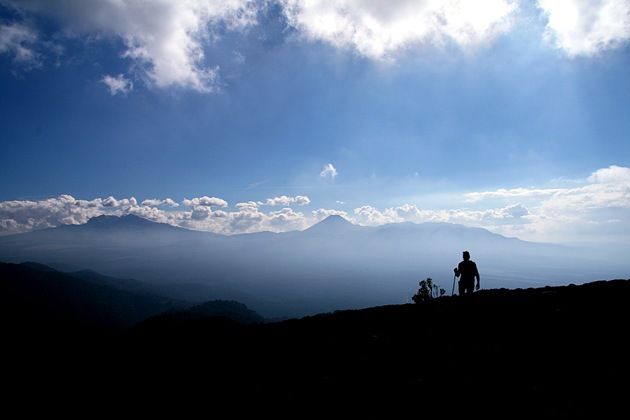
After a year in Australia, I summarised my three favourite day hikes in that wondrous country.
It seems only fair therefore to give New Zealand a similar treatment, particularly since hiking (or tramping, as it is known locally), is major highlight of any visit to New Zealand.
All the hikes in this section are possible in a day for a reasonably fit person. If you’re not a regular hiker, I’d highly recommend giving my guide to preparing for a day hike post a read through, it’ll help you prepare properly for any trip you undertake.
Hiking is an amazingly fun sport with tremendous reward, but as with any outdoor activity, there is an element of risk – preparation is the key to success!
Worrying uncle role aside, let me now talk about five of my favourite day hikes in New Zealand (because three just isn’t going to be enough to cover it!)
Mount Cook
Mount Cook is New Zealand’s highest mountain, towering above it’s spiny brethren in the southern alps. Climbing to the top of it is not the sort of thing one tackles as a day jaunt – this is serious mountain climbing country which has been tackled by world famous climbers such Edmund Hillary.

However, you can get some epically rewarding day hiking achieved around the base of this mountain, starting from the Mount Cook village.
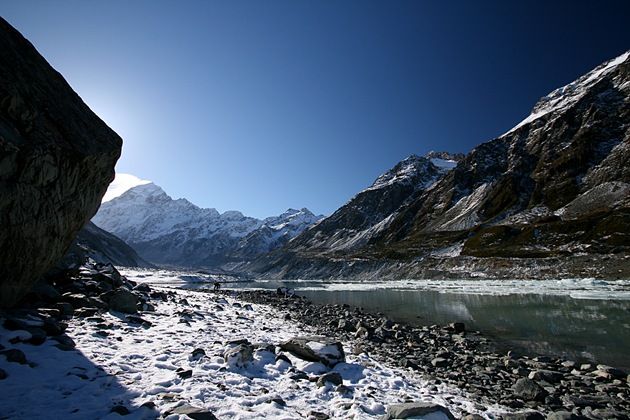
One walk that stood out for me in this area was the walk to the lake at the foot of one of Mount Cook’s glaciers, a three – five hour return walk that crosses snow covered boulder fields and a number of glacially fed startlingly blue rivers. The walk isn’t particularly tough, other than being potentially slippy due to snow and ice, but the views are absolutely mind blowing, as Mount Cook looms over you, with snow coated mountains all around. Enthralling stuff.
Tongariro Alpine Crossing
No summation of day hikes in New Zealand would be complete without mention of the Tongariro Alpine Crossing – the walk which most people just refer to as “the Crossing”. This is a 20km, 6-8 hour one way hike across the remains of Mount Tongariro, a volcano which, before it blew its top, was easily New Zealand’s highest mountain.
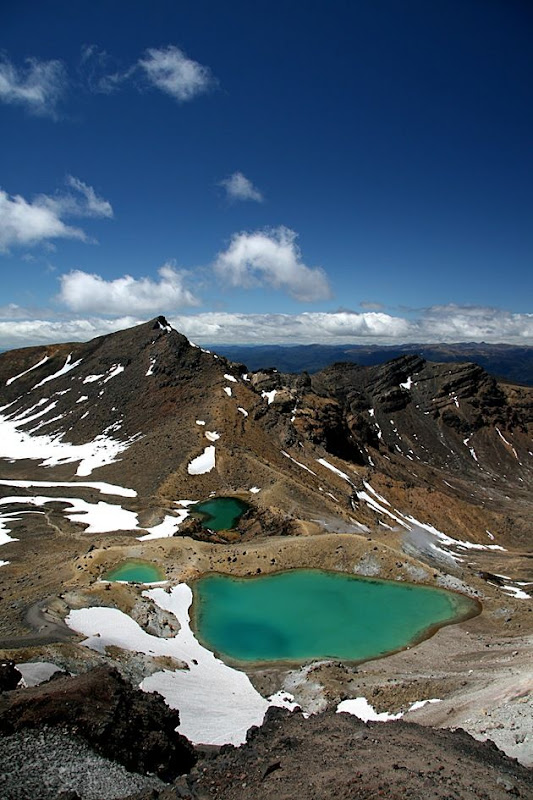
These days the mountain is a couple of thousand metres lower than Mount Cook, but the walk, across craters, around smoking volcano cones (this area is still very much active), and past lakes whose colours have to be seen to be believed, really is a must do.
Unfortunately, this is one day hike that is on the must do list of pretty much everyone who comes to New Zealand – so don’t expect to be hiking alone. On busy days upwards of 1000 people will be tackling the hike, so it can feel like more of a commute than a walk with nature.
You can avoid the crowds by visiting either earlier in the season (around October time) or much later on. Alternatively, try taking the Mount Ngauruhoe side route instead. This is a seriously challenging climb, and not for the faint hearted, requiring you to scale a gigantic pile of loose ash to the summit.
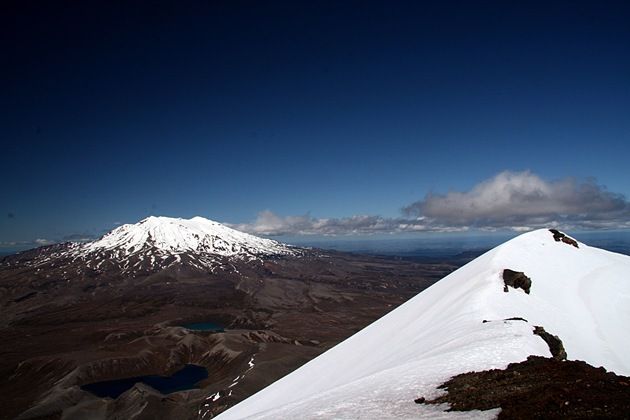
The views from here are breathtaking though, and you will be guaranteed to be sharing them with fewer people. Just don’t take too long – the hike is one way, and the buses at the end won’t wait forever.
Mount Taranaki
If I had to pick one hike in New Zealand that was my absolute favourite, the walk up Mount Taranaki would be it. Way out on the west coast of New Zealand’s north island, this incredible volcano rises vertically from sea level and flat, rolling fields, to an eye watering 2.5km in height.

This is actually a pretty dangerous walk, and nearly seventy people have lost their lives tackling this summit. For this reason, it is imperative that you check the weather conditions with the DOC office at the start of the track, and register your intentions with them in the booklet.
It may only be a 6-8 hour walk, but being right on the coast, the weather conditions here can change incredibly quickly.
We were lucky to have perfect conditions for our climb, with only a tiny bit of snow up in the crater itself. The views of the North island, right across to Mount Tongariro and Ruapehu, some 180km distant, have to be seen to be believed - when you’re not desperately trying to climb on to the ground that is. This is a walk which is not for vertigo sufferers.
If you get the chance, and the right weather conditions, I cannot recommend this hike enough.

Key Summit
Back on the south island again, the Key Summit track is a wonderful walk which shouldn’t take you more than a couple of hours. It follows the last part of the world famous multi-day Routeburn track in the Fiordland National Park, branching off to ascend the Key Summit.

The walk, although largely up, isn’t particularly strenuous, and is worth doing either on your way in to or out of Milford Sound. The reward, of views across the Fiordland National Park, is entirely worth it., with spikey mountain peaks, glacially carved valleys and rolling forests in all directions.
A small taste of what the Routeburn track may hold in store, if you have more time and the urge to tramp for multiple days.
Rob Roy Glacier Track
Last on my list of my five favourite walks in New Zealand is the Rob Roy glacier track in the Mount Aspiring National Park – a 50km drive from the town of Wanaka on the South Island.
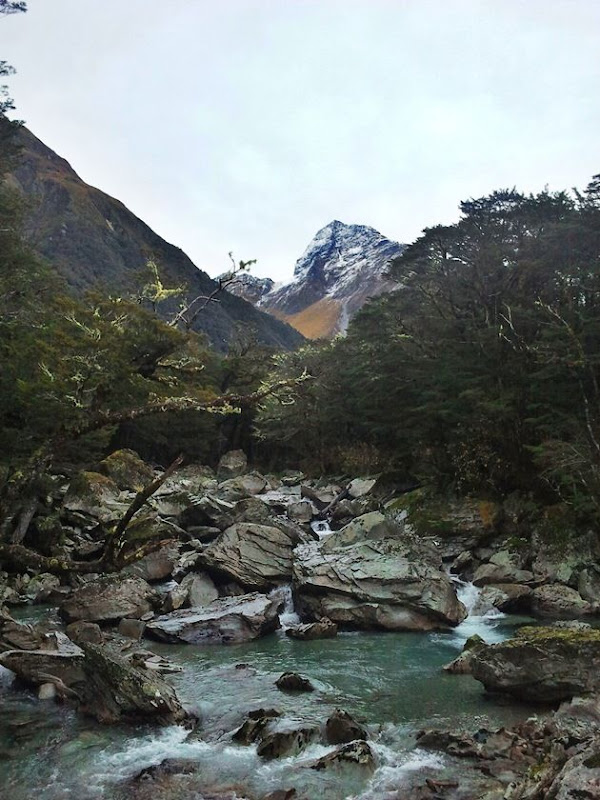
This area is renowned across New Zealand for being home to a huge number of ski fields. When we visited though the snow hadn’t quite set in, so tramping around was still possible. Lots of ski fields mean lots of mountains, and the walk up to the Rob Roy glacier is an absolutely astounding walk.
Taking 3-4 hours, this is a moderately strenuous walk which works it’s way up through the tree line in the Mount Aspiring National Park, before bursting you out into a tundra filled valley, where a spectacular glacially coated rock face towers above you. This is a tremendously challenging place to take decent photographs given the scale on offer, but I assure you, if you do this walk, you will not be disappointed by the view.
And that is that for my five favourite day hikes in New Zealand! Got a favourite hike in New Zealand, or somewhere else in the world? Tell us about it in the comments below!

Monday, October 10, 2011
Top five scenic drives of New Zealand
 The best way to see New Zealand is on a road trip. You can take your time, enjoy the scenery, and stop off wherever you like to breathe it all in, all whilst listening to your favourite tunes.
If you’ve got a campervan, all the better – there are loads of incredible places to spend the night immersed in the beauty of nature. In good weather, a tent is a great alternative.
I’ve already shared with you my favourite sights on the north and south islands of this fabulous country – now I’m going to tell you my favourite ways to get between these sights.
The drives I’ve selected are best enjoyed over at least a couple of days, although you could in theory do some of them in a shorter time. But then, you’d probably miss out on a number of awesome attractions on the way. Without further ado, and spanning the north and south islands, here are my five favourite scenic drives of New Zealand.
The Lost World Highway
The Lost World highway is New Zealand’s oldest touring route, and stretches for 155km from the central plateau of the north island, across to the west coast and the mighty mountain of Taranaki.
The route winds its way across some seriously crinkly landscape, through gorges, tunnels and dense forest. On the way you will have the chance to take in the north islands highest waterfall, a town which has formed it’s own republic, and the remarkable Tangarakau Gorge.
The route isn’t too far, and could be done in three or four hours, but with all the places you’ll want to visit on the way, I’d recommend giving this one a couple of days with a nights stop over in the middle.
The backcountry campground, if you’re camping, offers one of the best views of any campsite in New Zealand, with views of both the Tongariro National Park in the centre of the north island, and across to Mount Taranaki on the west coast.
East Cape
The East Cape region of New Zealand’s North land made it into my top five destinations on the north island, and with good reason. The scenery here is just epic, from endless driftwood coated beaches to lush forest and more.

Here you will find New Zealand’s most easterly mainland point, incredible Maori sculptures, black sand beaches, the longest wharf in the southern hemisphere and endlessly curvy roads to wind your way through. The scenery is truly mind blowing – more people need to experience it!
The East Cape is likely to take you a few days to truly explore – I’d recommend setting aside at least three days. There are a variety of accommodation options en route, from cozy guesthouses and hostels to remote and gorgeous campsites. Something for every taste and budget!

West Coast of the south island
The drive down the west coast of New Zealand’s south island is one of my favourite drives in the world. The best parts of this drive stretch from Greymouth down to Haast, although adding on a trip through Arthurs Pass National Park at one end and Haast Pass at the other end is entirely worth it.

The trip is incredible largely due to the presence of the southern alps – the mountain range which runs down the entire length of the south island, and has multiple peaks over 3000m. These snow capped beasts are awe inspiring in their splendour, and offer countless opportunities for gawking.
You’ll find eerily blue glacial rivers, eerily blue actual glaciers, and no other end of delights including surf pounded beaches, geological marvels, and, well, pies made from possum. If you only do one drive in New Zealand, make it this one.
Into Milford Sound
Milford Sound is without doubt one of New Zealand’s must see attractions, and it easily made my list of top five things to see on the south island. Whilst the sound itself is tremendously impressive (it’s hard to argue with a mile of vertical mountain coming out of the sea), the 121km drive in from Te Anau is no less so.
There are a multitude of attractions on this drive, which takes you across the southern alps through a variety of incredible landscapes, from lakes to wide open plains to forest and mountains.
Particular favourites include the roaring water filled Chasm, the engineering achievement that is the Homer Tunnel, the awesome reflections in the mirror lakes, and of course, the ever present towering majesty of the southern alps themselves.
There are ten campsites with limited facilities on the way into Milford, which are excellent places to base yourself if you have time for exploration beyond the mandatory cruise on Milford Sound itself. I can recommend taking more time to explore this area, with a hike up to Key Summit being a particular favourite.

The Catlins
Tucked away down on the south eastern corner of New Zealand’s south island, the Catlins are less about rugged towering beauty and more about stunning waterfalls, tree filled vistas and epic coastal views. 
They are home to a number of quite wonderful sights, including New Zealand’s most southerly mainland point, a massively spectacular blowhole, fossilised forests, sea lion colonies, incredible cliff top views and many more waterfalls than you can shake a stick at.
There is so much beauty to behold in the Catlins that you are going to want more than a day to explore it all, and driving through will give you the chance to take the many many stops that you are going to want to take. I’d recommend a couple of days at least to take it all in.
That’s that for my five favourite drives of New Zealand! If you’ve got a drive in New Zealand that you absolutely love, please share it in the comments below!

If you’re planning a trip to New Zealand, you’re going to want to get insurance. InsureandGo can offer you backpackers insurance meaning you can enjoy your trip and have peace of mind should anything unforeseen arise.


