Related Posts Plugin for WordPress, Blogger...
Showing posts with label Travel tips. Show all posts

Saturday, March 31, 2012

Staying in touch with home when travelling

Phone box australian outback 2

You can’t beat a good one-on-one with friends and family. In fact, one of the main downsides of travel is being far away from and out of touch with all those loved ones (well, mostly).

When I’m travelling, I find the sound of a voice is the best way to connect with friends and loved ones. There are other options of course, from the ancient art of the letter, through to the wondrous time sink that is facebook, but I find that quality time really needs to stimulate aurally.

If you’re reading this in the future, where teleportation has been invented, you can skip this post and use the teleportation option. For the rest of us, here are the various options you have for calling home when you are on the road. If you’ve got any more to share, or general opinions on staying in touch, do feel free to hit up the comments at the end!

Over the Internet

If you can persuade your friends and family to standardise on one bit of software, then you can save a fortune by using it to call them over the internet.

Personally, I’m a big fan of Skype, which these days has clients for computers and smartphones, so you don’t even need to lug a laptop with you. I’ve found it to be the option that most of my friends and family are likely to already have installed, which means less hassle in terms of asking people to install yet more software. It’s also future enabled, with video calls an option. Great for those just out of the shower moments.

It does have its limitations, though. Most folk at home have it on their computers, and these aren’t necessarily on all the time. To guarantee a conversation, it’s usually best to pre-arrange a time. Not ideal for spontaneity.

Also, it can be bandwidth intensive, especially if you throw video into the mix. Not ideal if you are in a country where the internet is a carefully doled out resource. Still… free is a tough price to beat, so if you can get around the issues, this is a great option.

Best for: Long, pre-arranged chats in an internet rich environment
Worst for: Your grandma not quite understanding what this newfangled doohickey is.

Phone Box 2

Using your mobile

There was a time, not so long ago, when using a mobile abroad was expensive. There was a time, not much before that, when just using a mobile was expensive, and required you to carry what looked like a generator with you everywhere you went. The pace of technology evolution is brilliant. Bring on the teleporters.

These days, mobile network operators are growing wise to the fact that there is competition out there, in the form of free internet calls and other such consumer friendly nonsense.

As such, calling home on your mobile is probably not as astronomically expensive as it once might have been. That said, it is most likely going to be cheaper to put a SIM card into your phone from the country you are travelling in, rather than using your home operator abroad.

You will need an unlocked phone (you can pick incredibly basic phones up for almost nothing these days), and you will need to buy a SIM card that offers a good deal for wherever you want to call. If the country you are travelling in has good operators and wide coverage, this is a great option.

Best for: You can be reached wherever you happen to be, and vice versa
Worst for: Ever tried to get signal in the Australian outback?

Satellite phone

Mobile phones and landlines are so like.. terrestrial, man. If you want to get your communication on, in a truly earth spanning space powered way, then a satellite phone is the way forward. Almost as good as a teleporter in fact.

As the name implies, these chaps use a network of orbiting satellites to relay your voice. So no worrying about pesky mountains or remoteness causing you problems in making a call. These work everywhere.

Satellite dish.png

More recent models are also far more portable than their forebears, with the latest models being not much different to recent smartphones. Yay technology!

There is of course a price to pay for this incredible go-anywhere call-anyone flexibility, and it’s a price you pay with money. The handsets themselves aren’t exactly cheap, and neither is the cost of making a call. Still, putting objects into space is a costly exercise, and that money has to come from somewhere.

If you know you are heading out into the middle of nowhere, and most of the above options aren’t going to do it for you, then satellite technology may be the way forward if staying in touch is a priority.

Best for: Feeling James Bond like in your ability to contact anyone from anywhere.
Worst for: Needing to rob a bank every time you want to use it.

Calling cards

When I was travelling in Australia and New Zealand, internet access wasn’t quite as easily obtainable as I would have hoped for in a first world country. And don’t get me started on mobile network coverage. With satellite being out of my price range, international calling cards were my personal saviour.

A number of providers offered these cards, and they were available from a whole variety of different retailers, from corner stores to hostels. Depending on which country you are calling, there will be different cards offering better or worse rates.

You need to do a bit of research and compare the options before settling on a card, and check the fine print for things like “connection fees” before parting with your cash. Additionally, some tack on a fee if you’re calling from a payphone, so you need to factor that in.

For convenience and cheapness, calling cards are a decent option. We even found a solar powered payphone once in the middle of the Australian outback, hundreds of kilometres from anywhere, which made for a memorable call home.

Best for: Being able to call home at reasonable rates on a real phone
Worst for: Not reading the fine print and realising that advertised “1c a minute” rate comes with a $2 connection fee. Also, payphones are becoming an endangered breed.

Tuesday, March 6, 2012

Dealing with bed bugs when travelling

800px-Bed_bug_nymph,_Cimex_lectularius

As a traveller, one thing that is certain is that you are going to be sleeping in many different places. With this comes risk, one of which is to wake up one morning covered in tracks of red bites.

The initial thought may be that you’ve been the victim of a highly trained vicious mosquito squadron. But look a little closer – because you may have been the victim of something else entirely, something that is going to get fellow travellers all terribly excitable and probably freak you out too – the fearsomely savage and much feared bed bug.

In today’s post I wanted to share with you some knowledge on bed bugs that I picked up from my time spent working in hospitality, and particularly in a hostel in New Zealand, where a great deal of my time was taken up with activities relating to bed bug management. Which wasn’t on the initial job description.

As a result of that experience I have seen and squished far more bed bugs than any person ought to, and spent tremendous amounts of time peering into tiny cracks looking for the evidence of their presence.

Today I’m going to tell how to know if you’ve been nibbled on by bed bugs, how to look out for signs that you’re not sleeping alone, plus what you can do to deal with the bed bug issue. First though.. some…

Bed bug facts!

800px-CDC_11739_Cimex_lectularius_SEM

Bed bugs are actually pretty amazing little critters! Here are some quick facts for you:

  • Bed bugs can survive for up to a year without food, particularly when it is cold. They can survive temperatures ranges down to around –32C and up to 45C. When it is cold, they go into a sort of hibernation, and pop out of it when it warms up.
  • In the right conditions It takes one pregnant adult female six months to create an infestation of literally hundreds of thousands of bugs. She is bloody awesome at hiding in the meantime.
  • Bed bug sex is not a fun thing for the bed bug female. It involves carapace piercing in order to get the necessary fluids inside her. If I was a bed bug girl, I’d want to go bite someone, too.
  • Bed bugs like other bed bugs. They secrete a pheromone that attracts more bed bugs. Sociable little chaps.
  • Bed bugs are bigger than you might think, particularly in their adult stage, which they reach after five junior stages. And I thought one go at puberty was tough. They grow up to 0.5cm long, easily visible by the naked eye, in their adult stage at least. 
  • They are attracted to their victims by carbon dioxide and warmth, amongst other things.
  • Bed bugs love travelling almost as much as you do. They or their eggs will happily hitch a ride in your clothes or on your backpack, and then hop off when they reach somewhere new and exciting with fresh fields of blood filled meat to suck on. This makes eradicating them a mite tricky in a well visited bed!

How to know if you’ve been bitten

People react to bed bug bites, like any other bites, in different ways. You may have been munched upon countless times, and have absolutely nothing to show for it, or you may come up in horrific pustules, blisters, or bumps that look just like mosquito bites. Diagnosis can be tricky! Additionally, for some reason, elderly people barely react at all.

The easiest way to tell though is the classic line pattern that the bed bug leaves behind. This will be a nice straight line of red bumps, that looks like something has methodically chewed you up. And that would be because something has methodically chewed you up!

bed-bug-bites

Often this will be a line of three bumps, sometimes more, depending on a variety of factors, including whether or not the bug was disturbed during the meal, or if the bug didn’t quite find what it was looking for on the first, second, third.. or.. well, you get the idea.

Bed bug bites can also take a while to appear after you’ve been bitten, sometimes up to a couple of weeks. Which makes working out what bit you and when fairly difficult. Very often, you will discount the bites as nothing more than mozzie bites, and move on with your life.

Bed bugs also tend to bite in areas that aren’t covered, however in tropical areas you’re not likely to be sleeping in much anyway. They also don’t usually target armpits or the back of your knees.

Spotting bed bugs in your room or bed – the warning signs!

800px-Bed_bug,_Cimex_lectularius

There is a bit of a misconception that for a place to have bed bugs, it needs to be dirty, or unkempt, or messy. This sadly isn’t the case – the hostel I worked in for example was absolutely fanatic about cleanliness and bed bug management, and we still had the odd bug.

Of course, if your chosen accommodation doesn’t care too much about basic things like cleanliness or tidiness, then you can be pretty damn sure that they aren’t that bothered about bed bugs either. So the two can be linked, even if one doesn’t cause the other.

So how to tell if you might not be sleeping alone? Here are some pointers:

  • Bed bugs are fairly shy and retiring creatures. They mostly come out at night. In the day time they like to hide, not too far away from their evening meal. Obvious places to look therefore include in your bed frame, and anywhere near the bed that harbours cracks that they can squeeze into. Curtain rails, skirting boards, door frames – even the heads of screws. You get the idea.
  • Bed bugs secrete a black gooey substance. You might find this on the bed sheets after you have been bitten. You can also look for it on the bed frame. Lots of black goo around a hole or crack indicates the likely presence of our friends. If it is recent, you will be able to easily smear it with your fingers.
  • Bed bugs have a distinctive aroma, which is how they attract other bed bugs. It’s a bit like the smell of a stink bug.
  • Bed bugs have six different sizes, from the super tiny to the fairly large. So there are a variety of body shapes and sizes to look out for.
  • Bed bugs are not excited by heat or excess amounts of carbon dioxide. If you think there are bed bugs in a hole, you could try breathing into it, or blowing a hair dryer into it on a low setting. This may force them out of hiding, or boil them in their shells. Whichever works for you. It may also distribute bed bug eggs all over the room.
  • You may find blood stains on the bed after you’ve been bitten. However, you can get these with any bite, so it’s not a guarantee of bed bugs.

What to do if you think you’ve been bitten

800px-Adult_bed_bug,_Cimex_lectularius

If you think you have been bitten, the first thing is not to panic. Whilst the bites can be itchy and annoying, bed bugs are not currently known to carry any actual diseases. So in that sense, you are better off having been bitten by a bed bug than a mosquito.

You should, of course, mention to your host that you think you have been bitten. There are two main  reasons to do this:

  • If the problem is with the place you are currently at, then they need to know so that they can do something about it
  • If you were bitten somewhere else, there is a possibility that you have brought the eggs or bugs with you. They therefore need to keep an eye out for future problems. Be aware that they are unlikely to thank you for this.

When you inform your host, a variety of things will happen. It is very likely that, even if the accommodation believes itself to have bed bugs, it will deny this. Admitting to having bed bugs is akin to admitting you have the plague, due to the bad reputation these critters carry. So unless you have the dead body to prove your case, don’t expect too much in the way of liability being admitted.

Additionally, as the bites can take so long to come up, the accommodation provider may actually have a point, in that you could have brought a problem into their previously clean environment. This is a great way to make you feel guilty and thus shut you up. After all, who is going to tell their friends that they may be a carrier of bed bugs?

What you should see, if they are at all bothered / professional / caring are some efforts by the accommodation provider to find any problems. Where I worked, if someone seemed to have an issue, we would take their room apart, literally. Bed frames would be disassembled, and any bugs we found would be squished. We also used a heat gun to sterilise cracks in wood or metal. However, if we found bugs or eggs, this was never disclosed to guests.

Treatment

Treating bed bug bites is much the same as treating any other bites. The application of topical creams or ingestion of anti histamine is about the best you can do. Try not to scratch the bites – your nails are dirty and this will lead to infection.

If you have reacted particularly badly, then get yourself down to the doctors where they may be able to help out with more powerful creams or pills.

Ultimately though, it’s going to be a waiting game where you’ll just have to wait for the bites to subside.

Getting rid of them

Getzadvert

The bad news about bed bugs is that in a well visited environment like a hostel or hotel, it is pretty much impossible to eradicate bed bugs. This is because even if you were able to find and kill every last egg, nymph and adult from the premises, all it takes is one new arrival with a pregnant adult female to turn up, and the problem starts all over again. In a warm climate where the bugs can breed quickly, the problem is only going to be worse.

In such an environment, the best that can be done is to try to manage and stay on top of the problem. Regular inspections of sleeping areas, blocking up inviting cracks and the occasional use of some sort of anti-bed bug chemicals are the best that can be done so that the issue stays small – akin to a few mosquitoes flying in through a window at night, rather than spiralling out of control into a serious infestation.

Speaking of chemicals, another problem arises. The most effective chemicals for properly killing off the whole bed bug lifecycle are also not exactly human friendly. Fumigating a room is actually therefore more hazardous to human health than a few bites is ever going to be – and in fact more people have probably died from reactions to the anti bed bug chemicals than from actual bed bug bites.

On a personal level, there are some products you can get to help stop that most nightmare of all situations – taking the bed bugs from your travels to your home. There are products that you can use to spray your luggage, which is a good idea if you’ve been travelling in known problem areas.

If you do have a problem in your home, it is likely that you will have to call in professionals to fully clean out your house. They will use all sorts of nasty chemicals, and you will probably have to move out for a while. That is the only way to really sort out the problem once and for all.

And that is that for bed bugs! If you’ve got any comments, questions or experiences to share from your travels, including horrific photos, don’t be afraid to share them below! Otherwise happy travels, and remember, sleep tight.. don’t let the bed bugs bite!

Tuesday, February 14, 2012

Tips for buying and selling a travellers vehicle in New Zealand

Bernie and Mount Ruapehu

If you’re heading to New Zealand for any length of time longer than a month, buying a vehicle is likely to be one of the most cost effective ways to see the country.

For example, renting a decent camper van for around a month is likely to cost you something in the region of $3000 - $4000 NZD. You can pick up a second hand camper van, depending on the time of year, for $2000 and up.

As well as being highly cost effective, the freedom of your own vehicle coupled with the wide spread availability of good value camping options gives you the opportunity to see the country at your own pace, and visit all of those funky little places that an organised tour may not be able to get you.

Here are some things that will help out when looking to purchase or sell a vehicle in New Zealand as a traveller, based on my experiences.

What to look for (or consider, when selling)

C360_2011-08-10 14-24-08

You are going to want to make sure that any vehicle you buy is mechanically sound. No buyer is going to reveal to you that they are trying to off load an oil leaking monster that barely makes it up a hill.

I’d recommend getting any vehicle that you are serious about purchasing checked at a garage. This won’t cost very much, and may save you a fortune in the long term.

On the flip side, if you are selling, keep copies of any services or garage visits that you have done. If you have invested time, money and love into your vehicle, demonstrating this to a buyer will reassure them that they are not buying a disaster.

When you are looking at a vehicle, there are some things to look out for:

  • Tell tale drips. Engines, as a rule, should not be an oil or fluid filled mess. Any savvy seller will clean up their vehicle before letting you inspect it, but any chronic oil or other fluid problem shouldn’t be too hard to spot. If you are inspecting a vehicle that has been sitting somewhere for a while, check underneath it to ensure that the ground isn’t coated in oil. Check for leaks again after the test drive.
  • Tyre tread. Don’t expect new tyres, but do check that the wear on the tyres is even – i.e. that one side of the tyre isn’t more worn that the other. Uneven tyre wear can mean problems with vehicle tracking, and may cost you money down the road.
  • Handling and engine. You will absolutely need to take the vehicle out on a test drive prior to purchase. Ensure that the brakes work properly, that it goes up and down through the gears smoothly, and that clouds of smoke don’t come out when you’re going up a hill, or accelerating hard, or even when you start it. Ensure that the vehicle doesn’t pull to one side, or the steering wheel vibrates terribly.
    In an ideal world, you will be able to try and start it cold, although this may not always be possible. Listen to the engine for weird noises as you go along. Anything unusual could be a sign that something is wrong.
  • Fluid levels. It is worth checking the various levels in the vehicle to see if there is anything amiss. Any savvy seller will ensure things like the power steering fluid, brake fluid, radiator and oil levels are nicely topped up, but it doesn’t hurt to check. Any older vehicle is liable to burn some oil – ask how much.
  • Spare tyre. Check that there is one, what condition it is in, that you know how to access it, and that all the tyre changing kit is present and correct.
  • The add-ons. Don’t get too excited about the “accessories” that the vehicle may come with, or the funky paint job. These may be nice to have, but your purchasing decision really should be based on the mechanical soundness of the vehicle rather than the cute disco ball and funky flowers down the side. Nearly every travellers vehicle should come with a full set of cooking gear and other bits and bobs, probably handed down from traveller to traveller. Consider it a flavour enhancer.
  • Windscreen, paint and rust. New Zealand roads are not always smooth layers of hard black bitumen. In fact, it is inevitable that any vehicle you buy will have driven on a selection of exciting gravel roads. You’ll want to check that the windscreen doesn’t have any serious cracks as a result of this. Also, give the paint job a good look over. A cheap can of spray paint can hide a multitude of rust spots from a casual observer. And don’t forget to look at the roof too. Finally – check the exhaust system isn’t a crumbling rusted pipe.
  • General upkeep. Whilst the tidiness of a vehicle isn’t always a reflection on how good of a deal it is, a well kept vehicle is always going to be a more positive option. When selling, make your vehicle look as nice as it possibly can to attract buyers. When we were looking, one of the vehicles had a used condom on the floor. We didn’t dally on that one. This was ours, prior to a successful sale. Full marks to my better half on this particular accomplishment!

Travellers camper van interior New Zealand

What to pay

Prices for vehicles in New Zealand for travellers fluctuate enormously depending on the time of year.

The peak season for buying and selling is between Oct/Nov and Jan/Feb, or the summer months. Prices can double or triple at these times, with vans going for anywhere upwards of $3000-4000, with over $7000 not being unheard of. Vehicles also sell very fast at this time of year, so if you find something you like you will have to move quickly.

Conversely, in the deep off season around Winter, April – August, prices crash, and you can pick up some serious bargains, with prices as low as $2000.

The price of a vehicle, as  with anything, is entirely based on demand. Obviously, newer vehicles with lower mileage will cost more. Also, larger vehicles, such as long wheel base models, or vehicles with a high roof that let you stand up, will demand a premium.

If you are able to plan your trip accordingly, you could buy in the off peak and sell in the peak season, and actually make a small profit on your vehicle, which was what we managed to do. Which beats renting by some distance!

Documentation and paperwork

New Zealand Rego document-001

It is unlikely that any vehicle you purchase from a traveller is going to have anything approaching a full service history. However, there are some bits of documentation that any vehicle will need to have to make it road legal, that you will then need to hold onto for a sale.

  1. WOF. The Warrant of Fitness is equivalent to Australia’s pink slip, or the UK MOT. It demonstrates that the vehicle is safe to go on the road. A WOF is valid for six months from time of purchase. Note that a WOF is not a mechanical certification – it is more about things like working lights, tire tread and seatbelts. It says nothing about the state of the engine. A WOF costs between $35 and $50. If the vehicle you are buying has a power hook up for camping, then it will also need an electrical WOF.
  2. Rego. Registration is essentially your road tax, and can be bought in three, six, or twelve month blocks.
  3. RUC. If you are buying a diesel powered vehicle, then you need to ensure it has an up to date Road User Charge certificate. For some weird reason in New Zealand, diesel is not taxed at the pump. Instead, you pay a charge per 1000km that you drive, of around $50, in advance.

When buying, you need to make sure that a vehicle has all of the above in place – normally these are displayed prominently on the windscreen. The REGO and RUC can be bought at any post office. A WOF can be done at most garages, or specialised WOF only centres.

You should be able to ask to see the last WOF report, which will highlight any problems that arose in the check - although holding onto this piece of paper isn’t a requirement of sale. The seller may also be able to show you the most recent service report, if there has been one. Don’t count on it though.

If you are selling, and you have regularly been keeping your vehicle serviced, being able to show this documentation will make your vehicle more attractive to a buyer.

Once you have agreed on a sale, there is a $10 fee to transfer ownership of the vehicle from seller to buyer. This is a very easy process requiring a couple of forms that can be done at any post office.

Where to buy and sell

The majority of travellers arrive into New Zealand in Auckland, which whilst not being New Zealand’s greatest city, is handy for getting yourself set up. Here you have a number of options for purchasing and selling.

Online

One of the most popular (and easiest) ways to sell a vehicle is online. There are a number of places to do this, although you should always arrange to view and test drive the vehicle if you are interested in it.

  • Gumtree New Zealand. We bought and sold our vehicle on gumtree. It’s probably the most popular online noticeboard in New Zealand for travellers looking to buy or sell a car. Be aware though, there are a number of scams operating. Be particularly wary of anyone wanting to buy a vehicle from you unseen, or wanting to pay in anything other than cash.
  • The backpacker notice board. As well as jobs, this is a decent place to look for a vehicle, but it doesn’t currently offer the facility to share images, so most folk use gumtree instead.
  • Trademe. Trademe is New Zealand’s equivalent of eBay, and is very popular with Kiwi’s. However, as listing on Trademe costs money, most travellers won’t bother with this one.

Car Markets

In Auckland, there are a number of car markets which charge a fee for folk to attend, where you can buy and sell a vehicle. These are often a good way to get a good idea of what is currently available for what price, and are worth a visit for that reason alone. There are two main place to consider:

  • Backpackers car market – this is a very popular option with backpackers, as it provides a one stop shop for traveller to traveller vehicle sales. They can sort you out with all the paperwork, provide insurance, and there is a garage over the road for mechanical inspections. However, our experience was that vehicles here were far more expensive than the other options, and we heard some negative feedback about the place from fellow travellers. It also featured recently on a TV programme in NZ, where undercover reporters showed that around 40% of the cars are actually being sold by dealers rather than backpackers. So buyer beware on that one!
  • Ellerslie Car Fair – this Car Market is held once a week on a Sunday. There is a $35 fee for sellers, and there are on site vehicle inspection services. This is a really great place to visit as a buyer to get an idea of what is on offer. As a seller, be aware that a lot of local dealers visit here looking to snap up a bargain from desperate travellers, so don’t get talked out of a fair price for your vehicle.

Noticeboards

If you are staying in a hostel, it will most likely have a noticeboard, which will probably have a swathe of leaflets from fellow travellers looking to sell their vehicle. Supermarkets and cafes will probably also have noticeboards that are worth taking a look at.

Insurance

It is not a legal requirement to have car insurance in New Zealand. However, it is not a bad idea to have third party insurance to cover the cost of any unexpected damage to someone else's vehicle. A year of third party car insurance specifically aimed at travellers will cost in the region of $250, and can be picked up through someone like BBH, or the previously mentioned Backpackers car market.

Rules of the road

Speedometer

New Zealanders drive on the left, and speed limits and distances are given in kilometres.

The road rules are not that different from the rest of the world, apart from the incredibly weird rule about giving way to traffic turning across you, which has proven so confusing to so many drivers that as of the 25th March 2012 it is being cancelled. Find out more about that over at the New Zealand Transport Agency. Otherwise, stay safe, and enjoy your travels in New Zealand!

I hope this post has helped you a little bit with buying a selling a vehicle in New Zealand. I spent a year travelling New Zealand in a van I bought. This ended up costing me very little, as I sold the van at the end, so the only costs were on-going maintenance and fuel.

Due to the seasonal price variations of travellers vehicles, I was even able to sell the van for a little more than I bought her, meaning this process was a real bargain, compared to say renting, where the money would have just been thrown away. The only sad part was saying farewell to our faithful travelling companion :(

If you found this post helpful, why not check out the rest of my New Zealand guides, which include ideas for finding a job, hooking yourself up with free internet, and must visit destinations on the north and south islands!

Saturday, February 5, 2011

Essential free software for travellers

Corn sky field These days, a laptop is almost as essential a piece of travelling gear as a backpack or passport. The thing is, after you’ve bought the hardware, you then find yourself having to pay more for all the software you want to load up on it.

With this in mind, I have compiled a list of essential, high quality software, which has the huge advantage of being free. Because more money saved is more money for, well, travelling!

One quick note – these programs are all for Windows based PC’s. There may well be Mac equivalents, but I’ve not got a Mac, so I have no idea. Mac fans, let me know in the comments what your favourite free tools to travel with are!

Photo editing / management

Photo management tool: Picasa
Picasa from Google is a great bit of software for both photo editing and photo management. Its excellent photography editing tools lets you do all the basic stuff you are likely to want to do, from contrast adjustment through to red eye removal, plus it even supports RAW files.

On top of this, it integrates excellently with Google’s web albums for online backup, and you can even get a Facebook application that allows you to post directly from Picasa to your Facebook profile, with comments.

Power photo editing tool: The GIMP
Weird name aside, the GIMP is a seriously powerful free Photoshop alternative. Like its paid for rival, it is not an easy piece of software to get to grips with, and probably won’t be necessary for most users, given what you can already achieve in Picasa.

However, if detailed photo manipulation, with layers, masks and all that jargon are what you want, then it’s hard to do better than this at this price point.

Email and RSS

Free desktop email tool: Thunderbird
There are plenty of free desktop email clients out there, but my favourite is Thunderbird, from the same people who brought you Firefox.

The advantage of a desktop email client over a web based version is that you can download your mails and read them at your leisure. You can also compose mail offline, and send when you are connected.

Thunderbird plays nicely with all the major email providers and types of mail server and is easy to setup and use.

Free RSS reader: FeedDemon
FeedDemon actually comes in two versions – a “lite” ad supported free version, and the full, paid for version. I’ve found the free version to be more than adequate for my needs, and the ads are barely noticeable.

An RSS reader like this is brilliant for travelling with – it downloads all your feeds to your desktop and then you can read them at your leisure, even without an internet connection. RSS feeds are available for pretty much every website out there, including this one, and are a superb way to stay up to date with your interests whilst on the move.

Productivity

Office application: LibreOffice (formerly known as Openoffice.org)
The main player in the Office productivity suite space is Microsoft, with their Office application, but not everyone can afford the money they want for their product.

Enter LibreOffice, a full suite of applications for document management and creation, from spreadsheets to documents. This is an incredibly powerful set of tools that will let you do everything you need to do, including exporting your files to PDF. It also has support for all the major office file formats, so you’ll still be able to edit and create files that are cross compatible with Office.

Blog writing tool: Windows Live Writer
Microsoft actually have a pretty awesome suite of free products under the WIndows Live brand, including an instant messaging tool, a photo editing tool and an e-mail program. My favourite of the lot though is Windows Live Writer, which integrates with the major blog platforms to allow you to compose posts offline in a template that looks the same as it will online.

As well as the WYSIWYG (what you see is what you get) editor, you can also directly edit the HTML of your blog posts, plus there is support for ping servers and all sorts of other things. A brilliant tool.

Media playback and management

Movie watching: VLC Media Player
There was a time, back in the days of yore, where watching movies on your computer involved a lot of messing around with devilish things called “codecs”. This was because different movies were encoded using different technologies, and your computer needed an appropriate codec to decode them.

Luckily, these are issues of the past thanks to the excellent VLC media player, which brings with it all the codecs you will ever need for every movie file you are ever likely to want to watch. And as travelling can have it’s fair amount of downtime, having a few films or TV shows ready to fill in those rainy days is no bad thing.

Music playback and management: Winamp
Winamp is the original MP3 playing software for Windows. It plays back most popular music file formats, and also lets you manage your music collection on your portable music players, including, crucially, your iPod.

This means that you don’t have to use the horrific piece of software that is iTunes for Windows, except for purchasing music, and even then, there are alternative, DRM free options out there too.

Backup

I went into far more detail on backup solutions for your travels in a recent article, all about Keeping your data safe on the road. Two great pieces of software I mention in that article follow, both of which are of course, free.

Cloud backup tool: Dropbox
Dropbox is a really great install and forget it’s there backup solution. It creates a folder on your computer, into which anything you add is automatically backed up into the cloud.

Files are versioned, and the basic version comes with 2 gigabytes of storage, which can be expanded. This is a great tool for backing up important documents or your absolute favourite photos. Certainly better than e-mailing them to yourself at least!

Offline backup tool: Syncback
If you’re anything like me, having a photo library that measures into the hundreds of gigabytes is the norm, and then when you add the music, documents.. well, it adds up.

Relying on one hard drive for all that critical data isn’t the best idea, which is where the excellent Syncback comes in. This allows you to backup your files from one location to another, and I use it to transfer files to my two external hard drives on a regular basis.

Security and Maintenance

Anti-virus: Microsoft Security Essentials
There was a time when the thought of Microsoft providing a security solution was, well, laughable, but times have changed, and their Security Essentials program is one of the best free anti-virus solutions out there. Fast, lightweight and easy to use, it regularly bests it’s competitors – even the ones you have to pay for.

General tune up: CCleaner
Computers, over time, tend to accrue unwanted bits of data. These could be left over files from botched software installations, temporary files from your internet browsing, or unwanted system restore points.

This data can usually be safely removed, and your PC will often run better as a result. The best tool for this job that I have found is the excellent CCleaner from Piriform, which offers a number of handy easy to use maintenance tools.

Those are my favourite free applications that I can’t live without when travelling. Do you have any favourite programs that you can’t travel without? Let me know in the comments below.

Sunday, January 16, 2011

Why you should travel with the WHV

Work. It doesn't have to be in one of these! Let’s face it, travelling can be expensive. Travel in developed countries even more so. Once you’ve added up the transport, the insurance, the food, the accommodation – well, the number at the end can be pretty scary. Even when travelling on a serious budget, if you want to see everything, you’re still going to end up spending a fair bit. As my recent article on the costs of travelling around Australia demonstrated.

And the thing is, we aren’t all in a position where our savings accounts happen to let us give everything up for a while and head off into the wide blue yonder. But that shouldn’t stop you from doing so. How, you ask? Why, with the wondrous working holiday visa scheme of course!

Before we go on, here are some brief caveats. To qualify for a working holiday visa, you usually need to meet some criteria. You need, for example, to be of a certain age, usually under 31. You need to have at least some funds, to demonstrate you will be able to afford to support yourself in your destination country. And you will need to be from one of the countries that participates in the working holiday visa scheme. There are a few more of these, but those are the major ones.

Bubbling mud pools near Wai-o-tapu thermal reserve - Rotorua 2

So what’s it all about then? Well, it’s pretty simple. A working holiday visa allows you to travel in a country for a period of time, often one or two years, plus, and most importantly, it lets you do some work whilst you are travelling.

And working whilst travelling carries myriad advantages, not least of which being that you will be earning money. So instead of sitting back home in a job saving up for your trip, you can actually be on your trip saving up for your trip! Pretty cunning.

Now you may be thinking that you would prefer to be at home saving up, and leave the trip for an actual holiday. And of course, that is your decision. It was what I did for my year long trip around Australia, where the WHV I was issued did little more than allow me to stay in the country for a full year. However, I believe that there are some serious advantages to actually working whilst you travel, which I will now go through:

The cultural side of it.
Maori statue There is a lot of talk about “authentic” travel, and experiencing the “culture” of a place. Personally I’m not convinced about the idea of travelling being anything other than authentic, the experience you get is a reflection of the place you visit. Whether or not it matches up to your expectations is, of course, another matter. But to really get a handle of what life is like for the folks who live in the places you are visiting, to understand how the culture works, you may want to do more than just skim through. And getting a job is a pretty decent way to go about getting a cultural experience you are unlikely to forget. You’ll meet people and get to grips with more than the skin deep impression that travel can sometimes give.

Travelling for longer.
The world is a big place. But there is no rush - it’s not really going anywhere in a hurry. If travelling long term is something you really want to do as a lifestyle choice, then you’re going to need some means to sustain yourself. If you don’t already have some form of job that you can travel with, then temporary positions as you move around are going to be your best shot. There are no shortage of countries that take part in the WHV scheme, so you could keep going for some time before you hit 31, and then head off to the rest of the countries that you want to see which don’t offer the same scheme. Think long term, and the possibilities do seem fairly unlimited!

Earning money.
Money makes the world go round. Travelling can be done on a budget, but that budget has to come from somewhere. If you are able to earn money as you go, then you can travel for longer. Or, you can spend money on more experiences as you go, with less concern about how you’re going to pay off all those credit card bills when you get home. If you find the right role and get enough hours of work, you can pretty much offset the cost of your trip, plus be richer in experience. An awesome feeling.

Why not swap the office for the beach? Byron Bay Beach - New South Wales - Australia

Incentives
Some countries offer incentives to folks on the working holiday visa scheme. In Australia for example, if you work for three months in a designated type of work (usually back breaking fruit picking), then you can extend your visa by an additional year. A whole extra year for three months work, certainly pretty cool.

Downsides
There are, of course, some downsides to the scheme. Some of the countries, for example, place restrictions on how long you can work for one employer for. Sometimes work can be hard to find. It can be, on occasion, a frustrating and difficult experience, and often the casual sort of work you find can require long hours for minimal pay, so your dreams of saving up whilst you travel could be tough to achieve. However, with perseverance and optimism, you should be able to get something that suits your lifestyle and wants.

Just bear in mind that any major lifestyle change carries with it risk, and change is often uncomfortable. The benefits, in my mind at least, far outweigh any of the downsides.

Surfer

For more information on the working holiday visa schemes, and whether or not you are eligible to participate, as well as further country specific information, this Wikipedia entry has all sorts of useful information. If you have any questions on this article, or feedback on your experiences with working holiday visa schemes, please comment below, or head on over to the site’s Facebook Page.

Tuesday, December 21, 2010

On the road: keeping your data safe

Lightning strike over Cape Le Grande square cropWhen we travel, we often rely very heavily on technology to help us preserve the memories of the trip we are taking. From photos to diary entries, trip notes to budget tracking, technology pops its head up all over the place to help us out.

But what happens when things go wrong? What if our laptop or camera is stolen, or the hard drive fails, or we get some kind of virus that knocks it all out of kilter?

Here are some ideas for how you can keep everything intact, should the unthinkable happen, ensuring that all you lose are some physical items rather than your precious memories.

Option 1: Email

This is a really simple way to back stuff up. Just email it to yourself. Most of the large email providers now provide large amount of storage as well as large file attachment allowances.

The advantages of this option are its simplicity, as getting access to email whilst on the go is pretty easy. The disadvantages are that emailing yourself your entire photo collection whilst on the move is likely to be somewhat impractical. But for quick and easy document backup, this is a tough one to beat. Just make sure that your email provider doesn’t have some strict rule about deleting data after a period of inactivity.

Best for: small, regularly updated files such as a diary or budget tracker

Option 2: Cloud based storage

Whilst sending yourself e-mail works on the same principal as storing your data in the “cloud”, it is not purpose designed for this so isn’t totally convenient. When I refer to the “cloud”, what I mean is some kind of online storage facility.

Cloud and wires. See what I did there..There are a number of options for cloud based storage. Usually you download a program, point it at the folders on your hard drive that you want to keep synchronised, and it will do the rest for you automatically. Dropbox is one excellent option, offering an initial 2GB of free storage, which you can then expand if required.

A number of services offer specific storage for photos, including Google’s Picasa Web albums. Here you can get 1GB of free storage, which again, can be expanded for a fee. Facebook is also not a bad idea, particularly now they have increased the resolution of uploaded photos, although getting all your photos back off Facebook could prove tricky.

The downside of these solutions, as with any cloud based system, is that the initial backup of all of your files and photos can be very time and bandwidth consuming, and thus may not always work out so well on the road. It is, however, a decent option for archiving your key documents and absolute favourite shots from your trips against disaster.

Best for: Key documents and your favourite shots from your trips

Option 3: Local backup onto multiple disks

In most cases you are just going to have far too many files to make anything other than a local solution impractical, at least whilst you are on the road. In this case, I would recommend a backup solution involving at least one external hard drive.

Personally I use two external hard drives for backup, as well as keeping my data on my laptop hard drive. This could be seen as being a bit paranoid, but I did have an external hard drive fail on me during a trip and as a result of my paranoia, I didn’t lose any important data.

Setting up a regular backup schedule isn’t too difficult to do, and if you do it regularly, it will take you no time at all. I use the excellent and free SyncBack from 2BrightSparks which allows you a great deal of control over the way you back up your data. More options on offline backup can be found in this excellent lifehacker article.

Adata ruggedised hard driveWhen travelling, I try my best to keep the hard drives in different locations, as well as separate from my laptop. I also chose ruggedized and waterproof external hard drives because hard drives are sensitive creatures and encasing them in rubber should help stop them from becoming damaged. I expect that as flash based storage grows ever cheaper, that this will become a more viable option for backup solutions.

If physical size matters more to you than storage space, then a selection of flash based usb drives could be your solution. Plus, when they get full, they’re easy to pop in the mail and send home, keeping your data safe for when you get home.

Best for: Keeping everything backed up as you go

That’s it on keeping your data safe whilst on the move. Do you have any tips on this subject, or horror stories you’d like to share? Feel free to do so in the comments below, or over on the site’s Facebook page. You may also like to check out the two part article I did on Travelling with technology.

Monday, December 13, 2010

Day hikes: what you need to know

Sign at start of Tongariro Alpine Crossing Living in the shadow of one of New Zealand’s top day hikes means I get regularly asked about what sort of preparation folks need to do in order to have a comfortable and safe walk. It’s a subject that’s close to my heart, having done a fair amount of walking, particularly during my time in Australia, where the heat can make for a challenging experience. I thought an article on preparing for a day hike would come in handy.

First of all, what do I mean by a day hike? Well, as the title suggests, this would be a walk that lasts for no more than a day. The distance would really depend on the type of terrain, but would rarely be longer than 30km, although walking 50km in a day is certainly achievable for fit individuals. I’d say an average of 20km would be more likely.

With this in mind, there are certain items of equipment that you aren’t likely to be needing on a day hike, compared to a longer hike. These mostly revolve around eating and sleeping equipment – there’s little point lugging a tent, sleeping bag and cooking gear if it’s not going to be used. So what do you need then?

Pre trip preparation.

The most important part of the trip is preparation. Here are some things you should keep in mind:

Weather

You need to know what the weather conditions are likely to be on the trip you are going to be taking, and what extremes are possible to occur. It may be that the weather forecast for your alpine hike is glorious sunshine, but be aware that forecasts are not always totally accurate. So you need to be aware of what conditions may occur in the season you are hiking, so you can prepare appropriately. It may be predicted to be sunny, but you don’t want to be stuck on the top of a mountain in shorts and T-shirt when it starts snowing.Mount Ngauruhoe on the Tongariro Alpine Crossing Track

Route

Having a good idea of the route you are going to be taking is essential. Sometimes tracks will be well marked and full of people, other times you’ll be walking on your own trying to figure out which bit of rock you’re supposed to be aiming for. A detailed map of the area will come in handy. If the route is really out of the way, then a GPS may be a good option. As well as the actual direction of the route, be aware of the sort of ascents and descents you are going to be doing, so you can be mentally prepared in advance for the potential challenge ahead, as well as alerted if you are going off track.

Clothing

Appropriate clothing is critical for having a comfortable and safe walk. You need to be wearing and carrying clothing that will get you safely to the other end of the walk in whatever conditions mother nature is likely to throw at you.

View from the top of the Castle Rock, New South Wales, a challenging 7 hour day hike The layering system of clothing is the best way forward. All this means is that you have a number of layers that you can put on and remove depending on the conditions, from shorts and a T-shirt up to thermals and a waterproof outer shell. Of course, based on your knowledge of the likely conditions, don’t go way over the top. If you think it’s likely to be cold and wet, then the sombrero and flip flops are unlikely to get much use.

Based on the conditions, therefore, you need to decide what to take that will keep you warm, dry and safe. I would recommend that for maximum comfort you get some clothing that is specifically designed for outdoor activity. Standard T-shirts are more often than not made of cotton, which gets wet easily from sweat and then doesn’t dry for ages, leaving you uncomfortable.

Properly designed walking clothing, manufactured from synthetics such as polyester, will take the moisture away from your skin and dry quickly, resulting in you having a far more pleasant walking experience. This principle works all the way though – so you would want something like a polyester fleece rather than a cotton hoodie as an interim layer, then a walking jacket on the outside.

Obviously you can spend as much money as you like on gear that will promise you wonderful things. Personally I’ve found little difference in performance between the cheap brands and the expensive ones, particularly for things like base layers. You may want to spend a little more on an outer jacket to ensure you get something truly waterproof (keeps the water out) and breathable (lets your sweat out).

Warning sign at the start of the walk. Paying attention to these is a good tip!

As an example of clothing, here is what I took on the Tongariro Alpine Crossing and Mount Ngauruhoe ascent, a 19.5km day hike which peaks at 2200 metres and has the potential for bad weather at any time of year. This walk was done during Spring, when snow was still lying on many parts of the track.

  • Merino wool thermal base layer (long pants and T-shirt)
  • Nylon walking trousers with zip off legs for shorts
  • Two fleeces, a thin one and a jacket, both polyester / nylon
  • A gore-tex windproof jacket
  • Gloves
  • Thick wool walking socks
  • Walking boots

For much of the walk, even though it was windy and there was snow on the ground, the weather was absolutely glorious, with the sun beating down, so all I wore was the thermal base layer and trousers, with everything else in my backpack. During the descent phases, when my body wasn’t generating as much heat, I put the thinner fleeces on.

The message here is really to do your research on likely conditions, and take everything you think you may need. It is better to have it and not need it, than to need it and not have it.

The last item of clothing, and perhaps the most important, is that of footwear. Your feet are going to be transporting you a long way, and you are going to want them to be comfortable. There are endless varieties of footwear available. What you want to do is to wear boots that you have broken in, that are comfortable, and that don’t give you blisters. On trickier terrain, walking boots provide critical ankle support as well as solid grip. When it’s wet and rainy, they should be waterproof. Sand dunes - New South Wales - Australia. Walking in deep sand and hot temperatures is a serious challenge - plan accordingly!

Buy your boots well in advance of your walk from a reputable store who can help you out with getting the correct fit for your feet, and walk in them for a while to “break them in” before tackling any serious hills. Pair them with some good walking socks. A good trick is to wear a pair of thin socks underneath the wool socks, to minimise friction and the potential for blisters.

Food and Water

Walking is a great activity for burning off energy, so you want to make sure you give your body enough food to last you through the day. Ideally you want food that releases energy as the day goes on rather than the quick release that you may get from chocolate. Muesli bars and nuts are a great choice, as well as sandwiches. Of course, chocolate is a good idea anyway, you’ll want to reward yourself at the top of the mountain with something. Carry enough food to keep you going throughout the day, and bear in mind that it’s more efficient to eat regular small snacks instead of one big meal so as to keep your energy levels from spiking and crashing.

The most important thing to carry, however, is water. You can last for three weeks without food, but only three days without water. Dehydration is a very serious danger when walking, signs include dizziness, headaches and nausea, and you need to avoid this at all costs.The climb up Uluru. A handy rail to follow.. and many many people to do it with!

You will want to carry an absolute minimum of 2 litres, and if the weather conditions are liable to be hot, then far more. Drinking a litre an hour is a perfectly reasonable amount on a hot day, so carrying five litres of water is not unheard of. Yes, water is heavy (a kilo a litre) but as the day goes by you will drink it and your pack will get lighter.

I cannot stress the importance of carrying sufficient water enough. A great way to keep your water intake up is to buy one of those bladders which goes into your backpack and feeds a tube round to your mouth. This way you can take sips as you go without having to stop and go through the hassle of finding your water bottle. Sometimes water is available on the track, but more often than not it isn’t, so don’t count on it.

Other gear

Obviously you are going to need a comfortable bag to do the walk. A day pack of around 20-25 litres should be more than enough to fit all your gear in. You really want something with straps that come around your waist and chest to help distribute the load and keep it stable. Also, I’d recommend something which lets air flow over your back to keep the sweat from building up. 

Walking the Razorback in the Victorian Alps - a 22km day hike - AustraliaIf the weather is likely to be hot and sunny, and even if it isn’t, sun cream is usually a good idea, as are a hat and sunglasses.

In terms of emergency gear, a mobile phone is quite likely going to be the single most useful item you can carry, although don’t always count on reception. For any walk, you should let someone reliable know where you are going and when you are expected to be back, so help can be summoned should you not appear. Beyond that it depends on the conditions you are likely to be encountering for the sort of extra gear you should be taking, from crampons and ice axes to survival shelters and torches. Most day hikes won’t require this level of gear however, some plasters will usually suffice, and perhaps walking poles if you find them to help with any knee troubles.

Finally, plastic bags always come in handy. If the weather turns bad, you can wrap all your electronic gear in them to keep it safe, such as cameras, phones and so on.

The hike itself

Now that you are ready for the trip, the most important thing to remember is to enjoy yourself. You’re out walking for the scenery and the views, so take your time, take lots of photos, and generally have fun. If you find yourself struggling, take more breaks. If things seem really too difficult, or the weather starts to close in, don’t be afraid to turn back.

As you walk, take in plenty of fluids, and don’t forget to snack from time to time. If it’s hot, re-apply sunscreen regularly – sweat will likely cause it to lose its effectiveness over time.

Do your best to stay on the marked tracks, particularly if it is a busy route. Erosion caused by walkers straying off the paths can be a real problem, so try to help out where you can. And naturally, take out any rubbish you bring in :)Sometimes... just a walk on the beach is enough... Fraser Island - AustraliaWell, that’s about it on the topic of day hikes. If you’ve got any questions, or have anything to add, feel free to pop them in the comments below. Also, you may want to take a look at this article, detailing my three favourite Australian day hikes. Enjoy!

Monday, December 6, 2010

A year in Australia – the costs

Australian Flag Grafitti - New South Wales - Australia I have waxed somewhat extensively on this blog about the 60,000km year long road trip I took around Australia last year. But what I have failed to mention, thus far at least, is what this sort of trip is likely to cost you, should you decide, as I did, to down tools and head out into the wide blue yonder.

So now I will rectify that. The bottom line, is that a year in Australia, with all of that travel, with food, with insurance, with flight tickets, with a vehicle, with all those kilometres, cost me just about £12,000, or £32 a day.

And here, in case you were wondering, or thinking about doing something similar, is how that broke down, and where money can be saved. Note that this is written largely from the perspective of coming over from the UK under the working holiday visa scheme, but there is certainly plenty that would apply to most travellers here!

Insurance

Uluru at sunset If you’re travelling for any period of time, travel insurance is an absolute must, in large part for the medical cover that it provides you should something unfortunate happen to you on your trip. If you’re coming from the UK, you will be covered under a reciprocal agreement under the Medicare scheme, but this won’t cover you for things like repatriation.

Insurance from a reputable company is therefore a must. Luckily Australia isn’t considered too high of a risk, so insurance for a full year is reasonably priced. Many insurers will do “backpacker” or “gap year” insurance policies which are usually fairly cheap and will cover most of the basics. Clearly, the more cover you want, the more it will cost. Expect to pay in the region of £150 - £300 for a year of cover, more if you have big ticket items to insure like laptops or digital cameras. Remember to always read the policy wording carefully to see what you are signing up for and what the terms and conditions are.

Insurance -  £150 - £300

Flights

Lets face it, Australia isn’t exactly close to a lot of the world, so flights here aren’t ever going to be particularly cheap. A return flight from the UK / Europe is likely to cost you at least £1000. Check out all the usual deal sites and flight search engines, but don’t expect to get to the other side of the world for a song.

Flights - £1000+

Transport

Part of the Bungle Bungles in Purnululu National Park - Western Australia. Inaccessible without a 4WD or a plane.. This, for me at least, was the biggest cost. I wanted to see all of Australia in a year, and it is a somewhat large place. Plus I wanted to get to a lot of places that are inaccessible to normal vehicles, which meant either getting my own transport, or signing on to a lot of tours. As I wanted to go at my own pace, my own transport seemed like the way forward. And for a year, the most cost effective way of doing that was to purchase my own vehicle.

The second hand vehicle market for travellers is pretty active in Australia, with key buying spots being Cairns, Perth and Sydney. Prices fluctuate based on demand and availability, with prices being lower in the quieter seasons (think Winter in Sydney) and higher in the busier seasons. Of course, if you are travelling for a year, this largely cancels itself out, as any saving you make on purchase will be lost when you come to sell.

We bought, therefore, a second (or possibly fourth) hand Toyota Landcruiser, 1991  model, for £4000. Of course, if you aren’t into four wheel driving, or you want something more like a camper van, then there are a myriad options. A popular option is to get a station wagon, which you can sleep in the back of. Prices range from about £1000 upwards, and naturally, you can spend as much as you can afford. Once you have chosen your vehicle, don’t forget to budget for additional equipment you may need, like camping gear, tents, etc.. some travellers vans will come fully equipped, other won’t.

Vehicle cost - £1000 and upwards, in our case £4000, plus around £1000 in gear

Outback travel - South Australia Once you have your vehicle, you then need to factor in the cost of ongoing maintenance, repairs and of course, fuel. It will also need to be taxed and insured. Expect to pay in the region of £300 for the latter, and then however much the gods choose to charge you for mechanical damage as you go. In our case we had to get a new radiator, multiple new tyres, new rear differential, new battery and snorkel as well as oil and filter changes every 10,000km or so.

Vehicle maintenance – approximately £3500

Fuel is of course the other main cost - in fact on a trip like this, fuel accounts for a serious majority of what you are likely to be paying. We averaged around 15 litres of fuel per 100km, although that is higher than most cars as we had a big heavy vehicle. Over 60,000 kilometres, we consumed in the region of 9,000 litres of diesel. The price of this diesel varied enormously, from around a dollar twenty in the densely populated areas, right up to two dollars twenty in the deep outback.

Taking an average of a dollar seventy per litre, our total fuel costs for the trip were in the region of £8000. When travelling, keep an eye out for fuel deals, often a purchase of groceries over a certain amount will entitle you to a discount at the pump, and these discounts will add up over time to significant amounts.

Fuel – approximately £8000

Food / Drink
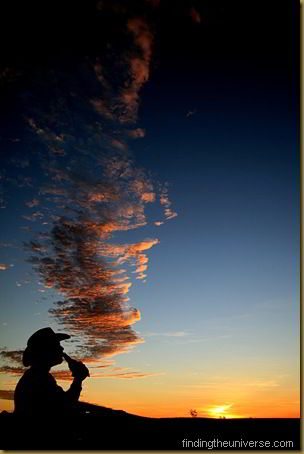
Beer and an outback sunset Food and drink are obviously something you can’t do without, but are an area where you can save serious cash if you shop carefully. Buy in bulk where you can, stocking up on items that are on offer. If you stick to the value ranges, and aren’t extravagant with your purchases, then you can get by on a fairly tight budget.

Of course, if you go the other way and spend all your time in restaurants and takeaways, then you may find yourself over budget fairly quickly. In terms of drink, well, one can’t possibly expect to travel without a beer or two of an evening, again, look out for deals and do your best to keep costs down. Buying a case of beer will always be cheaper than hitting the pubs, but don’t forget of course that you are travelling and having fun, so you can’t expect to skimp on everything!

Overall I would estimate that our food and drink budget per person worked out to around £40 per person per week, and then spiked from time to time when we hit a pub in earnest.

Food and Drink - £3000

Accommodation
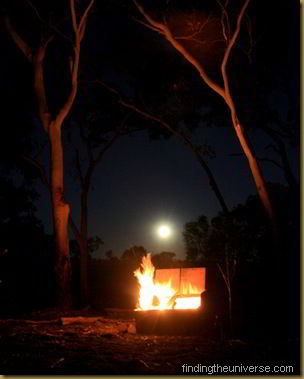
Outback campfire with moon rise - Northern Territory - Australia The dream of course, once you have your vehicle, is to head out into the wilderness and camp for free under the stars for the rest of your trip. Unfortunately, the reality is a little bit different. When you start your trip you are likely to spend a fair bit of time in a hostel as you look for your vehicle and get it ready to hit the road, and whilst this is fun, it isn’t necessarily that cheap in a country like Australia. Expect to pay £10 a night for a dorm bed, and £25-40 for a private room (per person). Alternatively, you can rent a timeshare in Australia that will provide you with more space and privacy than a hostel, and can sometimes be found for cheaper on the secondary market.

When you actually hit the road, things will become a better. Australia is a very large country, and there are a lot of places where you are legally allowed to camp for free. Often these camps will be very basic rest stops just off the highway, sometimes with a pit toilet, sometimes not. Don’t expect water to be available. But still, for free, what can you expect.

If rest stops aren’t your thing, some national parks are also free, although many operate an honesty system of payment. Another option of course are the commercial camp grounds and holiday parks, and here you can pay anything from three or four pounds per person per night right up to ten or twenty depending on location and amenities. On our trip I would say that we managed to camp for free for just over half of the nights, and ended up in paid sites for the rest of the time.

An absolutely invaluable asset if you are planning this kind of trip is the Camps Australia Wide series of books. Issued on a fairly regularly basis, and up to edition five when we did the trip, these list every free and budget minded camp site around Australia, handily located on a full road map of the whole country. This book, whilst a little pricey to purchase, is absolutely a no brainer on a trip like this. It will save you its cost multiple times over.

Total Accommodation cost, including hostel at start and end: £1500

Extras and incidentals

The Painted Desert - South Australian outback Extras, of course, are where the price of the trip can sky rocket. There are many many choices of things to do in Australia that are both amazing and often seriously expensive. From sky diving, to bungee jumping, to learning to surf, to heading out to the great barrier reef, to countless tours and adventures, it can all really add up. My advice would be to absolutely do the things you want to do as often these can be once in a lifetime experiences, and money can always be earnt again, but keep an eye on the budget, and if something is likely to wipe six months off your trip due to cost, just weigh the pros and cons carefully before making a decision.

On my trip one of the major costs was a trip to Tasmania, which involved taking our large four wheel drive on the ferry. This was not a cheap option, totalling nearly £1000 for the return trip for three of us and a vehicle, but the month we had in Tasmania more than made up for that. Other things we did that cost us more than we would usually spend included a boat ride over to Fraser Island, which was another amazing adventure.

In our case our extras probably added up to around £2500 all in, which was a result of being fairly conservative and doing our best to do things ourselves where we could. This includes things you can’t avoid doing, like laundry, and things like festival tickets and what not as we went.

Extras - £2500

How to save?

The endless roadBy now you have probably started to tot up the various numbers I have been floating around, and realised that my maths is probably fairly dire, as I am way over the £12,000 mark that I put forward initially.

The reason for this, and the number one way that you can save money on a trip like this, is by not doing it alone. As soon as you have a travelling companion, your main costs, which will be largely transport based, will be cut in half. Instead of spending £4000 on a vehicle and £11,000 on fuel and maintenance, I was spending a third of that, as for most of the trip we travelled as a trio. Food costs also come down when you are cooking as a group, and sometimes accommodation works out more effectively too. Even if you don’t know anyone who shares your dream of this sort of trip, you will find plenty of people on the way who will be willing to share costs, at least for a part of your adventure. Seriously consider this, as it is the number one way that you will be able to bring your costs down.

The other way you can recoup your costs is by successfully selling your vehicle at the end of the trip for as close to what you paid for it as possible. Due to the vagaries of the exchange rate, which had conspired against us throughout the trip at every possible opportunity, we ended up losing only around £400 on our vehicle. So one landcruiser, for a whole year and 60,000km, only cost us £400 in actual vehicle cost. Plus a few thousand in fuel and maintenance, certainly, but that was to be expected. So set aside some time at the end of your trip for the sale of your vehicle, and try your best to get a fair price for it.

That was a summary of how I got around Australia for £32 a day. I hope you find it useful. If you are considering a trip to Australia and have any questions, feel free to pop them into the comments or head over to the site’s Facebook page and see what the community has to say. Also, you may want to check out the excellent community over at the Working Holiday Tips Australia Facebook page, where you can find out all sorts of things about this most marvellous of schemes.

Sydney opera house at night - New South Wales - Ausralia

Note – all the prices in this article were converted to pounds at the exchange rate of 1 pound to two dollars. As this in reality fluctuated throughout the trip, prices changed as we went. It’s not something you have any control over, but it can seriously impact how much your trip costs you. Note that some of the links in this article generate me revenue.

 
Bloggers - Meet Millions of Bloggers