Related Posts Plugin for WordPress, Blogger...
Showing posts with label Walking. Show all posts

Tuesday, January 10, 2012

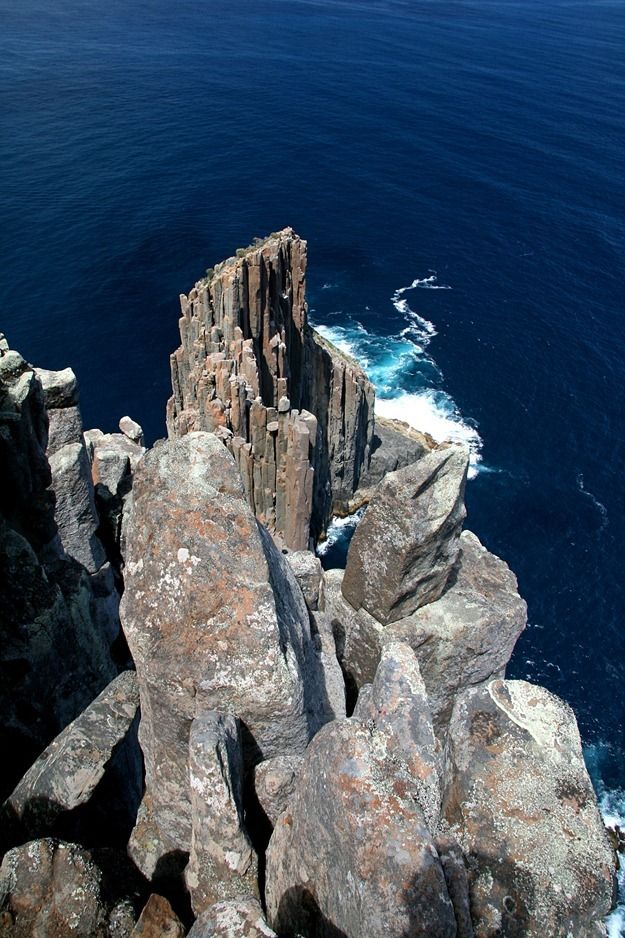
In photos: Cape Raoul, Tasmania

Cliffs of Cape Raoul walk tasmania 4

The first big view of the walk out to Cape Raoul, Tasmania.

One of my favourite walks in Tasmania was the five hour return hike out to Cape Raoul, on the Tasman Peninsula.

This is a hike that takes you though native bush and out to cliff tops with quite frankly terrifying drops. There’s little in the way (ok, nothing in the way) of safety barriers, other than a very ominous sign at the beginning of the trail warning you of pretty much certain death if you choose to undertake the walk.

Certain death aside, this is one walk that should be on your to do list when in Tassie. The views are absolutely incredible, and the scale of the scenery on offer is breath-taking. Enough of the talking already. Lets get on with some photos!

Cliffs of Cape Raoul walk tasmania 2

The stunning cliff walls of the Cape.

x-default

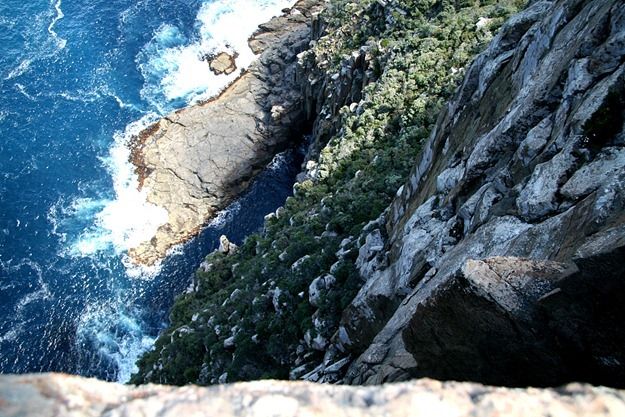
Looking back along the coast line

Tip of Cliffs of Cape Raoul walk tasmania

The walks half way point. Great spot for lunch!

It was a long long way down

Looking down. Don’t try this at home.

Danger warning sign Cliffs of Cape Raoul walk tasmania

Health and safety. Serious stuff.

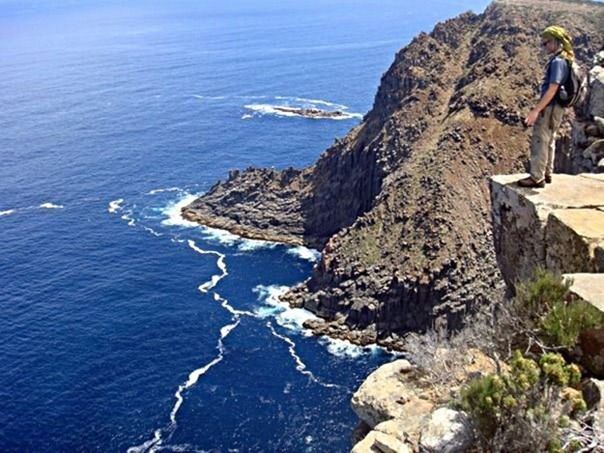
Me at Cape Raoul, Tasmania, Australia

I paid attention to the health and safety. Honest mum.

And that’s Cape Raoul in photos! It’s a truly wonderful walk in one my favourite Australian states. If you want to know more about this walk, take a look at the Tasmanian parks and wildlife service’s  excellent 60 Great Short Walks page, of which this is number six! And before you set off on this, or any other walk, you may want to check out my tips for preparing for a day hike.

Cape Raoul Panoramic view

Wednesday, November 16, 2011

My five favourite day hikes in New Zealand

Silhoutte of girl walking

After a year in Australia, I summarised my three favourite day hikes in that wondrous country.

It seems only fair therefore to give New Zealand a similar treatment, particularly since hiking (or tramping, as it is known locally), is major highlight of any visit to New Zealand.

All the hikes in this section are possible in a day for a reasonably fit person. If you’re not a regular hiker, I’d highly recommend giving my guide to preparing for a day hike post a read through, it’ll help you prepare properly for any trip you undertake.

Hiking is an amazingly fun sport with tremendous reward, but as with any outdoor activity, there is an element of risk – preparation is the key to success!

Worrying uncle role aside, let me now talk about five of my favourite day hikes in New Zealand (because three just isn’t going to be enough to cover it!)

Mount Cook

Mount Cook is New Zealand’s highest mountain, towering above it’s spiny brethren in the southern alps. Climbing to the top of it is not the sort of thing one tackles as a day jaunt – this is serious mountain climbing country which has been tackled by world famous climbers such Edmund Hillary.

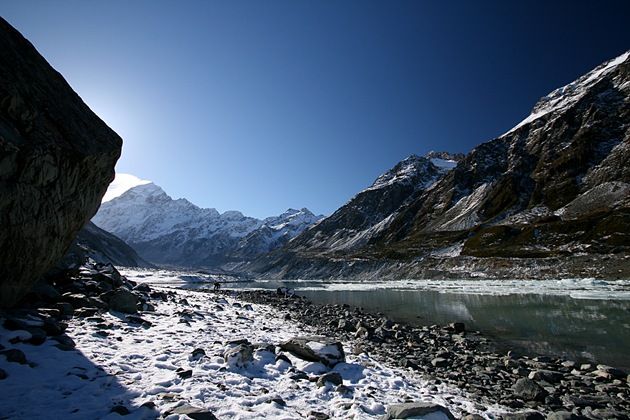
Snow covered rocks to Mount Cook

However, you can get some epically rewarding day hiking achieved around the base of this mountain, starting from the Mount Cook village.

One walk that stood out for me in this area was the walk to the lake at the foot of one of Mount Cook’s glaciers, a three – five hour return walk that crosses snow covered boulder fields and a number of glacially fed startlingly blue rivers. The walk isn’t particularly tough, other than being potentially slippy due to snow and ice, but the views are absolutely mind blowing, as Mount Cook looms over you, with snow coated mountains all around. Enthralling stuff.

Mount Cook and iceberg coated lake

Tongariro Alpine Crossing

No summation of day hikes in New Zealand would be complete without mention of the Tongariro Alpine Crossing – the walk which most people just refer to as “the Crossing”. This is a 20km, 6-8 hour one way hike across the remains of Mount Tongariro, a volcano which, before it blew its top, was easily New Zealand’s highest mountain.

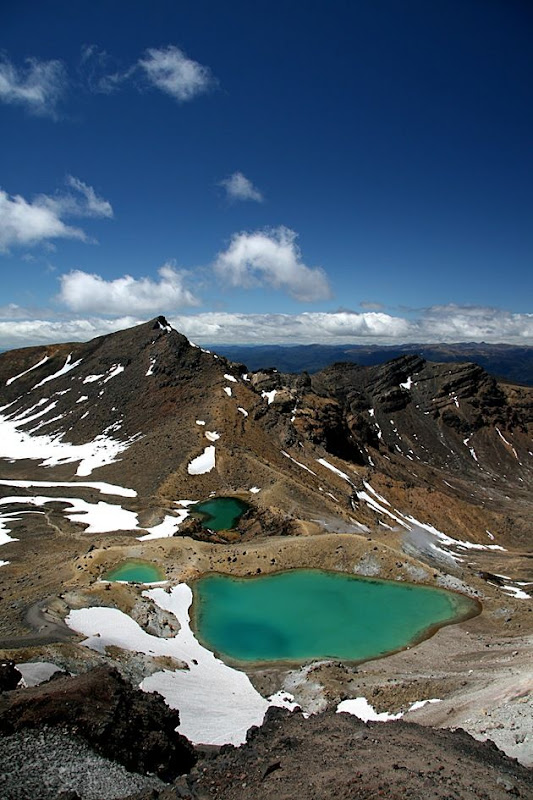
Emerald Lakes

These days the mountain is a couple of thousand metres lower than Mount Cook, but the walk, across craters, around smoking volcano cones (this area is still very much active), and past lakes whose colours have to be seen to be believed, really is a must do.

Unfortunately, this is one day hike that is on the must do list of pretty much everyone who comes to New Zealand – so don’t expect to be hiking alone. On busy days upwards of 1000 people will be tackling the hike, so it can feel like more of a commute than a walk with nature.

You can avoid the crowds by visiting either earlier in the season (around October time) or much later on. Alternatively, try taking the Mount Ngauruhoe side route instead. This is a seriously challenging climb, and not for the faint hearted, requiring you to scale a gigantic pile of loose ash to the summit.

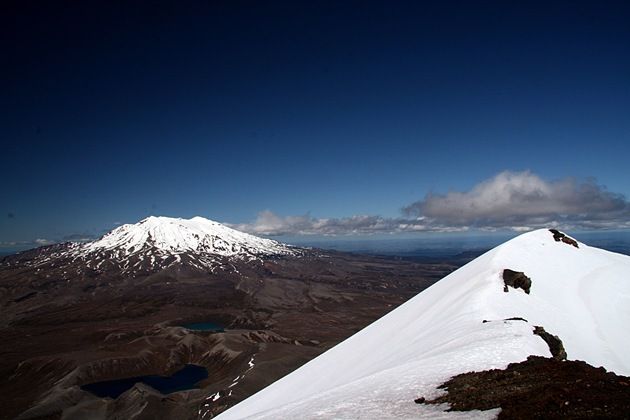
Mount Ruapehu from Mount Ngauruhoe 2

The views from here are breathtaking though, and you will be guaranteed to be sharing them with fewer people. Just don’t take too long – the hike is one way, and the buses at the end won’t wait forever.

Mount Taranaki

If I had to pick one hike in New Zealand that was my absolute favourite, the walk up Mount Taranaki would be it. Way out on the west coast of New Zealand’s north island, this incredible volcano rises vertically from sea level and flat, rolling fields, to an eye watering 2.5km in height.

Taranaki Trail Begins

This is actually a pretty dangerous walk, and nearly seventy people have lost their lives tackling this summit. For this reason, it is imperative that you check the weather conditions with the DOC office at the start of the track, and register your intentions with them in the booklet.

It may only be a 6-8 hour walk, but being right on the coast, the weather conditions here can change incredibly quickly.

We were lucky to have perfect conditions for our climb, with only a tiny bit of snow up in the crater itself. The views of the North island, right across to Mount Tongariro and Ruapehu, some 180km distant, have to be seen to be believed - when you’re not desperately trying to climb on to the ground that is. This is a walk which is not for vertigo sufferers.

If you get the chance, and the right weather conditions, I cannot recommend this hike enough.

People on the summit

Key Summit

Back on the south island again, the Key Summit track is a wonderful walk which shouldn’t take you more than a couple of hours. It follows the last part of the world famous multi-day Routeburn track in the Fiordland National Park, branching off to ascend the Key Summit.

Alpine lake reflection

The walk, although largely up, isn’t particularly strenuous, and is worth doing either on your way in to or out of Milford Sound. The reward, of views across the Fiordland National Park, is entirely worth it., with spikey mountain peaks, glacially carved valleys and rolling forests in all directions.

A small taste of what the Routeburn track may hold in store, if you have more time and the urge to tramp for multiple days.

Rob Roy Glacier Track

Last on my list of my five favourite walks in New Zealand is the Rob Roy glacier track in the Mount Aspiring National Park – a 50km drive from the town of Wanaka on the South Island.

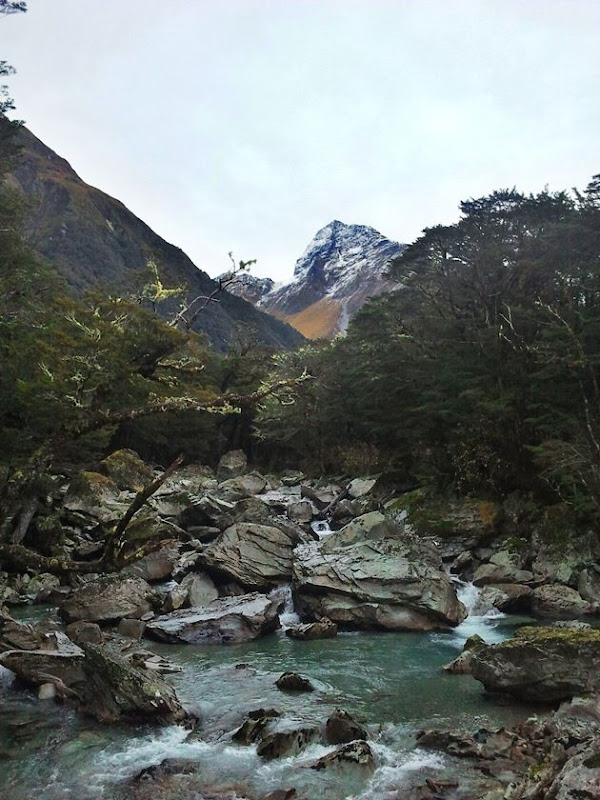
Rob Roy Glacier Track

This area is renowned across New Zealand for being home to a huge number of ski fields. When we visited though the snow hadn’t quite set in, so tramping around was still possible. Lots of ski fields mean lots of mountains, and the walk up to the Rob Roy glacier is an absolutely astounding walk.

Taking 3-4 hours, this is a moderately strenuous walk which works it’s way up through the tree line in the Mount Aspiring National Park, before bursting you out into a tundra filled valley, where a spectacular glacially coated rock face towers above you. This is a tremendously challenging place to take decent photographs given the scale on offer, but I assure you, if you do this walk, you will not be disappointed by the view.

And that is that for my five favourite day hikes in New Zealand! Got a favourite hike in New Zealand, or somewhere else in the world? Tell us about it in the comments below!

The South Crater, Mount Ngauruhoe and Mount Tongariro

Thursday, March 17, 2011

Climbing Mount Taranaki in photos

Mount Taranaki

Mount Taranaki is the second highest mountain on New Zealand’s north island, at 2517m (around 8500ft for you folks on the imperial system).

The climb up it is a gruelling 17km hike, and this is generally regarded as being one of the toughest day hikes you can do on the north island.

With this knowledge in our minds, we decided to give it a go. The day we chose was absolutely perfect, with just a gentle breeze to accompany us, and no cloud forecast.

The hike started at the 900 metre mark, and from there on in it was all uphill, first through lush forest, then scrubland, before the really hard part – a tough slog up an insanely steep scree field and a scramble up the lava flow near the top.

Here are a series of photos to give you an idea of what this walk is like. Check out the end of the post for a bit more information on the walk, and a video of me making a tit out of myself on the way back down the aforementioned scree slope…

Taranaki Trail Begins

 The path up. At around 1000m altitude here, only 1500 metres to go!

First hut - where the going starts to get tough

The end of the easy path. The trail continues up to the right of the hut.

Looking out across New Zealand

 Looking back from the hut to the Tongariro National Park, 180km away.The trail becomes tougher

Onwards and upwards. Still relatively easy compared to what is coming..

IMG_8337

 The end of the creek, the path winds round these boulders…Staircase up Mount Taranaki

 A staircase! Fairly steep too. Well, the whole thing is pretty steep if I'm honest..Scree slope up Taranaki

The end of the staircase. It’s a crazy scramble up a scree field from here on in. Vertigo sufferers need not apply.Start of the Lizard on Taranaki

End of the scree and the start of the “Lizard”, a lava flow up the side of the mountain to the crater. Also quite a scramble. Oh yes, and some snow.Looking out across the scree slope

View back across the scree scramble from the start of the Lizard. The views were pretty awesome.Entering the Taranaki Crater

Nearly the top! The crater is snow filled year round and for most of the year requires ice axes and crampons. We didn’t have these and didn’t need them.Snowy mountain and clouds

On the way up to the final summit from the crater. Actually almost there now.People on the summit

The top! And we were not alone – this walk is nowhere near as busy as some, but there are a few people on the trail when the weather is this good. Spiral Rocks

There was some art at the top. Cloudy mountain top

The view from the top with the clouds swirling around was lovely. The clouds in the far background are across the Tongariro National Park, 180km away. Laurence on the summit of Taranaki

And the inevitable picture of me at the top. Splendid stuff!

For more information on this walk, the excellent Department of Conservation centre at the start of the walk has pretty much everything you need to know. There is also a sign in and sign out book which is essential to fill in even for the day hikes – the weather here changes incredibly quickly and having someone know you are still on the mountain is a comfort. It is a serious mountain to hike – over sixty people have died on its slopes – so every precaution should be taken.

For more information on how to prepare for a day hike, check out my day hikes - what you need to know post. Otherwise, I can highly recommend this walk if you want a slightly less crowded volcano climb compared to say the Tongariro Alpine Crossing, or are just looking for a really awesome uphill stroll. And now.. here’s that video I mentioned:

Thanks for reading! If you enjoyed this post, why not take a look at some of the other posts I’ve done featuring the Taranaki region, including two fabulous road trips in the area: the Surf Coast Highway, and the Lost World Highway.


Saturday, February 26, 2011

More lakes and mountains in Tongariro

Tama Lake and Mount NgauruhoeOur time in the Tongariro National Park – the spectacular dual world heritage site on New Zealand’s North Island – is dwindling to an end.

The four months we’ve spent here have been fabulous, and now that the end is in sight, with a new adventure on the way (more on that in a later post), we’re doing our best to finish seeing all of the sights in the area.

In the last couple of weeks therefore we’ve been swimming in a volcano crater, peered at the awesome Tama Lakes, explored some silica coated river rapids, and even ventured a little further afield into the stunning Kaimanawa Mountain Ranges. Here are the stories to accompany these adventures, with some photos to boot!

Tama Lakes

I’ve actually seen the Tama Lakes before – a pair of lakes nestling in some ancient volcano craters in the valley between Mount Ngauruhoe and Mount Ruapehu. At the time, I was standing on the top of Mount Ngauruhoe and peering down at them over the edge of a kilometre long drop, so whilst the view was good, I wasn’t able to get quite so up close and personal.

Tama Lakes from Mount Ngauruhoe

That has now changed, as we have now conquered the valley that the lakes lie in, on a 17km return trek that took us across sub alpine terrain, with short tussocks of grass, heather, and surreal white lichens our main companions.

The trek afforded another wonderful view of the mountainous scenery on offer in the Tongariro National Park, and as it wasn’t a part of the Tongariro Alpine Crossing, it had the added bonus of being almost people free.

Tama Lakes and Mount Ngauruhoe

The lakes themselves, right at the end of the walk, were an almost iridescent shade of blue, with the towering mountains looming down on us. Quite magnificent stuff. If you are interested in doing this walk when in Tongariro, it starts at Whakapapa village, and the first part of it is along the same part of the track as the Taranaki Falls walk.

Silica Rapids

Another walk that departs from Whakapapa village, this one rambles through alpine forests of moss coated trees and along seriously gurgling streams before the view opens up onto the beautiful Silica Rapids. These are a series of, not entirely surprisingly, water rapids, dashing over the silica coated rocks of the stream bed.

Water flowing over Silica Rapids

The silica coating has been formed as a result of mineral deposits over countless years, with the end result being the sight of water dancing over a cream coated river bed. A worthwhile way to while away a few hours.

Lake Rotopounamu

We’ve visited Lake Rotopounamu before, only the last time we went the weather was not quite as warm. This time we decided to go all out, and packed sun cream, books and towels, and ended up having an afternoon at the beach.

Yes, we may be living at least 150km from the sea in any direction, but we didn’t want to let that stop us from participating in this quintessentially summer time tradition before summer runs out.

Vera at Lake Rotopounamu

So to the beach we went, and lie on the beach we did, and even swim in the not totally warm waters of the lake itself we managed. Despite the warming rays of the sun, this lake, sitting in a crater at an altitude of around a thousand metres, never gets exactly balmy.

Still, it’s been a while since I’ve had a good swim in a lake, even if this was a little on the brief side, and it was all in all, a jolly way to spend the afternoon.

Kaimanawa Mountains

Last on our list of recent explorations are the Kaimanawa Mountain ranges, which border the Tongariro National Park to the North East. These are a spiny series of mountain ridges, rising to around 1700 metres, which have been tempting me with their potential ever since we arrived in the area. We have already explored a part of their beauty with the magnificent Pillars of Hercules meander, now it was time to ascend into their peaks.

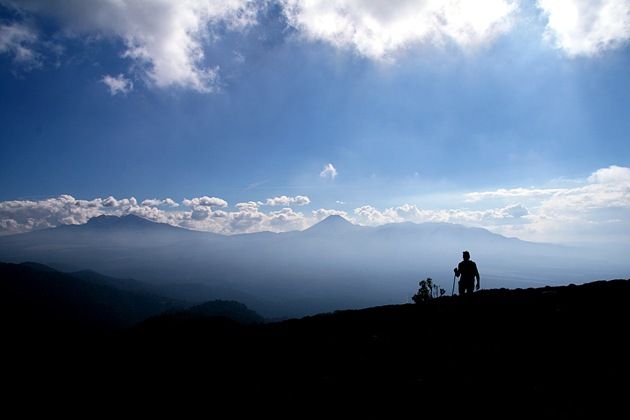
Silhoutte of girl walking

We chose to walk up the Umukarikari track, a five hour tramping track up Mount Umukarikari, a 1561m high peak in the centre of the ranges. This track is one of the many tramping tracks in the area, which also offers multiple huts for overnight sleeping and a multitude of multi-day tramps.

Despite all the incredible walking on offer, and the spectacular views across to the three peaks of the Tongariro National Park, we barely saw another soul on this walk. The previously mentioned Venice effect in full play here.

Kaiwamana Ranges Walk

The walk itself was pretty tough, being as it was almost all uphill from start to peak. The first five kilometres were up through densely wooded forest, which we then burst out of before the final two or three kilometres to the peak itself.

It was these last few kilometres that really made the walk for us, with the range stretching out all around us, and the three peaks of Tongariro providing a stunning backdrop. We paused at the top to take it all in, before we headed back down, with some wonderful light accompanying us over the mountain as we drove home.

If you’re in the area, and thinking about exploring the Kaimanawa Ranges, the New Zealand DOC website has loads of information on walks in the area.

Crepuscular rays over Tongariro National Park

Well, those were four recent adventures we have undertaken. Our last major undertaking in the area will be the conquering of Mount Ruapehu, which at just over 2700 metres, is a bit of a challenge. That one will require a bit of luck in terms of perfect weather, but in the ten or so days we have left here, I’m really hoping we are able to get it done.

Monday, December 13, 2010

Day hikes: what you need to know

Sign at start of Tongariro Alpine Crossing Living in the shadow of one of New Zealand’s top day hikes means I get regularly asked about what sort of preparation folks need to do in order to have a comfortable and safe walk. It’s a subject that’s close to my heart, having done a fair amount of walking, particularly during my time in Australia, where the heat can make for a challenging experience. I thought an article on preparing for a day hike would come in handy.

First of all, what do I mean by a day hike? Well, as the title suggests, this would be a walk that lasts for no more than a day. The distance would really depend on the type of terrain, but would rarely be longer than 30km, although walking 50km in a day is certainly achievable for fit individuals. I’d say an average of 20km would be more likely.

With this in mind, there are certain items of equipment that you aren’t likely to be needing on a day hike, compared to a longer hike. These mostly revolve around eating and sleeping equipment – there’s little point lugging a tent, sleeping bag and cooking gear if it’s not going to be used. So what do you need then?

Pre trip preparation.

The most important part of the trip is preparation. Here are some things you should keep in mind:

Weather

You need to know what the weather conditions are likely to be on the trip you are going to be taking, and what extremes are possible to occur. It may be that the weather forecast for your alpine hike is glorious sunshine, but be aware that forecasts are not always totally accurate. So you need to be aware of what conditions may occur in the season you are hiking, so you can prepare appropriately. It may be predicted to be sunny, but you don’t want to be stuck on the top of a mountain in shorts and T-shirt when it starts snowing.Mount Ngauruhoe on the Tongariro Alpine Crossing Track

Route

Having a good idea of the route you are going to be taking is essential. Sometimes tracks will be well marked and full of people, other times you’ll be walking on your own trying to figure out which bit of rock you’re supposed to be aiming for. A detailed map of the area will come in handy. If the route is really out of the way, then a GPS may be a good option. As well as the actual direction of the route, be aware of the sort of ascents and descents you are going to be doing, so you can be mentally prepared in advance for the potential challenge ahead, as well as alerted if you are going off track.

Clothing

Appropriate clothing is critical for having a comfortable and safe walk. You need to be wearing and carrying clothing that will get you safely to the other end of the walk in whatever conditions mother nature is likely to throw at you.

View from the top of the Castle Rock, New South Wales, a challenging 7 hour day hike The layering system of clothing is the best way forward. All this means is that you have a number of layers that you can put on and remove depending on the conditions, from shorts and a T-shirt up to thermals and a waterproof outer shell. Of course, based on your knowledge of the likely conditions, don’t go way over the top. If you think it’s likely to be cold and wet, then the sombrero and flip flops are unlikely to get much use.

Based on the conditions, therefore, you need to decide what to take that will keep you warm, dry and safe. I would recommend that for maximum comfort you get some clothing that is specifically designed for outdoor activity. Standard T-shirts are more often than not made of cotton, which gets wet easily from sweat and then doesn’t dry for ages, leaving you uncomfortable.

Properly designed walking clothing, manufactured from synthetics such as polyester, will take the moisture away from your skin and dry quickly, resulting in you having a far more pleasant walking experience. This principle works all the way though – so you would want something like a polyester fleece rather than a cotton hoodie as an interim layer, then a walking jacket on the outside.

Obviously you can spend as much money as you like on gear that will promise you wonderful things. Personally I’ve found little difference in performance between the cheap brands and the expensive ones, particularly for things like base layers. You may want to spend a little more on an outer jacket to ensure you get something truly waterproof (keeps the water out) and breathable (lets your sweat out).

Warning sign at the start of the walk. Paying attention to these is a good tip!

As an example of clothing, here is what I took on the Tongariro Alpine Crossing and Mount Ngauruhoe ascent, a 19.5km day hike which peaks at 2200 metres and has the potential for bad weather at any time of year. This walk was done during Spring, when snow was still lying on many parts of the track.

  • Merino wool thermal base layer (long pants and T-shirt)
  • Nylon walking trousers with zip off legs for shorts
  • Two fleeces, a thin one and a jacket, both polyester / nylon
  • A gore-tex windproof jacket
  • Gloves
  • Thick wool walking socks
  • Walking boots

For much of the walk, even though it was windy and there was snow on the ground, the weather was absolutely glorious, with the sun beating down, so all I wore was the thermal base layer and trousers, with everything else in my backpack. During the descent phases, when my body wasn’t generating as much heat, I put the thinner fleeces on.

The message here is really to do your research on likely conditions, and take everything you think you may need. It is better to have it and not need it, than to need it and not have it.

The last item of clothing, and perhaps the most important, is that of footwear. Your feet are going to be transporting you a long way, and you are going to want them to be comfortable. There are endless varieties of footwear available. What you want to do is to wear boots that you have broken in, that are comfortable, and that don’t give you blisters. On trickier terrain, walking boots provide critical ankle support as well as solid grip. When it’s wet and rainy, they should be waterproof. Sand dunes - New South Wales - Australia. Walking in deep sand and hot temperatures is a serious challenge - plan accordingly!

Buy your boots well in advance of your walk from a reputable store who can help you out with getting the correct fit for your feet, and walk in them for a while to “break them in” before tackling any serious hills. Pair them with some good walking socks. A good trick is to wear a pair of thin socks underneath the wool socks, to minimise friction and the potential for blisters.

Food and Water

Walking is a great activity for burning off energy, so you want to make sure you give your body enough food to last you through the day. Ideally you want food that releases energy as the day goes on rather than the quick release that you may get from chocolate. Muesli bars and nuts are a great choice, as well as sandwiches. Of course, chocolate is a good idea anyway, you’ll want to reward yourself at the top of the mountain with something. Carry enough food to keep you going throughout the day, and bear in mind that it’s more efficient to eat regular small snacks instead of one big meal so as to keep your energy levels from spiking and crashing.

The most important thing to carry, however, is water. You can last for three weeks without food, but only three days without water. Dehydration is a very serious danger when walking, signs include dizziness, headaches and nausea, and you need to avoid this at all costs.The climb up Uluru. A handy rail to follow.. and many many people to do it with!

You will want to carry an absolute minimum of 2 litres, and if the weather conditions are liable to be hot, then far more. Drinking a litre an hour is a perfectly reasonable amount on a hot day, so carrying five litres of water is not unheard of. Yes, water is heavy (a kilo a litre) but as the day goes by you will drink it and your pack will get lighter.

I cannot stress the importance of carrying sufficient water enough. A great way to keep your water intake up is to buy one of those bladders which goes into your backpack and feeds a tube round to your mouth. This way you can take sips as you go without having to stop and go through the hassle of finding your water bottle. Sometimes water is available on the track, but more often than not it isn’t, so don’t count on it.

Other gear

Obviously you are going to need a comfortable bag to do the walk. A day pack of around 20-25 litres should be more than enough to fit all your gear in. You really want something with straps that come around your waist and chest to help distribute the load and keep it stable. Also, I’d recommend something which lets air flow over your back to keep the sweat from building up. 

Walking the Razorback in the Victorian Alps - a 22km day hike - AustraliaIf the weather is likely to be hot and sunny, and even if it isn’t, sun cream is usually a good idea, as are a hat and sunglasses.

In terms of emergency gear, a mobile phone is quite likely going to be the single most useful item you can carry, although don’t always count on reception. For any walk, you should let someone reliable know where you are going and when you are expected to be back, so help can be summoned should you not appear. Beyond that it depends on the conditions you are likely to be encountering for the sort of extra gear you should be taking, from crampons and ice axes to survival shelters and torches. Most day hikes won’t require this level of gear however, some plasters will usually suffice, and perhaps walking poles if you find them to help with any knee troubles.

Finally, plastic bags always come in handy. If the weather turns bad, you can wrap all your electronic gear in them to keep it safe, such as cameras, phones and so on.

The hike itself

Now that you are ready for the trip, the most important thing to remember is to enjoy yourself. You’re out walking for the scenery and the views, so take your time, take lots of photos, and generally have fun. If you find yourself struggling, take more breaks. If things seem really too difficult, or the weather starts to close in, don’t be afraid to turn back.

As you walk, take in plenty of fluids, and don’t forget to snack from time to time. If it’s hot, re-apply sunscreen regularly – sweat will likely cause it to lose its effectiveness over time.

Do your best to stay on the marked tracks, particularly if it is a busy route. Erosion caused by walkers straying off the paths can be a real problem, so try to help out where you can. And naturally, take out any rubbish you bring in :)Sometimes... just a walk on the beach is enough... Fraser Island - AustraliaWell, that’s about it on the topic of day hikes. If you’ve got any questions, or have anything to add, feel free to pop them in the comments below. Also, you may want to take a look at this article, detailing my three favourite Australian day hikes. Enjoy!

 
Bloggers - Meet Millions of Bloggers