Related Posts Plugin for WordPress, Blogger...
Showing posts with label France. Show all posts

Friday, April 20, 2012

Angouleme–wanders around the ramparts

Angouleme castle.png

This is my third post on Angoulême! Who would have thought one French town could hold so much appeal? Admittedly, Angoulême cheated slightly, by seducing me with awesome street art. That’s a good way for any city to get my attention, and more than one post. See Berlin’s street art for example.

So I have now thoroughly covered the paintings on the walls of Angouleme in this post and this post.

There is, I am pleased to tell you, more to Angouleme than just great street art. Although, if you ask me, that’s enough to make a city worth a visit anyway. 

Angoulême is the capital of France’s Charente department, in the Poitou-Charentes region. Charente is also notable for being home to the town of Cognac, for the drinkers amongst you.

The Charente department is named for the river Charente, above which the main centre of the town of Angoulême perches. The rocky outcrop upon which the old town sits was, back in the day, splendidly defendable, and this is a town which has seen its fair share of sieges and plunders, with a history of invasions dating back to the 5th century.
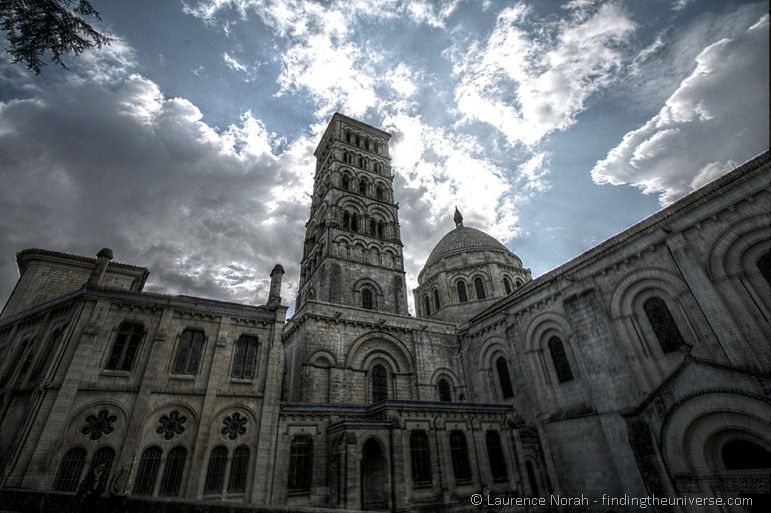
Angouleme Cathedral blue sky.png

These days the fortifications that surrounded the old town have been turned into boulevards which sit upon the old city walls, and afford the visitor a rather jolly set of views across the valley surrounding. A valley which is, admittedly, rather full of industry, but still. The thought is there.

The old centre of Angoulême is rather more interesting than its surrounding industrial area, being home as it is to a fine pedestrianised and cobbled town centre, which is just stuffed full of restaurants and quirky little streets to explore.

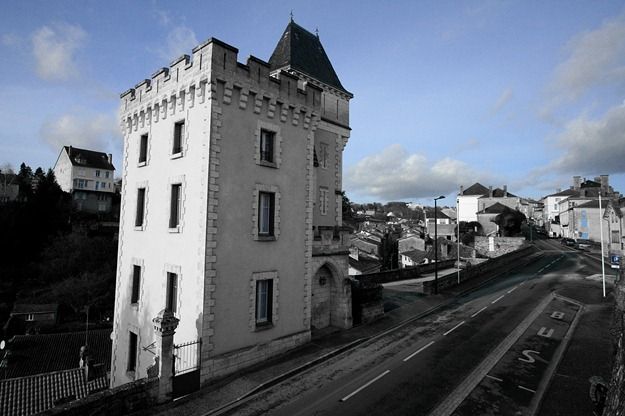
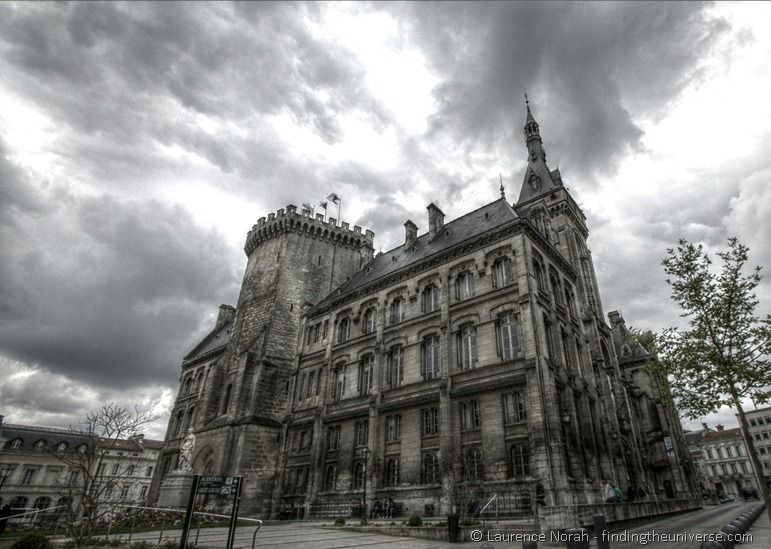
It also has its fair share of interesting looking buildings, including a fine cathedral (as seen in the photo above), and the “hotel de Ville” (first photo), which incorporates into its design the old chateau of Angoulême.
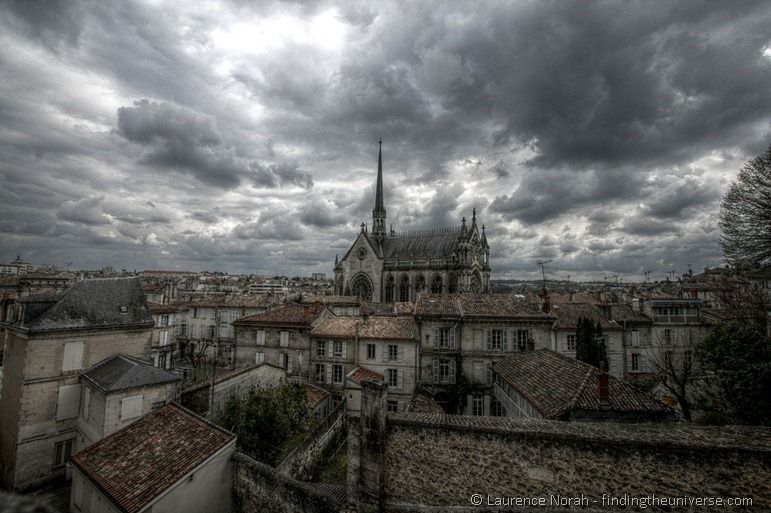
Angouleme Church

Angoulême is a very vibrant town, made so perhaps by its large student population. There is a really positive buzz in the city centre, with lots of people wandering and plenty to see down the twisty alleys.

When wandering, if you’re in the mood, there are a number of museums that could while away a rainy afternoon. These include the Fine Arts and Archaeology Museums, as well as the Paper Museum and Comic Book Museum. The latter sounding more interesting to me, although to be honest, museums have to be pretty damn amazing (or featuring Dali) to get me excited.
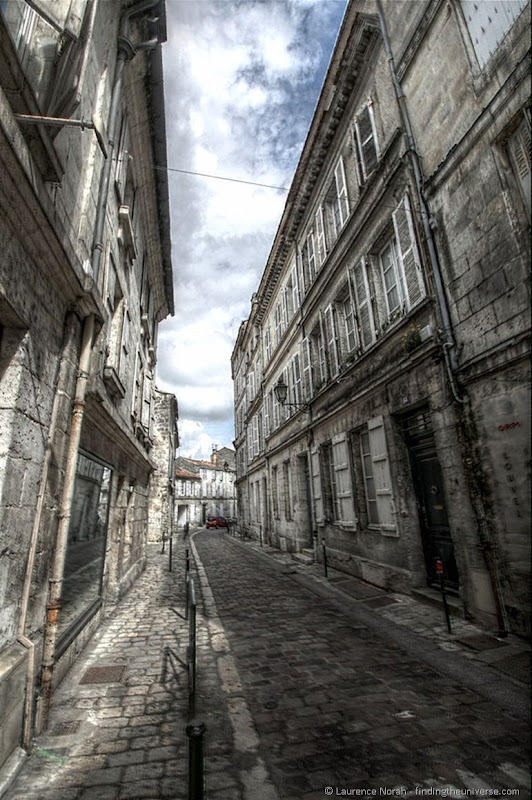
Angouleme Street.png

If you’re like me, and wandering aimlessly peering at street art or sculptures is more your thing, then you should swing into the tourist office and pick up the map of the notable street art in Angouleme, which will guide you past the main highlights.

If you’re more into formalised art with a side of greenery, then there is a lovely park under the ramparts to the west of the city, which features sculptures and fountains. A nice way to round off a bit of exploration.

Church Angouleme cloudy angry sky.png

Finally, Angoulême is also notable for its events and festivals. As well as the yearly international comic book festival, held every January, there is a classic car race which takes place around the roads of Angoulême , held every September since 1939. There are also music, food and animation festivals. Something to suit every taste!

If you’re in the area, I can really recommend taking a bit of time out to explore Angoulême. It’s a fascinating town with loads to see and do, and no shortage of excellent restaurants to fill up on fine French food!

As always, I’d love your feedback on this post! Is Angoulême somewhere you’ve been, or somewhere you’d want to visit? Never heard of it before now? Hit up the comments below, and let me know!

Tuesday, April 10, 2012

In Photos: Street Art of Angoulême (Part 2)

Street Art French Angouleme Couple embracing far away HDR.png

In my previous post I shared with you the rather fabulous trompe l'oeil that can be found on one of the walls in Angoulême’s old town centre, where two chaps do their best to break into reality.

Today’s post is about some of the rest of the street art that Vera and I found and photographed as we wandered around the lovely old town of Angoulême on a recent trip. Enjoy!

Street Art French Angouleme  Couple embracing on wall.png


Street Art French Angouleme  Flying angel.png


Street Art French Angouleme Chinese Lady on Door.png


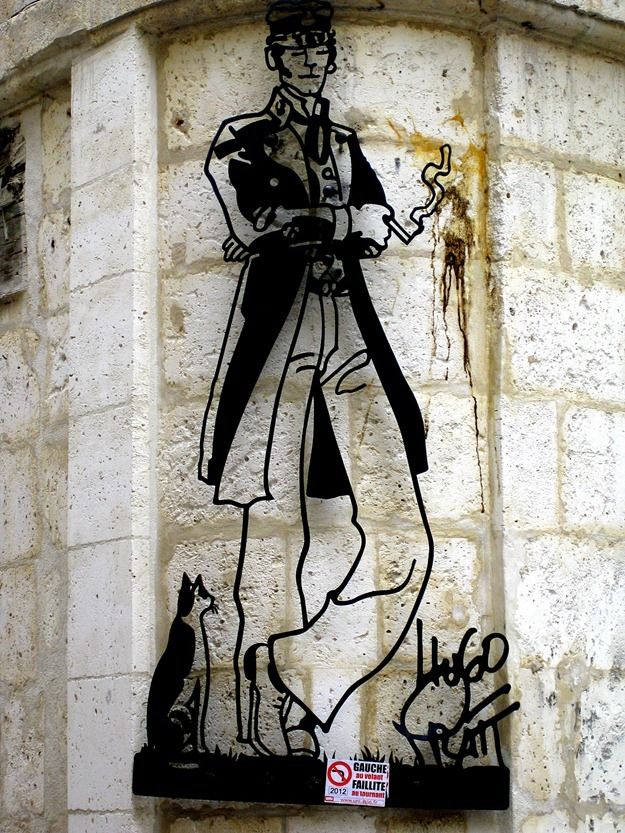
Street Art French Angouleme Dandy smoking line drawing.png


Street Art French Angouleme Giant yellow monster.png


Street Art French Angouleme Man and child drawing.png


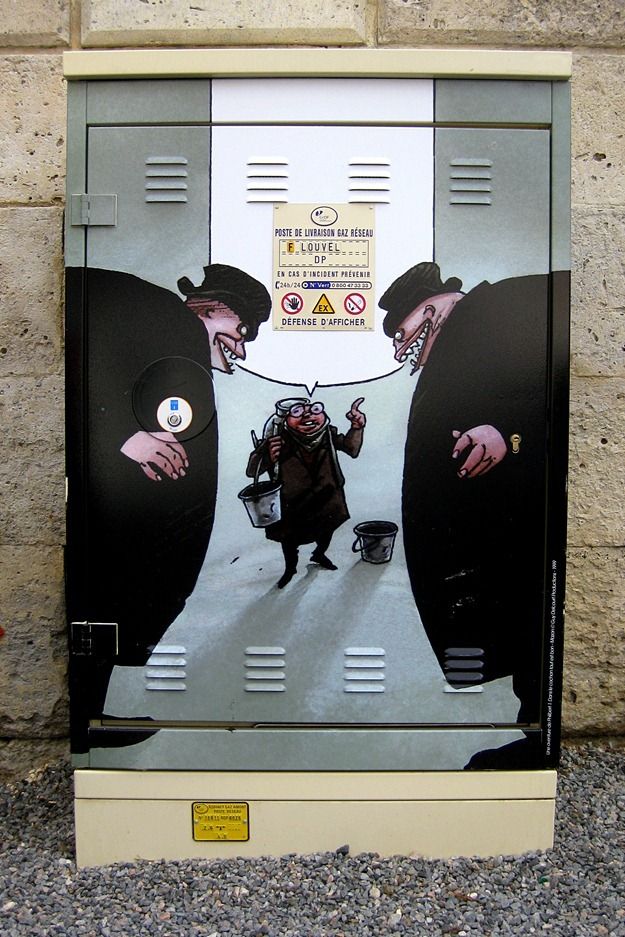
Street Art French Angouleme Two scary big men intimdating small man.png


Street Art French Angouleme Waving Man and Woman with dog.png


Street Art French Angouleme 1984.png

So what do you think? Does Angouleme have sufficient street art to tempt you.. or do you need more from a city than just pretty paintings on the walls?

Let me know in the comments, and keep an eye out for the next post in my Angoulême trilogy, where I’ll be sharing my thoughts on the other attractions!

Sunday, April 8, 2012

In Photos: Street Art of Angoulême (Part 1)

The town of Angoulême, capital of France’s Charente department, is notable for many things. It boasts an impressive location, high up on a rocky outcrop overlooking the Charente river. It has a rather fabulous collection of old buildings, from churches to castle ruins. And it has a wonderful old town that is just ripe for exploration.

And I’m going to save all that for another post, because over the next couple of posts I just want to share with you the other thing that Angoulême is famous for, that being it’s yearly international comic festival.

This has resulted in the walls of Angoulême being coated in a myriad of wonderful street art, from small pieces through to huge trompe l'oeils, or eye deceivers.

The first part of this two part series focuses on six images which take up a whole section of the street wall. Which, despite appearances, is entirely flat. Enjoy!

Escaping reality

Street Art French Angouleme Reality Series Part 1.png


Street Art French Angouleme Reality Series Part 2.png


Street Art French Angouleme Reality Series Part 3.png


Street Art French Angouleme Reality Series Part 4.png


Street Art French Angouleme Reality Series Part 5.png


Street Art French Angouleme Reality Series Part 6.png

Shout if you need a translation! Keep an eye out for the next couple of posts on Angouleme, which will cover the remainder of the street art.. and then some thoughts on the city itself.

Sunday, March 11, 2012

Nontron – French town of the knife

Nontron entrance castle coloured.png

Were I a knife aficionado, (of the pen knife, rather than the Crocodile Dundee variety), then I could not have picked a better place to locate myself in France than where I am now, near the town of Nontron.

Because as it turns out, Nontron is home to France’s original folding knife creators, a cutlery making tradition which dates all the way back to 1653.

I’m not exactly a knife aficionado, but sharp pointy objects kindle the inner cave man in me, plus I’m on a roll with seeing traditional French stuff of late, so a visit to the Nontron knife centre, along with a wander around the town streets with my camera, was long overdue.

Nontron is a very pretty French town, although that does seem to be the rule rather than the exception, as explorations of both Brantome and Perigueux have revealed. It is perched on a rocky promontory overlooking the valley of the river Bandiat, and is dotted with churches, bits of castle, crumbly old beam laden properties and a number of rather splendid looking viaducts.

Nontron castle arch blue sky.png

These were all observed carefully. However, the main aim of the day was to find out more about the Nontron knife, and to do that we had to go to the knife centre in town. Of the 39 knife manufacturers active in the region three hundred years ago, this is the sole survivor, and is where today over 65,000 Nontron knives are manufactured annually.

This is a working factory rather than a museum, and it’s a working factory for fairly dangerous pointy things, so there isn’t much getting opportunity for getting up close and personal. Rather, there is a sort of knife makers zoo in operation.

The building, which is free to visit, is on two levels, with the workers busily creating knives on the lower level, and you, the happy watching public, safely ensconced behind thick glass on the level above, able to gaze down at the whole operation.

It’s fascinating stuff, watching these knives being put together by skilled craftsman and naturally it is all accompanied by information panels that tell you a great deal about the process and history of knife making. 

From time to time the knife crafters will look up from their work and give you a smile and a nod, making you feel that perhaps you are the ones on display, sent to entertain. Whichever way round it is, it’s a fun experience. And did I mention it’s free to boot?

Nontron knife workers making knives.png

Nontron also holds an an annual knife festival (who needs bulls eh), where people come from all over the world to peer at shiny pointy things. You don’t hold the title of French knife capital for nothing!

The knife makers go a bit bonkers for this festival, with all kinds of twists on the traditional folding knife being created for display, from the much-larger-than-you-could-fit-in-your-pocket version, right down to the so-small-it-is-made-out-of-a-cherry-stone version. I guess making 65,000 knives a year under the close inspection of the travelling public means that you want to break out of the mould every once in a while.

Nontron knives folding penknife.png

Beyond knives, as mentioned above, Nontron is lovely for a wander. There is the Jardin des arts, overlooking the Bandiat valley, which combines landscaped garden with artistic creations and a marvellous view of the town. There is the centre for arts and crafts, which displays, you guessed it, both traditional and modern arts and crafts from the region and France as a whole. This being France, there is also a local weekly market, held every Saturday.

And if you’re all crafted out after that, well, as with any French town, there is no shortage of excellent places to stop and grab something to eat or drink! Which was how we finished our tour.

Nontron street lights France.png

If you’re visiting Nontron, then I can highly recommend a visit to the knife museum, which is open pretty much year round. And for more information about Nontron and attractions in the area, head to the town’s own website, nontron.fr. Enjoy!

Thursday, March 1, 2012

In photos: My life in France (so far!)

For today’s post I thought I’d share some of my favourite photos from my first four months of living in France. The surrounding area holds all kinds of attractions, plus the rural nature of our current living arrangement makes for all sorts of lovely shots. Here are some of them!

Red leaf coated house 2

The local towns and villages err seriously towards the cute. Old, plant covered buildings, beautiful shutters, serious stonework. What is not to love!

Arch in Nontron

Our closest town, Nontron, is famous for it’s knife making. I’ll be writing about that soon. In the meantime, here’s an arch under the town castle.

Barriere Castle ruins France perigueux.png

Our regional capital, the town of Perigueux, has over 2000 years of history to explore - from its early Gaulic and Roman roots, to a fascinating medieval town centre and a UNESCO listed cathedral. This is Barriere Castle, a 12th century castle which as you can see didn’t do too well during the various religious wars and crusades of the time.

Brantome street shop

The town of Brantome is known as the Venice of France, largely because it has some water features going for it. It’s not that much like Venice, but it doesn’t need to be – this is an awesome little spot with fabulous restaurants and caves which once featured troglodytic monks. Who needs Venice!

Chateau Lastours

Castle also feature heavily in the surrounding area – this part of France is said to be the land of 1001 castles. From the Norman style ruins of those such as this at Lastours, to beautifully preserved Renaissance Chateauxs such as those at Jumilhac - there are castles here to meet every need, and we’ve been out to see a number of them!

Church at Montbron

If you’re a church buff you won’t go short. This is the church in the little town of Montbron – as you can see, even the smaller villages have pretty impressive churches going for them. Visit the larger towns of the region, and the splendour just grows and grows!

deadly mushrooms

Food is a big deal in France as well I have learnt. I wouldn’t go for these mushrooms, but there are nearly endless varieties of mushrooms that you can eat, and during the months of October and November, the surrounding woodlands are filled with hopefuls searching for treats to serve up.

Amazing food

…and if you do go out to eat (which we do, often!).. you can be assured that you will not end up hungry! This was just the starter in a four course Christmas Eve meal!

House water reflection

France has so many pretty villages that there is even an association of pretty villages. St Jean de Cole is a nearby village on the list, and also holds the title of being the village with the prettiest roofs in France. Who knew such a thing even existed!

Kitchen renovation

Slightly closer to home, and we have our own bits of crumbly building to get excited about. This is going to be a new kitchen at some point, after a bit of work, Formerly it was the bread oven, which is what the hole in the far wall is all about. That is going to be restored to former glories.. if we can find a door to fit!

Log piles in the snow

Like most of Europe, we also got hit by the freak snowy weather in the last month. This being rural France, our roads stayed snow coated and slippery for a couple of weeks – snow ploughs and salt spreaders do not feature highly on the local councils budget!

Nosy Chickens

Rurality has its benefits. We have acquired four chickens who produce incredible eggs, as well as possessing fascinating personalities to amuse us.

Oradour Sur Glane street

History is never far away, and France has no shortage of that. More recent history here, in the village of Oradour Sur Glane, site of the most devastating civilian atrocity in France of the second world war. A staggeringly moving place to visit.

Smoke through the trees

And finally, three photos of our garden, which is a mix of open land and woodland, and is also home to our small campsite operation. It is a wonderful place to explore and relax in :)

Snowy garden


View from my window

And that was four months in France, neatly summed up in pictures. As the days grow longer and the light more abundant, I’m hoping to get out even more and be able to share more of my adventures with you. Don’t forget to check out the sites facebook page for even more photos from my travels!

Monday, February 27, 2012

An Old French Mill

French nut mill baker sign France stone

Parts of rural France have some really old bits of industry lying around. One of the more common types of surviving building still in use today are the old mills that were used to create both flour and oil.

Of course, not all the mills that once dotted the landscape have survived intact. Many, whilst still technically classed as mills, no longer operate as such, having been turned into guest houses, or restaurants, or terribly good looking private accommodation. A water wheel stuck on the outside of your house being the ultimate water feature for the discerning property buyer.

So when you are invited to visit a still working version of one these mills, which has survived from the 17th century through revolution, Nazi occupation, economic crisis and a general lack of interest from the youth of today, you would jump at the chance. 

Spinning water wheel.png

We were recently invited on just such a trip by a local mill owning friend, so jump we did - excited about this opportunity to visit a part of rural French history.

To my mind, for some reason, mills are big places with giant sails on the outside. However, as this is France and not Holland, the majority of mills are water rather than wind powered. Thus the main giveaway that the place you are visiting is not just a house by a river is the giant waterwheel affixed to its external wall, which is responsible for powering the whole operation. Even in the nuclear powered France of today.

Stepping inside the Moulin de la Chaume for the first time, and greetings complete (everyone is terribly jovial in France, and much kissing is required), the first thing that hit us was the wonderful scent of gently toasting walnuts. This being a walnut oil mill.

Walnuts being crushed by stone wheel in water powered mill France

Walnuts being crushed by the giant stone water powered wheel.

Some things I had not previously known about walnut oil production: it takes about 20 kilos of nuts to produce around 8 – 10 litres of oil. The walnuts need to be crushed to a fine goo, then warmed, then pressed. And walnut shelling is done by hand, during a giant walnut shelling party which involves much drinking. We sadly missed out on that part of the process.

Walnut oil maker stirring

After crushing, the walnuts are warmed to soften, then pressed for their oil.

This particular mill isn’t really a commercial operation. They make a small amount of walnut oil as an artisanal product for sale, but the main service they offer is oil production from your own walnuts.

Turn up with your sack of peeled nuts, leave with some bottles of aromatic oil, perfect for drizzling on salads. This seemed to be a very popular option, with beret wearing French people turning up very regularly to much kissing and joy, followed by much crushing and extracting, with excited peering at the wheel going round.

A real slice of French rural life, probably not much changed over the last couple of hundred years, other than the mode of transport now being petrol rather than hay powered.

Walnut oil in bottle.png

The finished product!

As well as all the walnut oil creation paraphernalia, the mill was also home to a small scale flour mill. The really interesting part of this, as well as the various grain crushing, sifting, sorting and transporting devices, was the collection of flour bags that had accumulated over the life of the mill.

One in particular stood out, an all too recognisable symbol on an otherwise innocuous container.

Nazi swastika symbol with eagle on flour bag

And that was that for the mill visit. You can usually visit mills like this quite easily if you ring in advance to arrange a viewing. There is a website for the Federation des Moulins de France, which lists all the mills in France, when they were built, what they make, and if you can visit. If you’re interested in this sort of thing, I can highly recommend taking the time to pop along.

Saturday, February 18, 2012

Perigueux: what have the Romans ever done for us?

St Front cathedral exterior france perigueux unesco.png

If the title of this blog post makes little sense to you, then you should pause your whole life for a couple of hours and go watch Monty Python’s Life of Brian. Done that? Good.

Perigueux is a town with a remarkably hard to spell name in the heart of France’s Dordogne. It is the administrative capital of the region, and has held the title of capital for some time, ever since 200BC in fact, back when the Gauls ran France.

Of course, the Romans put a bit of an end to that, with their rampant empire building, so for a few hundred years this was a serious Roman city, before the Romans gave up the whole empire thing and moved on to driving funky scooters and coming up with romance.

Ruined Roman Temple of Vesunna perigueux France.png

After the Romans came that dark bit of history that no-one seems to know much about, after which came the Middle Ages, during which time all kinds of embellishments appeared around the city, like the Cathedral, which is one of the sights on the Santiago de Compostela pilgrimage.

What all this history means is that Perigueux is a rather interesting place to wander around, filled as it is with relics from over 2000 years of history. So wander we did.

The initial approach to Perigueux is, it has to be admitted, not totally exciting. The town has sprawled beyond its Roman and medieval roots and moved on to being filled with the sort of large commercial parks that you would expect to find in any big town.

Close your eyes as you come into the town though, and all is well. Assuming someone else is driving of course. Or you’re reading this in the future where driverless cars have become the norm.

Barriere Castle ruins France perigueux.png

There are two main parts to the city that are of interest to the visitor – the old crumbling roman ruins, and the slightly newer and less crumbly medieval bits.

The Roman Bits

We started with the crumbly Roman ruins. We visited the remains of the temple of Vesunna, a Gallic goddess, which was built in the 2nd century AD. This is a fairly imposing bit of construction, measuring 27 metres in both height and in diameter. The original temple would have been much bigger – now only the central and most sacred part remains. And it looks good, for its age.

perigueux amphitheatre ruins france roman.png

Beyond the temple we visited the very crumbly remains of the amphitheatre, now a public park, which has a children's playground in the middle and the ruins of the original seating around the rim. This was actually quite weird to walk around – the mix of ancient and new in the same place seemed quite out of place. Try imagining someone popping a couple of swings in the middle of the coliseum for an idea of what I mean. 

After exploring further Roman ruins, and the burnt remains of the 12th century Barriere Castle, sacrificed in one of the regions wars of religion, we headed up to the medieval town centre.

The Medieval Bits

This is absolutely dominated by the St Front Cathedral – a UNESCO World Heritage site. This is more impressive on the outside than the in, covered as it is in little cupolas and domes. Inside it is cavernously vast and sparsely decorated, a far cry from the usual lavishness one finds in these places.

Around the cathedral the twisty mazes of the largely pedestrian only medieval town wind and wind, these are an explorers paradise, with countless little shops and restaurants tucked away to be discovered, and endless scope for wandering. Which we did, at some length, before finding somewhere to fill ourselves with excellent French food.

Medieval city street france perigueux

If you’re visiting the area, Perigueux is a must visit. It’s easy to get to and from, having both a train station and airport, and forms an excellent base for exploring the region. Beyond the town, there are no end of sights to see, from the town of Brantome to the endless castles of the region. You won’t run out of things to do!

 
Bloggers - Meet Millions of Bloggers