
Today, it's back to Europe with a big thank you Ben for this fabulous insights about Germany and it's festivals. Can't wait to visit one of them ;)
You shouldn’t need any special reason to visit Germany. There are amazing city breaks that you could try, plus the beautiful forests, lakes and mountains for the more leisurely walking and cycling holidays. However, Germany does have a wealth of festivals. They happen throughout the year, and some are well worth checking out. They cover everything from cultural diversity to celebrations of beer and wine, so there is always something to match anyone's interests.
With a population of three and a half million, Berlin is Germany’s largest city, and with half a million of those coming from different parts of the world, it is also very diverse culturally. A celebration of this fact happens every May with the ‘Carnival Of Cultures’ taking place in the Kreuzberg district of the city. Expect colourful sounds and tastes from around the world during this four-day festival, which culminates in a spectacular parade featuring thousands of performers and scores of floats making their way through the city, bringing a Brazilian party atmosphere to the streets of Berlin. 
One of Germany’s – if not the world’s – most famous festivals is the ‘Oktoberfest’, where as many as six million people descend upon Munich to take part in a medley of drink, food and song. Despite its name, the Oktoberfest usually begins in September (mainly due to the fact that the weather is better!) and has been increasing in popularity ever since the first festival back in 1810. This means that if you are planning a visit, then you may need to sort out a hotel well in advance, as well as reserving a table in one of the many beer tents – especially if you are bringing a large group. You may also want to stock up on your Euros, as you won’t get a lot of change out of a 10 Euro note for a litre of beer. 
This is just the tip of the iceberg and there are many more special events held across Germany throughout the year. Keep your eyes peeled for these and many more festivals happening this year and beyond.
Ben Gallivan loves travel and enjoys all kinds of festivals (especially if they involve good beer or tasty international food), so Germany is one of his favourite destinations. He writes for One80 Hostel in central Berlin.
Thursday, May 17, 2012
Festivals in Germany

Wednesday, February 1, 2012
Face off: five European cities duel to the death

I was going to write a nice post about my five favourite cities in Europe, but then I figured that wasn’t quite as exciting as putting them to the test in a knockout and seeing which came up trumps. Naturally, this will be an entirely objective post, based solely on fact.
Each round will feature two European cities, and I’ll work out which one I like better, allowing it to proceed to the next round. The city still standing at the end, wins! Let’s get this started with our five contenders. Rocky theme music is optional.
Round 1: Paris vs Rome!

Lets see – two cities famous for being the romance capital of Europe. Sadly only one can carry that particular crown, and Paris wins my heart there.
Romance isn’t everything though. Rome has the upper hand when it comes to empire building, with the Roman Empire once spreading all across Europe. They’ve also got the religious angle down pretty well, what with being the seat of Christianity.
As far as old crumbliness and prettiness go – well, Rome and Paris both have their spectacles, but for me, Rome wins. Paris may have a steel tower, but Rome has so many ruins that you can often find ruins built on top of other ruins built on top of other ruins. Rome is the onion of ruins. Plus the ice cream is better. Victory to Rome!
Round 2: Berlin vs London!

On second thoughts, putting Berlin up against London may have been an error, what with the recent history between the Germans and the English. Still, I’ll labour on, and do my best not to mention any unfortunate football based incidents.
I am slightly biased, as I lived in London for a couple of years, and haven’t spent a massive amount of time in Berlin. Still, the time I did spend there let me see what a fascinating city it is.
There are visible reminders of the cold war all around – from the crumbling remnants of the actual Berlin wall to the incredible street art to be found all over the city.
It is also home to a vibrant club scene, wonderful palaces and churches, and some of the most inventive sausage sauces out there.
It’s not all over for London though. London has quirky markets, incredible pubs, and some of the most recognisable landmarks in the world. Plus I’m English. Victory to London!
Semi-final: London vs Rome!
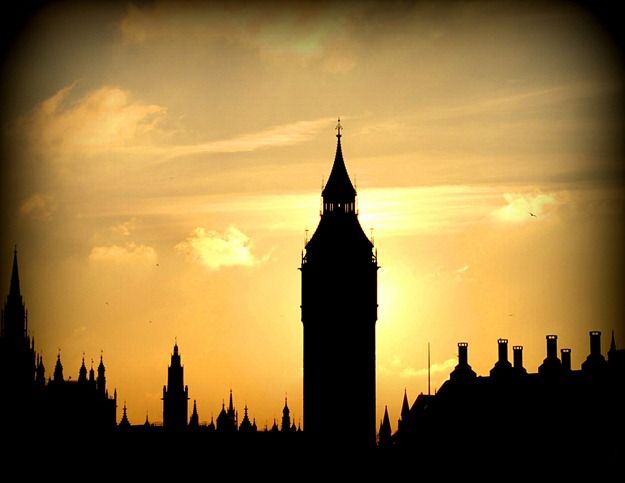
So now I have two cities that are over two thousand years old, both of which owe a rather great deal of their look and feel to that previously mentioned empire, both of which I absolutely love.
Rome has some serious quirkiness going for it, which I am mostly basing on the fact that everyone drives tiny cars or scooters. This transport option is less popular in London, largely due to the presence of the deadly London bus.
Rome also has better weather, better ice cream, and a bit more crumbliness. London has markets that service goat curry, pubs that serve real, meaty beer, and the South Bank.
Ah, this was a tough one, but ultimately, London isn’t going to win this bout. Rome, as she was a couple of thousand years ago, is victorious. Alea iacta est.
Final: Surprise Contender vs Rome!

I did say this was a round up of five of my favourite European cities, and thus far only four have slugged it out, Rome emerging victorious.
My fifth city is a bit like Marmite. For those of you not familiar with this food stuff, marmite is a yeast based tar like substance that you spread on bread. The flavour is difficult to describe, and hard to appreciate unless you’ve been brought up on the stuff. The thing about Marmite though, is that you either absolutely love it, or you hate it. There is no happy in-between.
And the same can be said of Venice. Some folk absolutely adore the place, a city set in a swamp which is slowly sinking away. They will go on about the tiny backstreets, the magnificent piazzas and the fabulous ice cream. They will wax lyrical about the cafes, the glass sculptors, and the joy of getting lost in the pedestrian heaven that is a car free city.

Venice’s detractors, on the other hand, will bemoan that the place is tacky, full of tourists, overpriced, and smells like an open sewer.
Those people are wrong.
Which is why I am happy to declare Venice my overall favourite city in Europe! Rome has a lot to offer, but the magic that can be found in Venice is unbeatable.
I’d love to know what you have to say about my five picks! Did I miss one of your favourite cities off the list? Am I completely insane to have picked Venice? Share away in the comments below! And if you are planning on visiting some of these cities, why not check out the deals that Hotels4U have on accommodation, including London hotels and Paris hotels :)
Monday, October 24, 2011
Rock in Köln

More recently, I was invited to watch one of the band members, who happens to be a friend of Vera’s, perform in her own band, playing in a club in Köln, or Cologne.
The music style was described to me as being of the melodic metal variety. I am not really a tremendous expert on the various metal genres, but I have seen some pretty non-melodic metal performances involving a lot of screaming and general anger, so assumed this would be the opposite of that.
I was happily right, in that there wasn’t so much of the screaming and anger, and you could, if you tried really hard, discern the words. I couldn’t discern the words, despite them being in English, because my ear drums were in the process of being perforated by the giant speaker stacks.
I was aware that lyrics were there however, which was a marked improvement on the thrash metal concert I once attended by mistake.
Some observations on going out in Germany. One, Germany has not quite gotten around to properly outlawing smoking in public venues. Well, actually, they tried. Legislation was put in place to make it illegal. And then a loop hole was discovered, whereby a venue just had to register as a smokers club, and it was back to business as usual. Apparently this loop hole is in the process of being closed. In the meantime, depending on where you go out, be prepared for some fug. It’s all very noughties.

Second, if you’re going to a metal concert, ear plugs are a good idea. Small rooms and giant speakers result in a gigantic wall of sound that will surround the next few days of your life in acoustic cotton wool. With ear plugs, you may even be able to work out what the singer is on about. I didn’t have ear plugs.
Third, doner kebabs. If you’re going to go out in Germany, you need to have a kebab at the end of the night. I can safely say that the large Turkish community present in Köln have made it their business to ensure that kebabs are actually an almost gourmet item, featuring delicately soft bread and meat that is recognisable as such. You could eat this stuff sober, which is saying a lot for a kebab. I can only assume this is the case Germany wide.
Finally, never, ever, ever, mention the beer. Wherever you are from in Germany, your local beer is treated with reverence. Other beers are worse than mud. One of the bands playing that night was from Munich, and he attempted to discuss with the crowd the topic of Köln’s local beer (Kölsch, for those of you interested), a subject he managed to get roughly four words into before being booed silent. Mentioning the beer therefore is not a good idea – you are expected to hate all beers other than your local beer.
And on that happy beer related note, I end. Our time in Germany is coming to an end in the next week or so – after a trip to the UK for a wedding it’s off to France and a whole new series of adventures involving, most likely, cold. Until the next time…

Today’s post was partly made possible thanks to the support of only-apartments, who provided the following message: No hurries, no stress, no waking up early to have breakfast. Just get one of the apartments in Madrid and enjoy your holiday your way.
Friday, October 21, 2011
The kindness of strangers

I was recently doing something that required me to acquire a bit of electrical donglery that would allow me to join four wires to four other wires.
I had been messing around with these eight wires for a while, and had come to the conclusion that twisting them together and applying electrical tape was not a sturdy joining solution, and perhaps an actual connector was required.
A search of the house around me yielded very little on the electrical connector front. It was time to explore further afield.
Were I to be living anywhere other than a tiny village, this exploration probably would have not taken too long. As it was, I suspected that the local supermarket and post office were unlikely to be coming to my rescue. But, ever hopeful that the universe would provide me with the answer I was looking for, I set off into the rain.
The supermarket was, as expected, a dead end, but I did bump into a housemate within, who was also searching for something, namely, gloves. The German word for gloves, as an aside, is hand shoe. Brilliant.
We searched for gloves for a while, and failed at that also, at which point I continued on into the rain to the post office. Normally one wouldn’t hope to find an electrical connector in a post office, however this particular post office, as well as stocking your usual letters and stamps, is home to a plethora of fascinating items not normally found in your usual run of the mill post office. Or at least, not the ones I usually visit.
After some careful shelf peering, it became apparent to me that electrical connectors were probably not on the list of things that German post offices stock, however out of the box the proprietors thinking may be. As I was clearly looking confused, I was offered assistance.
I should point out that despite having now spent a total of around half a year living in Germany, my mastery of the language could best be described as minimal. I explained this (in English), and he replied, also in English, that maybe he could still help. Thinking that there was a chance, I embarked on a lengthy description as to what I wanted.
Sadly, despite much hand waving and gesturing, I was unable to get the idea across that I wanted a connector to connect wires together. The connector part was understood. The wires part was not.
I was close to quitting at this juncture, but rescue was on the way, in the form of a lady in the shop, who had overheard my feeble attempts at describing an electrical connector.
He wants a luftithingy, she said, except instead of luftithingy, she used the real German word for electrical connector. Comprehension dawned in the proprietors eyes. Comprehension, sadly followed by the statement that he didn’t have any.
How many did I want, asked my new lady friend. Enough to join four wires to four other wires I replied. She went on to say that she had some in her workshop, and if I wanted some, she could give them to me, gratis.
I was rather boggled by this offer, but it seemed pretty good to me, so off we went. First, into her car, then to her workshop. Obviously, getting into a car with a total stranger and driving off to an unknown destination on the promise of a workshop and some electrical connectors is not my usual modus operandi, in case my parents are reading this. It usually takes the offer of a lot of sweets to get me interested.
I’m not totally sure my rescuer was convinced as to the brilliance of the scheme either, once we had set off. But still.

We arrived at said workshop, which was delightfully full of all kinds of things, from power tools to cable ties. Were she so inclined. As it was, I was directed to a drawer, from which I managed to find sufficient connectors for my needs. I thanked my rescuer profusely, and headed back across the village (still in the rain), just in time to meet the housemate who had succeeded in her great glove quest. A positive day for all concerned.
So thanks to my nameless electrical dongle supplier, for reminding me quite how awesome strangers can be when you need them. Oh, and for not murdering me. That was nice too.
Monday, October 17, 2011
The curious tale of buying a vehicle in Germany

Imagine my surprise therefore when I entered the world of vehicle buying in Germany, to find a system that could be, at best, described as kooky, and at worst, as bureaucratic. Here is my experience.
Having spent some time searching for the perfect vehicle, scouring classified ads and local dealers, we had found what we believed to be the perfect vehicle for our needs. This was then followed by some serious time peering at the engine in a wise and knowledgable manner, some debate over pricing, and finally, the time to part with some cash and drive off. Except, it wasn’t quite that easy.
The main issue was that of the number plate. In the three countries to date where I have had the pleasure of buying a vehicle (UK, Australia and New Zealand), the car has always come with a number plate. It is a part of the car, much like the doors or windows. Or engine. After all, you can’t exactly drive anywhere without one.
In Germany, it rapidly became apparent to us that the number plate is related to the car’s owner rather than the car itself. So when you sell a car, you take the number plate with you.
For what reason, you probably ask? To put on the next car, would be the logical response. Logical yes. True, no. In actuality, the number plate has a little sticker on it, which shows the world (or the German police) that your vehicle is legally registered. To cancel your registration you take your number plate to the nearest vehicle registration office, where the plot thickens.
We had the pleasure of going through this process for Vera’s parents car, in a totally separate adventure, which primed us for the journey before us. That time, we went to the vehicle registration office where we were handed a pair of safety goggles and directed over to the corner of the office.
Here, a hugely intimidating metal grinding machine lurked, waiting for us to feed it our number plate. This process was wonderfully boggling. People were wandering around a large, frankly depressing government building, clutching their number plates, waiting for their pair of safety goggles and go on the machine, which is operated via the means of a large red button. I have to admit that this is a lot of fun. I’m not convinced about the health and safety aspect.

As a result of all of this, any vehicle bought in Germany is likely to come without a number plate, as the previous owner will have destroyed it in a fit of glee and button pressing madness. The vehicle we had chosen was no different. We, therefore, were going to need to enter into the world of getting a new number plate. Does life get any more exciting than this?
To get a number plate, we needed all the paperwork associated with the car. Which we weren’t able to get unless we had paid for the car, as due to a marvellous part of German law, whoever is in possession of the cars documentation, owns the car. So people are usually a bit shy of handing over the actual paperwork until they have received payment.
We handed over payment therefore for our new steed (more on her shortly), which got us some pieces of paper, and a vehicle we couldn’t take on the road as it had no number plate. The next step was to leave it where we had bought it, and find ourselves a number plate.
The obvious place to buy a number plate, to my mind, would have been the vehicle registration office next door to where we had bought the vehicle. This would have involved a short walk, some paperwork, and some number plate printing. Sadly, this was a little bit too easy to be the case.
It turns out that one has to go to the office that represents the region of your home address. In our case, this was a forty minute drive away. Quite how the car buying public not already in possession of a car goes through this process I have no idea.
Still, this was how it was done, so off we drove to a large government building, much like the previous government building, where we waited for our ticket to come up and watched the entertainment on offer.
This largely took the form of people wandering around clutching their number plates with the expressions of those fairly sure that the internet was invented to make our lives easier, and wouldn’t some sort of online system for all of this be better? Although of course, that would make some metal grinding machines redundant, and we couldn’t have that.
After some waiting, we got to talk to someone, who asked us if we had a preference for the letters and numbers on our number plate. We opted for the randomly generated sequence, which happened to match my mothers birth date. Which was nice.
Randomly generated sequence assigned, we were given a ticket with our number plate printed on it, which we took to the conveniently located number plate shop, who printed out our number plate in front of us. Financial tip: the number plate printing business in Germany is one to invest in. Demand will never cease.
We were now the proud owners of a pair of shiny new number plates for our vehicle which was parked 40km away. Some driving later, and we were the proud owners of a vehicle with actual number plates, which we could actually drive away ourselves. Yay for us!
Oh of course, there is the matter of insurance. In Germany, insurance is a legal requirement. The insurance system however is a bit better, in that you can get a promise of insurance on a vehicle, which is good for fourteen days, in which time you can drive the vehicle legally, and be covered should something bad happen. You need the promise of insurance prior to getting the registration, as otherwise you won’t get your new number plates. In case all of this has got you as boggled as it got me, let me boil it all down for you into a nice, simple workflow:
Find a vehicle –> ensure vehicle isn’t leaking too much oil –> agree on price –> go to insurance company office and get a print out of an insurance promise –> return to vehicle and exchange some money –> get some bits of paper –> go to the registration office and get a number plate –> return to your vehicle, affix the plate and drive off –> pay for your insurance within fourteen days so it is valid.
Easy stuff!
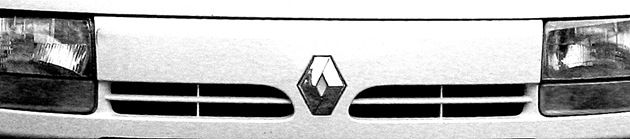
All of the above means that we now have a new addition to our travelling family, whom we have christened Ma Fleur. Although largely she is being referred to as Fleurie. She is a long wheel base Renault Master, in other words, a large white van. Currently she consists of three seats and a large empty space (which we can stand up in!). Naturally we have grand plans involving converting her to a camper van, which we will use to tour Europe. Which is likely to be our next grand adventure. More on that in future posts!

Today’s post was partly made possible due to the support of only-apartments, who provided the following text: When travelling with your family, you need to stay comfortable. Get one of the apartments in Budapest and feel like you’re at home wherever you are.
Thursday, September 22, 2011
Space wee, and more from Germany

How intellectual of me, you are probably thinking. And you would probably be right, although any man who turns down the opportunity to wander around giant bits of machinery with accompanying red buttons and warning signs that you can’t read should be questioning their status of manliness.
The festival in question, from what I could glean, was mostly about space, and also about planes, mostly of the planes-that-help-in-space-research variety. It took place in a very large and very barbed wire surrounded facility that was home to a great many machines that clearly did very interesting things, given the number of wires and buttons that were attached to them, and the length of their names in German. German not being a language that is afraid of a nice long word.
I did find one section of the show that was in English. It was all about wee, and how astronauts wee, and what wee in space is like. This wasn’t a topic I had previously thought I would find of interest, but as it was the only information panel I was able to find in English, I devoured it nonetheless. And it was as fascinating as the topic of space based wee could be.

Beyond wee, there were all sorts of other things that engineer friends of mine would no doubt have been enthralled by. Giant wind tunnels, for example, currently in use to test things that might be on their way to Mars shortly. Other enormous machines whose use were a mystery to those of us in the crowd (me) not fluent in German.
All of these things were presided over by a large number of extremely boffin looking chaps, who, I’m pretty sure, were fairly nervous about the general public being allowed to come and poke around their highly scientific looking equipment.
This being a German festival, there were some standards that were adhered to. Wurst stalls selling sausages that far outsized their accompanying buns of course being one, and copious amounts of beer being sold at bargain prices being the other.

The other half of the show, past the wind tunnels and the red buttons, was the planes bit, which was the part of the show I was more interested in, being as I harbour a secret passion for things that fly around in the sky.
This was very interesting, full of seriously exotic looking craft. The plane that is used to simulate Zero G for example, was there. A giant 747 used by NASA as some kind of mobile telescope (turbulence must make that job fun) was casually parked up. There was even an A380 that deigned to give us a low level fly by. All very jolly stuff.
So that was the space show, and other than a hilariously overcrowded bus (Germany is not as efficient as you might think) getting us to and from the venue, the whole day was terribly enjoyable.
Other recent activities we’ve taken part in have been what you would expect – meeting people, drinking beer, wandering through the forest, enjoying the long tail of the European summer that is still doing it’s best to let t-shirts and shorts be the preferred clothing choice.
This weekend we’re off to Luxembourg for a brief visit, and I’m sure a post about that will be coming soon. In the meantime, here are some bells.

Friday, September 9, 2011
Back in Germany

Well ok, the mountains aren’t quite as stunning, the buildings are definitely older and there is a somewhat greater headcount, but overall going from one developed country to another isn’t a major culture shock. I just have a sturdier roof over my head.
In fact, in some ways, Germany is more of a foreign place than New Zealand to me because of the language barrier. Luckily, insanely cheap beer is one of the ways that Germany differs from New Zealand, and beer is a fabulous way to conquer any language barrier.
We’re living back in the house we left a year ago. This is in itself very much like living in a hostel in New Zealand – full of friendly people who all speak German. (If you’ve not visited New Zealand or Australia recently, you may not have realised that roughly 80% of all travellers appear to be German. You’d think this would mean Germany is empty, but it turns out not to be the case).
The occupants of the house, including a fat one eyed cat, are approximately the same, minus one philosopher who has gone off to make her merry way in the world. There are of course, subtle changes.
Vera no longer smokes for one. Smoking in Germany is far more socially acceptable than in New Zealand, where by all accounts the plan is to outlaw it completely by 2025. It is also significantly cheaper here. The social aspect of that morning (and mid morning, and late mid morning, and pre-lunch and… etc..) smoke is therefore missing a little.

The other changes also affect Vera more than I. This house was her home for nearly ten years, and whilst we are back in the same room that we left a year ago, it is an emptier place. Everything is gone except the bed (and there was a lot of everything, this is a girl who knows how to hoard), and it certainly isn’t the same place to her any more. The disconnect one sometimes feels after long term travel, returning to a place that no longer feels the same as the place you left, is a little apparent. I’m sure we’ll live.
And what of our plans going forward? Well, we’ll be here for a couple of months, catching up with friends and family. I can, happily, make one of the three weddings I had previously thought I was going to be missing, over in good old England. And then we’re heading to France to spend some time with my parents, and plan beyond that.
In the meantime I shall regale you with further observations from New Zealand, thoughts on my time in Germany, and do my best to work out a sufficient answer to “how was your trip” that somehow encompasses a whole year of life into a paragraph.
Keep smiling!

Today’s post was partly made possible thanks to the generosity of only-apartments, who provided the following zen-like text: If you cannot find inner peace, try staying at one of the Budapest apartments: distance puts everything in its place.
Monday, June 13, 2011
76-Second Travel Show: 'Who Is Dean Reed?'
Dean Reed, who died 25 years ago today in East Berlin, is my vote for one of the most fascinating people of all time. He outran a mule, picked up a random hitch-hiker with a Capitol Records contact that led to his recording contract, got huge in Uruguay, had dinner dates with Che Guevara, was the first rock star to appear in the USSR, and made movies with Yul Brynner, and eventually one billion people -- per some estimates -- knew who he was. About ten of which were Americans.
For free MP3s, see this German site.
Saturday, May 28, 2011
Tourist Atractions and Things to do in Frankfurt, Germany
Today it's welcome and thanks to Ovie for sharing this tour and also some insights over Franfurk! Without delay let's get to know a bit more about this German city.
For most tourists who visit Germany, Munich and Berlin tended to be their most likely destination. However, more people are being drawn to another German destination, Frankfurt. Known the world over as an international financial and trade centre with the most amazing skyline in Germany and the world over, the city is steeped in history and culture which has been overshadowed by its label as a financial centre. Frankfurt offers more and tourist as quickly finding that out for themselves. Some of the must-visit locations which tourists visiting Frankfurt should add to their itinerary include;
The Kaiserdorm (Imperial Cathedral) - Also known as Bartholomew’s Cathedral and built on the foundations of a pre-existing church. The cathedral was built in the 14th and 15th centuries and by strict definition, it is not a cathedral since it was never a bishop’s church. Kings of Germany and Emperor of the Holy Roman Empire were elected and crowned in this church. And it was regarded as symbol of national unity. Its captivating exterior architecture combined with its large collection of gothic art in the cathedral’s museum. From April to October, visitors are allowed to go to the top of the tower. A calorie-burning 324 steps is rewarded by a breath-taking panoramic view of the city.
The Paulskirche - Located in Frankfurt am Main, The Paulskirche is a church which is of great political symbolism to Germans. In was the seat of the Vorparlament (the Frankfurt parliament, the first freely and publicly elected government body in Germany) which later prepared the election for the National Assembly. Though it failed, the first constitution for a united Germany was written in this church. Nearly destroyed in World War II, seen as the cradle of Germany, the church was the first to be rebuilt after the war and was re-opened on the 100th anniversary of the Frankfurt Parliament. Post WWII, it has not been used as a church and is now used an events centre with events such as the Frankfurt Book Fair and annual national awards ceremonies being hosted within its historic walls. It is famously remembered for playing host to a major speech by US President John F. Kennedy in 1963 during a visit to Germany.
Höchst Castle - Famous known as the location of the industrial site of the former Hoechst AG company, Höchst medieval streets lead to historic places of interest such as the Bolongaro Palace, the City Fortifications, the Main gate, the Customs Tower and the Old Town Hall. However there is a special attraction which on the bank of Main which every tourist must visit. Höchst castle was built between the 13th and 16th century and was the former residence of the archbishop of Mainz. Close to the castle is the oldest church in Frankfurt – St. Justin’s Church which often plays host to classical concerts. In June and July, the entire Old Town becomes a showplace for the annual castle festival. For 4 weeks, visitors are entertained with numerous events, such as a garden party at the Bolangaro Palace, jazz concerts, the Höchst Summer Organ festival and the Old Town Festival around the castle and St. Justin’s Church.
Main Tower - Famous for its high-rise skyline, Frankfurt over 15 extra-ordinary skyscrapers and counts amongst its record-breaking buildings, the highest office building on the continent, the Commerzbank Tower. The Main Tower actually consists of interconnected towers, one square and the other round. Built in 1999 and the first high-rise to have a façade of made of glass, the Main Tower attracts tourists from the world over especially those who like architectural feats. It is the only skyscraper in the city with a view platform and a restaurant that is open to the public all year round. The 53rd and 54th floor are home to the highest radio and television station in Europe.
Ebbelwei Express - A colourful part of the Frankfurt cityscape, the Ebbelwei Express enables tourists to enjoy a leisure tram ride through the city while enjoying a beverage of your choice – usually the Ebbelwei or Apfelwein (meaning apple wine - a German variant of cider). This tram ride with its colourful carriages takes passengers through the sights and attractions of the city. The trip last for approximately one hour and passengers can get off at sights that capture their interest and get back on when the next train arrives. Train arrive punctually and regularly and make this a fun and convenient way to experience the city.
Goethe House and Goethe Museum - Frankfurt is the proud home of one of Germany’s most famous personalities, Johann Wolfgang von Goethe. Johann Wolfgang von Goethe is the great writer, biologist, physicist, artist and polymath whose Faust is regarded by many as the greatest long poem of Modern European literature. The Goethe House and Goethe Museum are on the site of his birthplace which was destroyed during WWII and restored to their original state. Goethe’s study on the second floor is a Mecca/Jerusalem to his fans the world over who visit in the museum in their thousand annually.
Goethestraße - Goethestraße is Frankfurt’s own version of “Fifth Avenue” with its collection of top designer brands located in this hub of prestige, class, exclusivity and extravagance (from Armani and Versace to Tiffany and Cartier). Less expensive products are sold in adjoining streets for more savvy shoppers and every Friday, a weekly market with around fifty stalls is held in Schillerstraße.
Frankfurt Airport - With millions of passengers annually, this list would be incomplete without Frankfurt airport (the portal to this beautiful city) which caters for millions of passengers a year. So captivating is the airport that more than a million people a year go on an airport experience tour to experience flight operation live. Visitors get to witness what happens behind the scenes in the terminals, aeroplanes close up or get to watch from the runway while a plane take off. Most tourists travelling to Frankfurt find that it is quite convenient to book a car hire from Frankfurt airport from one of the few companies which offer car hire services at the Airport such as Avis. Having you own means of transport makes exploring this breath-taking city a real adventure as there is much more to be experienced.
Wednesday, May 18, 2011
Germany, Travel to the heart of European history
Opening a brand new section dedicated to Germany the thanks of today goes to Sachin for this guest post and also to wikimedia for the pictures that accompany it.
Germany has perhaps the most complex of all national histories. This is a country which has been in the centre of Europe’s history for thousands of years. The Germans themselves are a diverse grouphttp://www.blogger.com/img/blank.gif of regional peoples having a common language and ancestry but spread over a large area of Europe and even Russia. Every single part of Germany has an extraordinary story which few foreigners know. When you come to Germany, bring a few reference books, your travel insurance and an open mind, because you’ll learn things you never suspected about this fascinating place. German history basics - In Roman times, Germany was a wild place outside the Roman Empire, full of savage tribes against which the Romans fought for centuries. Germany was never conquered, and became the western limit of the Empire. In later history, Germany became a bewildering maze of tiny principalities and kingdoms under the Holy Roman Empire. The rise of Prussia and the Protestant reformation began a process of disintegration for the Holy Roman Empire, which created an equally messy collection of kingdoms, principalities and states. During this period, many wars were fought in Europe, mainly in Germany. European nations fought across Germany and German states fought with and against each other.
The Seven Years War fought by France, Austria, Russia, Saxony and Bavaria against Frederick the Great of Prussia ended in a Prussian victory and returned the peace to a relatively stable but fractured and economically weak grouping of regional German states. This situation continued through the Napoleonic wars until the mid 19th century when the German states, Saxony and Bavaria unified under the Prussian Kaiser.
The First World War was the sequel. Germany’s defeat sowed the seeds for the rise of Hitler, the Second World War, and the separation of Germany into East and West Germany during the Cold War. West Germany prospered and became one of the original members of the European Common Market. The fall of the Soviet Union led to the reunification of Germany. Today, Germany is one of the world’s most advanced nations and an economic powerhouse of the European Union. German culture - German culture is as diverse as its history. Music, art, science and literature is famous for its unique perspectives and achievements. It’s a truly fascinating journey of exploration for the true culture buffs. The first thing you’ll notice in Germany is that the regional cultures are all contributors to the pan-German culture as a whole. Each area has its own cultural history, blended in with the wider German national culture. It’http://www.blogger.com/img/blank.gifs a unique study of cultural diversities, and the “provincial” element in Germany is as obvious as the French. These are the modern versions of the old states, with Berlin as the German equivalent of Paris. Germany is a combination of its past, its present and its future, and when you come to Germany, you’ll see a range of interactions of culture, society and history like nowhere else on Earth.
Germany remains unique. The only way to really understand the nation and its relationship with both history and itself is to see for yourself. Grab some cheap travel insurance, and be prepared to learn the story first hand.
P.S.: Marcela, the Jamaican Blue Mountains aren't forgotten :)
Wednesday, December 8, 2010
World's 10 best driving roads in the world
After the top 10 beaches of the world here's another guest post and photos from David - It's driving time today :)
There are some roads in the world that stand out from the crowd. Whether it’s the views, the terrain, the danger or the potential speeds that can be reached that make these roads stand out, anyone choosing to visit them will not be disappointed. This list brought to you by Moneysupermarket discusses 10 of these amazing routes and explains what makes each of them so special.
Great Ocean Road – Australia
Running along the south-eastern coast of Australia between the Victorian cities of Torquay and Warrnambool, the Great Ocean Road is a 160 mile stretch of road that was built by more than 3000 returning soldiers between the years of 1919 and 1932 as a memorial for the 60,000 Australians killed in World War 1. A scenic drive with spectacular coastline vistas, stunning rock formations and many other splendid sights including the Otways rainforest, the impressive views make this road undoubtedly one of the most inspiring in the world.
Millau Viaduct – France
Opened in December 2004, the Millau Viaduct is the world’s tallest vehicular bridge. Designed by the French structural engineer Michel Virlogeux and British architect Norman Foster, the Millau Viaduct spans the river tarn which is near Millau in Southern France. The bridge’s tallest mast is 343m tall which is taller than the Eiffel Tower and nearly as tall as the Empire State Building and the views from the bridge are quite spectacular. In fact, the views are so good that when the bridge initially opened drivers would regularly stop on the hard shoulder to admire the landscape and the bridge itself.
Transfagarasan Road – Romania
The most popular road in Romania with driving enthusiasts has to be the Transfagarasan Road and it’s easy to see why. Connecting the historic towns of Transylvania and Wallachia, this dramatic route reaches as high as 2,034 metres above sea level in some places and provides drivers with a real challenge. This winding road is dotted with steep hairpin turns, long S-curves, and sharp descents which is a big reason why drivers rate this road so highly. Constructed between the years of 1970 and 1974, the 90km stretch of road also has more tunnels and viaducts than any other road in Romania with the longest tunnel being 884 metres long. Due to its layout and altitude, weather dictates that the road is usually only open between June and early October.
Stelvio Pass – Italy
Regularly voted as the best driving road in the world due to its 60 hairpin bends and the fact that it is the highest paved mountain pass in the Eastern-Alps, the Stelvio Pass in Italy is a driving enthusiast’s paradise. Reaching 2757 metres altitude, it is the second highest mountain pass in the Alps, only 13 metres lower than the highest mountain pass in the Alps. The road was built between 1820 and 1825 and has changed very little since then. The northern side of the pass is far more challenging with 48 of the hairpin bends located on this side. The steep ascents add to the excitement/terror as drivers often have little or no visibility of incoming vehicles.
Overseas Highway – America
The 127.5 mile Overseas Highway in America was built back in 1938 following the Labor Day hurricane of 1935 that heavily damaged and partially destroyed the Overseas Railroad that had previously been in place. The route which is mainly over water runs from island to island across 42 bridges and it arcs through the Florida Keys. If you drove the full route in one go it would take less than 4 hours but with so many great sights to take in like the ocean, mangrove vistas and fantastic sunrises and sunsets, the journey often takes visitors slightly longer!
Guoliang Tunnel Road – Japan
Located in the Taihang Mountains which are situated in the Henan Province of China, the Guoliang Tunnel Road was amazingly built by a group of villagers who raised money to buy the hammers and steel tools needed to build the tunnel. 13 villagers initially started the project which took around 5 years to complete and cost a number of villagers their lives. The tunnel itself was completed in 1977 and is 1.2km long, 5 metres tall and 4 metres wide. As you might imagine, the road is regarded as one of the most dangerous in the world but that doesn’t take away from the fact that the Guoliang Tunnel road is a stunningly beautiful scenic route.
Hana Highway – Maui
Connecting the small town of Hana to the rest of Maui, the Hana Highway is a 60 mile stretch of road that is extremely popular with motorists. Firstly there are the waterfalls, beaches, ocean views, rainforest and other stunning natural sights that make this route so attractive to visitors. Then there is the road itself which has over 600 turns, 54 one-lane bridges, blind bends and narrow pavement edged by cliffs which make this route one of the most thrilling in the world. Together, these two things make this road stand out as one of the must visit routes for car enthusiasts.
Autobahn – Germany
If you were to look at the Autobahn you might struggle to see what all of the fuss is about. Just like highways around the world, Autobahns have multiple lanes of traffic heading in each direction which are divided by a central barrier. However, in many ways the Autobahns are the ultimate road for driving fans. The reason for this is that parts of the German Autobahns have no speed limit (except at junctions and various danger points) which means that motorists are free to drive as fast as they want. Obviously this is a hugely attractive proposition to motoring fans, meaning that the German Autobahn had to be included on this list.
North Yungas Road – Bolivia
High in the Andes Mountains in Bolivia is the North Yungas Road. The road is also known as Death Road and it’s easy to see why when you see the figures relating deaths and injuries sustained whilst travelling on the road each year. On average, there is a fatal accident on the road every few weeks and there are also remains of numerous cars, lorries and buses at the bottom of the abyss which serve as a reminder of just how dangerous the road is. Built in the 1930’s, the road stretches 43 miles between La Paz and Coroico and has huge ascents and descents, extremely tight hairpins and very narrow passages. What really makes the road dangerous though are the vertical drops off the side of the road which in some places are more than 1,500 metres and there are no guardrails to prevent vehicles falling. The North Yungas Road certainly isn’t for the faint-hearted but it’s also this danger that attracts so many people to the road.
The Jebel Hafeet Mountain Road – UAE
This amazing road is located in the Jebel Hafeet Mountain and spans 7.3 miles, climbing over 1,200 metres along the way. The perfect road surface and 60 corners make this road unquestionably one of the best driving roads in the world; its mix of fast straights and sweeping curves are what driving enthusiasts dream of. A 90 minute drive away from the city of Dubai, people flock to the Jebel Hafeet Mountain to experience the tight, technical and thrilling driving experience.
Monday, October 4, 2010
Auf wiedersehen, Germany

The people were really what made it however. I came to Germany to spend time with my girlfriend, who was the only German person I knew in the country. And that is the thing about relationships. When you get into them, you not only get a new person in your life, you end up with a whole bunch of new people to meet and befriend. From family gatherings to birthday parties, from flea markets to university tours, I have had just an amazing time with all the new folk I met, despite my tremendous inability to speak the language.
Particular thanks have to go to Vera’s sister, who introduced me to currywurst and Kolsch, and largely managed to outdrink me at every party we went to. Also her godmother, who put me up in Berlin for three nights having only met me once, and put a new chocolate on my pillow every night. Seriously, that was awesome.

Travel, for me, is an opportunity to experience new cultures and meet new people, see new things and perhaps learn a bit about myself on the way. In that regard, the four months in Germany has been a sterling success, and I am now ready for the next phase of the trip, that being a year in New Zealand. Next time you hear from me, it’ll be from a whole new country. Until then.. be happy!
Berlin – the rest of the story

Berlin is a great city for exploring. As well as a cheap and ubiquitous public transport system, there is an excellent network of cycle paths, plus the walking options aren’t too shabby either. I opted largely to explore by foot, hopping on and off the public transport if time was short or the distance was particularly long.
I started off with a visit to the Jewish Holocaust Memorial, which is both a huge installation of sombre grey blocks that you can wander throughout, and a factual information centre, which is located underneath the grey blocks. This is not a cheerful visit. It details, with seriously graphic photography, the workings of the engine that the Nazi’s put in place which resulted in the deaths of an estimated six million people. This was incredibly sobering stuff. There were stories of individuals, glimpses of lives that were ripped apart, told through diary entries and photos. It was incredibly moving stuff. If there is only one thing you do on a trip to Berlin, it should be to visit this place, and wonder as to the sheer horror that occurred such a short span of time ago.

Just near the Brandenburg gate is the Reichstag, a magnificent building built to hold the parliament of the German Empire. After various wars and damage, the building was restored to it’s former glory, and it is still used today as the place where the German parliament meets. It’s a fabulously pretty building, and whilst you can go inside and up to the top of a giant dome for amazing views of the city, the queues were very long and I had many other things I wanted to see, so I skipped the internal tour. I hear it is excellent though.
From the Brandeburg Gate you can walk up the Unter der Linden, a giant boulevard, similar to that of the Champs Elysees in Paris. This tree lined street houses many shops and museums. In the distance the ever present radio mast that towers over Berlin is visible, situated in Alexanderplatz. Before you get to Alexanderplatz though, there is the Berliner Dom, or Cathedral.

This is absolutely worth a visit, even if you have to pay a small fee to get in. The main reason for this, in my book at least, is that you can climb to the top of the building and enjoy fabulous unobstructed views of the city. Climbable buildings always make my shortlist of sights to visit, and in this case, it was totally worth it. I happened to visit it on an evening as the sun was setting across the city, so the light and shadows were just incredible.
As well as the view from the top, the Dom also has a crypt which houses some seriously impressive coffins. These are the resting places of over eighty Prussian royals. Whilst the guide book suggests that non-enthusiasts may not find them overly thrilling, I challenge anyone not to be at least be dumb struck by the sheer opulence and size of these things.

From there I popped up to the Charlottenburg Palace, the largest palace in Berlin and one of the homes of the Prussian Royal family. Whilst only two stories high, the palace stretches for quite some way in a wonderful baroque style.
Finally, my tour of Berlin took me to two fascinating places, the Topography of Terror and the former site of Checkpoint Charlie, perhaps the most infamous wall crossing point of them all.
The Topography of Terror is a large outdoor museum set on the former site of the Gestapo and SS headquarters. From 1961 to 1989 the Berlin Wall ran along this site, and this is now the only place in Berlin where the original wall still stands. It is fenced off, to stop people taking chunks of it, and a fascinating display details the rise to power of Hitler and the Nazi party, as well as life in Berlin before and during the war itself. This was well worth the visit, and I’d absolutely recommend it to anyone heading to Berlin.

So. Two days in Berlin was not an awfully long amount of time, but I did manage to squeeze a fair bit in. It’s a fascinating city with a lot of history, and there is a lot more I could have explored, from the museums, to the clubs, to the rest of the art scene. Still, this was a great little trip, and I’m pleased I had time to do it. If you liked the photos in the article, you can see more from my trip to Berlin on the site’s facebook page. Enjoy :)

Saturday, October 2, 2010
An alternative tour of Berlin

There is a chap, I am told, who wanders around Berlin by bicycle painting the number six everywhere he can. He has been doing this for a very long time. When questioned, at length, and the layers of slight madness are peeled back, a reason for his number painting is given. It is, apparently, to improve the working of the internet.
This was just one of the facts I learnt on the tour I took on my first full day in Berlin, which promised to show me the alternative parts of the city. Some would suggest that I should see the non-alternative parts of the city first before moving on to artists squats and bombed out train stations, but there we are.

Anyway. The day dawned fabulously, one of those clear and cold autumnal days where you can see your breath and the colours are almost forcing themselves into the back of your eyeballs against a staggeringly blue sky. The sort of day you would hope to have when wandering a new city.

I met my guide, and fellow guidees, underneath the giant radio tower which can be seen from pretty much everywhere in the city. Given that it is the tallest structure in Germany, this is not a huge surprise. I am not really one who usually does tours - normally I prefer to just wander a city by myself with a guide book at my own pace, taking shots as I go, and not feeling hurried along or as if I am missing things. I am absolutely delighted I didn’t follow this policy for my alternative tour of Berlin.

The tour started promisingly. Our dreadlocked Kiwi guide Ben had lived in the city for three years, and had a serious passion for street art. Add this to the fact that there were only six of us on the tour, and the whole thing felt like we were a group of friends out for a wander in a new city where one of us happened to be more knowledgeable than the rest.
Our tour took us from Alexanderplatz and out towards the North of the city, to a small alleyway called the Hoff. Sadly no imagery of the man himself appeared to be present. Along the way our guide talked to us about the various street artists and “crews” who worked the city. I haven’t mentioned this before, but street art (or graffiti, the line is blurry), is a big thing in Germany. It is literally everywhere, ranging from the basic tags through to highly detailed and complex murals. And Berlin, it turns out, is the epicentre of this art form.

The Hoff was a small, fairly dark alley, lined from wall to wall with pretty amazing art. Our guide explained the different techniques that were used, from stencils to pasting, and then let us goggle for a while.
There was plenty to goggle at. I am far from an expert on art, how art is defined, and the various skill levels involved, however I’m pretty sure nearly everything we were looking at was pretty amazing. Which was good.

After the Hoff we headed on, past the new Synagogue and to a giant, seemingly derelict building called Tacheles. Contrary to appearance, this building is alive and well, housing a number of artists within it’s colourfully painted walls.
There is an outdoor beach bar (Berlin seems big on beach bars despite not being near the sea) as well as five floors of art. Every square inch of wall space is covered in paint. It would take forever to look at all the imagery. Sadly we didn’t have forever, so after a while wandering around, mouths still largely agape, we moved on.

Our tour then took us through parts of Berlin that even a decade ago would have been seriously dangerous. We were shown the positive effects of street art, with one high rise building complex featuring an art project with over fifty faces painted around it’s base area. This, we were informed, had really helped turn a dodgy area around, and now it was as safe to wander as the rest of Berlin. Impressive stuff. Almost as impressive as the faces that were drawn. One in particular stood out, of an Asian boy. His eyes literally drilled out of the brickwork and into my soul. Haunting stuff.

Again, we moved on. We caught one of Berlin’s overground trains, which took us past massive murals which covered the entire sides of buildings. One of an astronaut, done to look like a stencil, particularly stood out.
When we got off the train, in the eastern end of the city, we were led to an old train depot and station. This had been a point of critical wartime importance and as a result had been largely bombed into nothing by the allies. What remains now are the hollowed out shells of buildings.

Amazingly, instead of just a giant derelict lot, this space has again been transformed by the community. Originally the site of illegal dance parties, where the only access was through a trapdoor of the toilets in the nearby kebab house, it now hosts a huge skatepark, art spaces, a climbing wall, bars and clubs. Quite wonderful stuff, with amazing street art all around again.
Our last part of the tour took us to the worlds only sticker museum, where we were given free tea, and the tour ended. I thanked, and tipped (the tour is free, tips are optional and are how the guide makes his money) Ben, our wonderful guide, gawked at the immense sticker collection for a while, before heading back into Berlin for a general wander, including a look at the East Side Gallery, the site of a part of the former Berlin Wall, now given over to, you guessed it, street art.

If you enjoyed this post, you may want to look at the rest of the posts from my trip to Berlin, where I take in the classic sites, including the Brandenberg Gate and the Holocaust memorial.
Also, If you liked the photos in this post, take a look at the Facebook page, where I you will find many more shots of the street art I saw on the tour, as well as more general shots from around Berlin. Enjoy!
Finally, if you want to be kept up to date with the site, and more posts and photos like this, why not subscribe to the RSS feed, either in your favourite reader or via e-mail? Enjoy!


